
10 Best Apps to Help with Anxiety in 2026
Feeling overwhelmed? Discover the best apps to help with anxiety, from guided meditation and CBT to daily affirmations. Find your perfect tool for calm in 2026.
Some anxiety spikes are obvious. Others show up in ordinary moments, halfway through a work email, in bed when you should be asleep, or in the checkout line when your body suddenly feels on edge. In that moment, an app is only useful if it helps quickly.
The best apps to help with anxiety fit into real routines. They give you a practical action you can take in under a minute, or a longer practice when you have the space for it. Some are strongest for meditation. Some focus on CBT tools, breathing, panic relief, or mood support. That distinction matters, because the right app depends less on popularity and more on what you need when anxiety hits.
That is the lens for this list. Instead of treating every app as interchangeable, it sorts them by primary function and explains how to use each one in daily life. You will see where affirmation-based support fits too. That makes I Become a useful starting point for people who want steady, in-the-moment guidance rather than another app they only open when they remember.
Research on mental health apps is encouraging, but results are mixed and usually modest. A study on how people use mental health apps for anxiety also reflects a practical reality. Many users try more than one app because different tools solve different problems. A breathing app can help during a spike. A CBT app may be better for thought patterns that keep coming back.
If affirmation support is part of what you are looking for, this guide to daily affirmations for anxiety can help you decide whether that approach belongs in your routine.
1. I Become
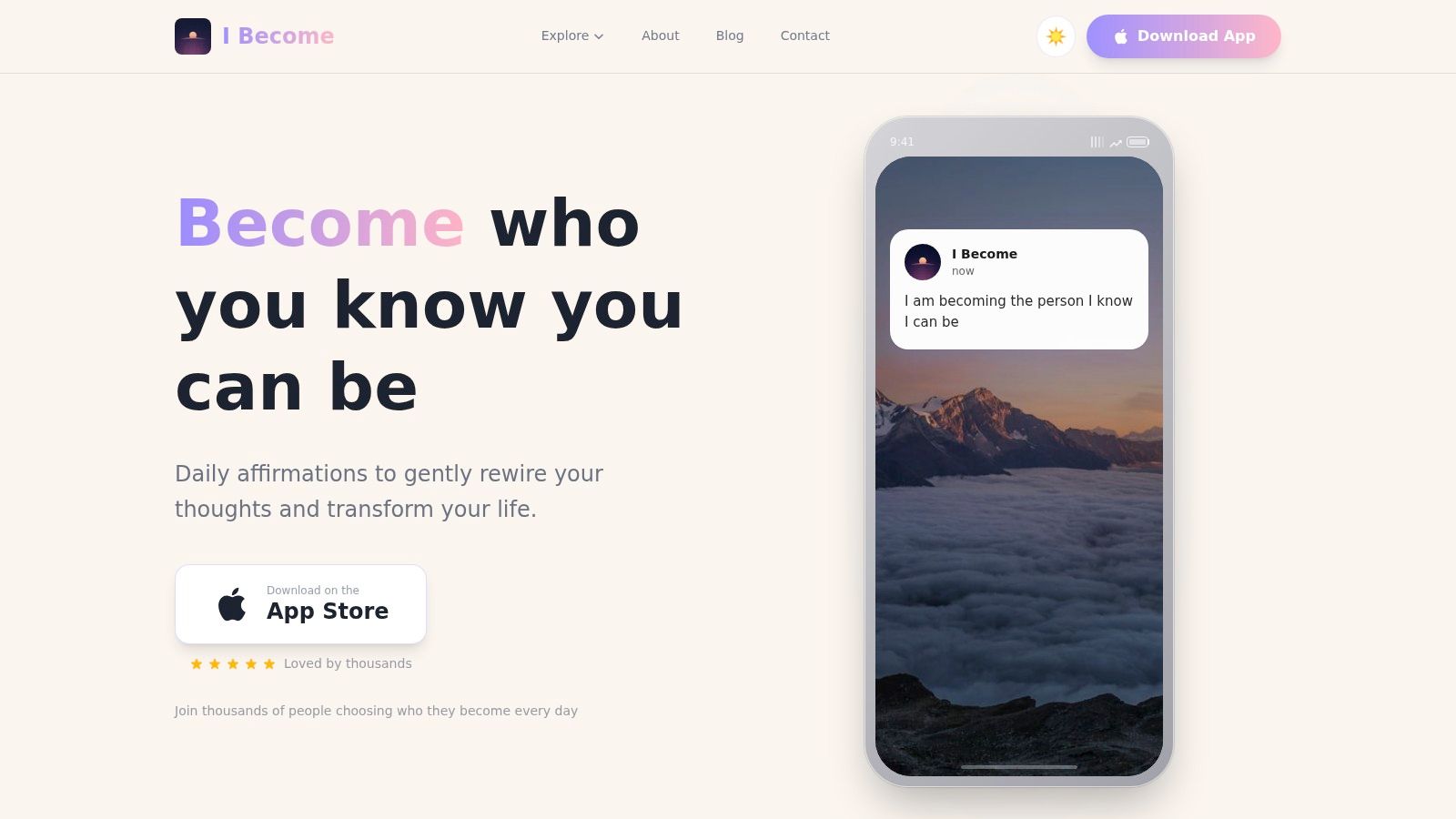
I Become stands out because it doesn't ask you to leave your day for a long session. It brings a calmer inner voice into the middle of your day through personalized affirmations, notifications, and Lock Screen widgets. For anxiety, that matters. You often need support in the exact moment your thinking starts spiraling, not only when you remember to open an app.
The app is built around short, repeatable practice. You can read, speak, listen to, or write your affirmations, which makes it easier to stick with the method that feels natural. Some people process language best by hearing it. Others need to write a thought down to believe it. I Become gives you that flexibility without making the experience feel cluttered.
Why it works so well for daily mindset support
Affirmation apps can sound too soft on paper, but the better ones help interrupt habitual self-talk. I Become does that elegantly. You choose focus areas tied to your goals and current season of life, then the app surfaces statements appropriate to your focus areas throughout the day so support shows up before anxiety gets all the momentum.
If meditation apps help you slow down, I Become helps you redirect. That distinction matters, especially if stillness sometimes gives anxious thoughts more room to speak. If you want a deeper look at that difference, this comparison of an affirmation app vs meditation app is useful context.
Practical rule: Use I Become as your anchor habit. Open it first thing in the morning and once more during your most predictable stress window, like lunch, commuting, or the hour before bed.
A few things it gets right:
- Personalized delivery: Notifications and widgets bring affirmations into your routine without adding friction.
- Flexible practice modes: Read, Speak, Listen, and Write make the habit easier to match to your mood and schedule.
- Habit momentum: Streak tracking gives you a gentle reason to come back tomorrow.
- Strong visual design: Themes and backgrounds make the app feel uplifting rather than clinical.
Trade-offs and best fit
The biggest limitation is simple. It's iOS-only, so Android users are out for now. There's also optional premium content, including additional affirmation libraries, themes, and advanced features, so some depth is behind an in-app upgrade.
Still, for people who want an anxiety-support app that feels encouraging, lightweight, and easy to revisit several times a day, this is one of the strongest picks here. If anxious thoughts tend to loop, pairing your practice with a set of daily affirmations for anxiety can make the app even more useful.
How to integrate it: Put the Lock Screen widget where you'll see it before messages and headlines. That tiny design choice can change the tone of your whole morning. If you want a gentle place to start, download I Become from the App Store and build a daily affirmation ritual that fits your life.
2. Calm
Calm earns its spot here for one reason. It helps people who feel fine enough during the day, then lie down and realize their mind has no intention of slowing down.
Its strongest category is sleep support, but the app is broader than that. You get guided meditations, breathing exercises, music, and a large library of bedtime content. That range is useful if anxiety shifts shape from one day to the next. On one night, a short body scan may help. On another, you may want a Sleep Story and nothing else.
The design also works in Calm's favor. When someone is already overstimulated, an app needs to feel easy to use within seconds. Calm usually does.
Best for sleep-driven anxiety
Calm is a strong fit for anxiety that peaks at night, especially if racing thoughts, physical tension, or dread tend to show up when the room gets quiet. The free version lets you test the experience, but many of the better sleep options sit behind Premium, so cost is part of the decision.
It also helps to choose Calm for what it does best instead of asking it to cover every kind of support. Meditation apps are helpful for settling the nervous system and building attention skills. If you want a clearer breakdown of where that differs from affirmation-based support, this comparison of an affirmation app vs meditation app explains the distinction well.
- Good fit: People who want reliable evening support, polished audio, and simple meditation sessions
- Less ideal: People who want lots of free content or a more direct CBT-style tool
- Primary function: Meditation and sleep support
How to integrate it: Pick one role for Calm first. I usually suggest either a 10-minute wind-down routine before bed or a single breathing session after dinner. Using it the same way each day works better than scrolling the library when you are already anxious.
3. Headspace
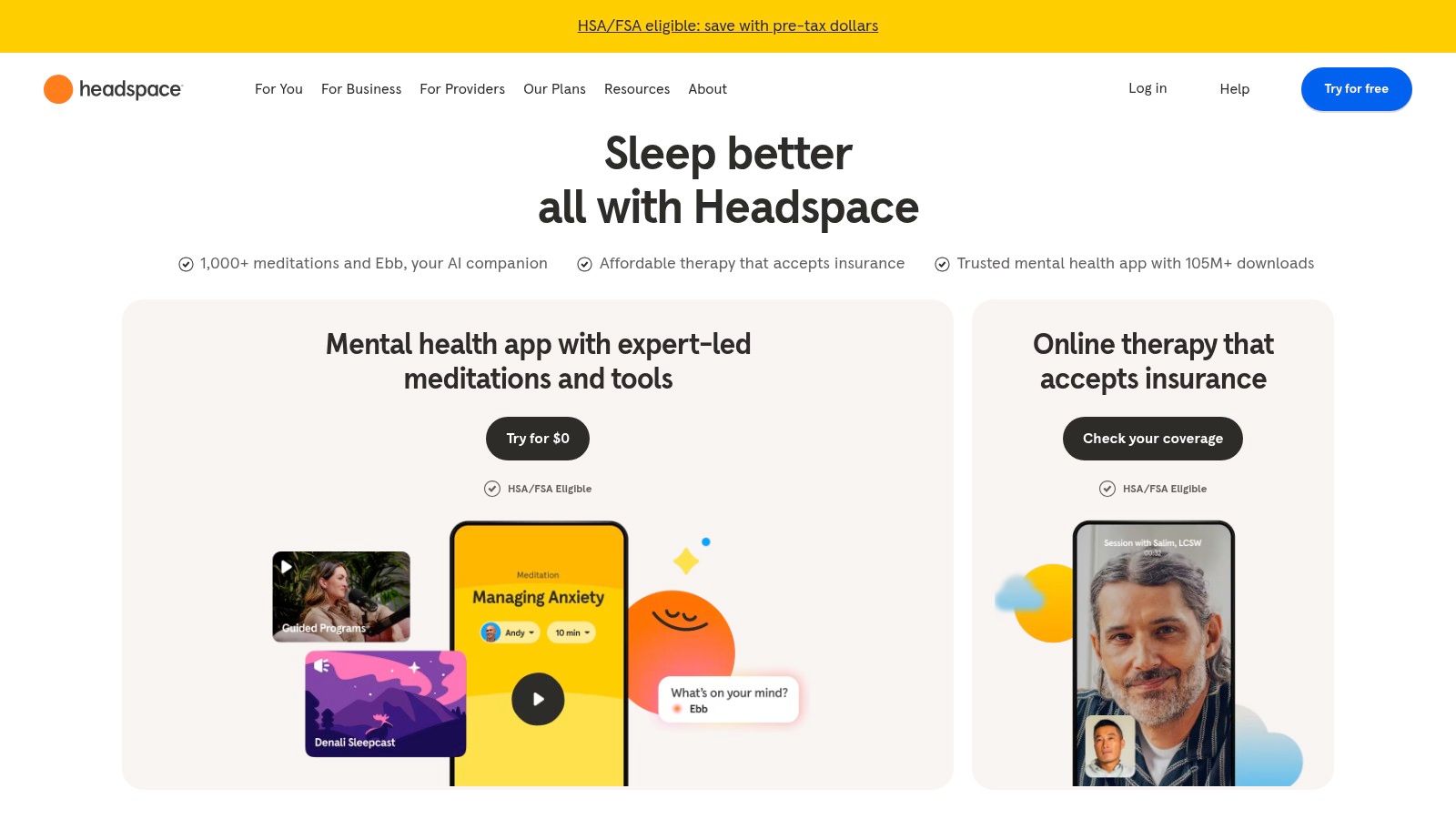
Headspace is one of the easiest apps to recommend to beginners because it teaches you how to meditate instead of assuming you already know how. That structure helps when anxiety and overthinking make open-ended wellness apps feel overwhelming.
Its guided courses have a clear beginning, middle, and progression. If you like learning in steps, that matters. You're not just selecting random sessions. You're building familiarity with the practice itself.
Best for beginners who want a path
Headspace is strongest when you want help creating a meditation habit from scratch. The themed programs for stress, anxiety, focus, and sleep are straightforward, and the bite-size sessions lower the barrier to entry on busy days. It also helps that the tone stays approachable rather than overly spiritual.
The trade-off is that some users outgrow it. If you already know you prefer looser exploration, or you want more niche tools for panic relief, another app may fit better. But for someone who wants a guided lane instead of a giant content library, Headspace earns its place.
A structured app is often better for anxious beginners than a huge app. Too many options can feel like another task.
How to integrate it: Commit to one short course instead of browsing. Use the same teacher for a week so the app starts to feel familiar.
4. Insight Timer
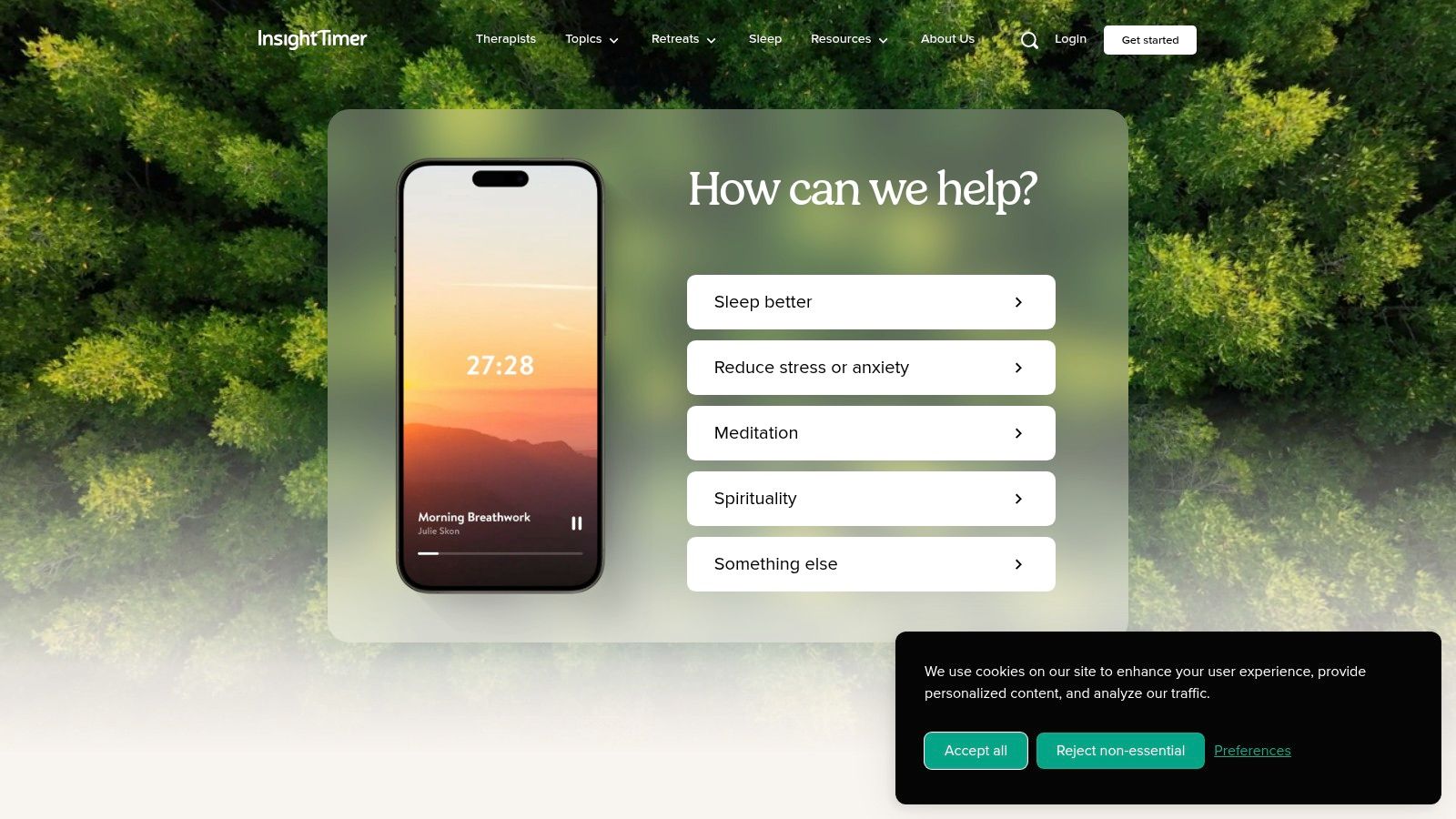
Insight Timer is the pick for people who want range and don't want to hit a paywall immediately. It has a huge free library, a strong community feel, and enough variety that you can explore different teachers, styles, and lengths without feeling boxed into one philosophy.
That flexibility is the appeal, but it's also the catch. A vast catalog can be calming for some people and oddly stressful for others.
Best if you want free exploration
This is one of the most generous options for free meditation content, and that alone makes it worth trying. If your anxiety changes shape from day to day, the variety can help. One day you might want breathwork. Another day you might want a sleep meditation or a talk that helps you feel less alone.
The downside is decision fatigue. If you're already scattered, scrolling through too many choices can become its own friction point. In that case, it helps to save a few favorite tracks early and treat those as your personal home screen.
- What works: Free access, teacher variety, courses, and challenges
- What doesn't: Too many choices for people who freeze when faced with options
- Who it suits: Curious users who like trying different approaches before committing
How to integrate it: Don't browse every day. Build a small saved list for morning calm, daytime reset, and sleep.
5. Wysa
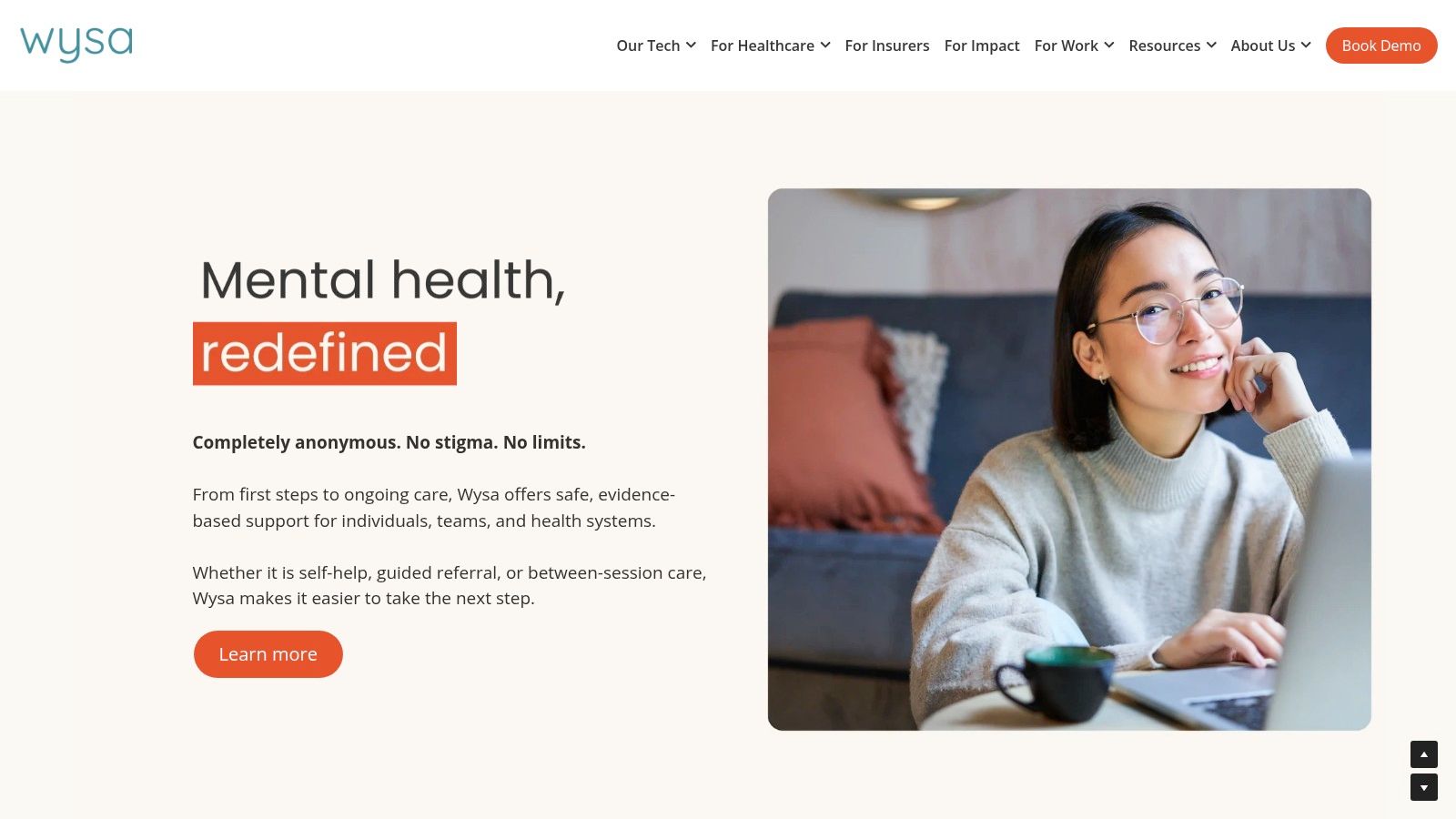
You open your phone because your mind will not stop arguing with itself. A meditation track can help sometimes, but in that moment, you may need to answer the spiral rather than sit beside it. That is where Wysa tends to fit best.
Wysa is the CBT app in this list. It uses AI-guided chat, prompts, and reflective exercises to help you name a thought, test it, and respond with something more grounded. For people who process anxiety through writing or inner dialogue, that format often feels more usable than an audio library.
Best for thought spirals and self-reflection
What Wysa does well is structure. Instead of asking you to figure out what kind of support you need, it gives you a place to start. That can matter on high-anxiety days, when too much choice becomes one more task.
There is a trade-off, though. Chat-based support can feel practical and immediate, but it is still an app, not a therapist, and some users will find the responses a little formulaic over time. The free version is enough to test whether the format clicks. Paid coaching adds more support if you want ongoing accountability.
If your anxiety sounds like an internal argument, Wysa gives you a place to slow that argument down and work with one thought at a time.
It can also help people who are still sorting out what is driving their symptoms. If your focus problems, restlessness, or emotional overload do not fit neatly into one box, this guidance on ADHD and autism assessment can add useful context.
How to integrate it: Use Wysa for a 5-minute written check-in after the same trigger each day, such as after work or before bed. If your mind tends to snowball at night, pair it with these practical tips on how to calm anxious thoughts before they spiral.
6. DARE Panic & Anxiety Relief
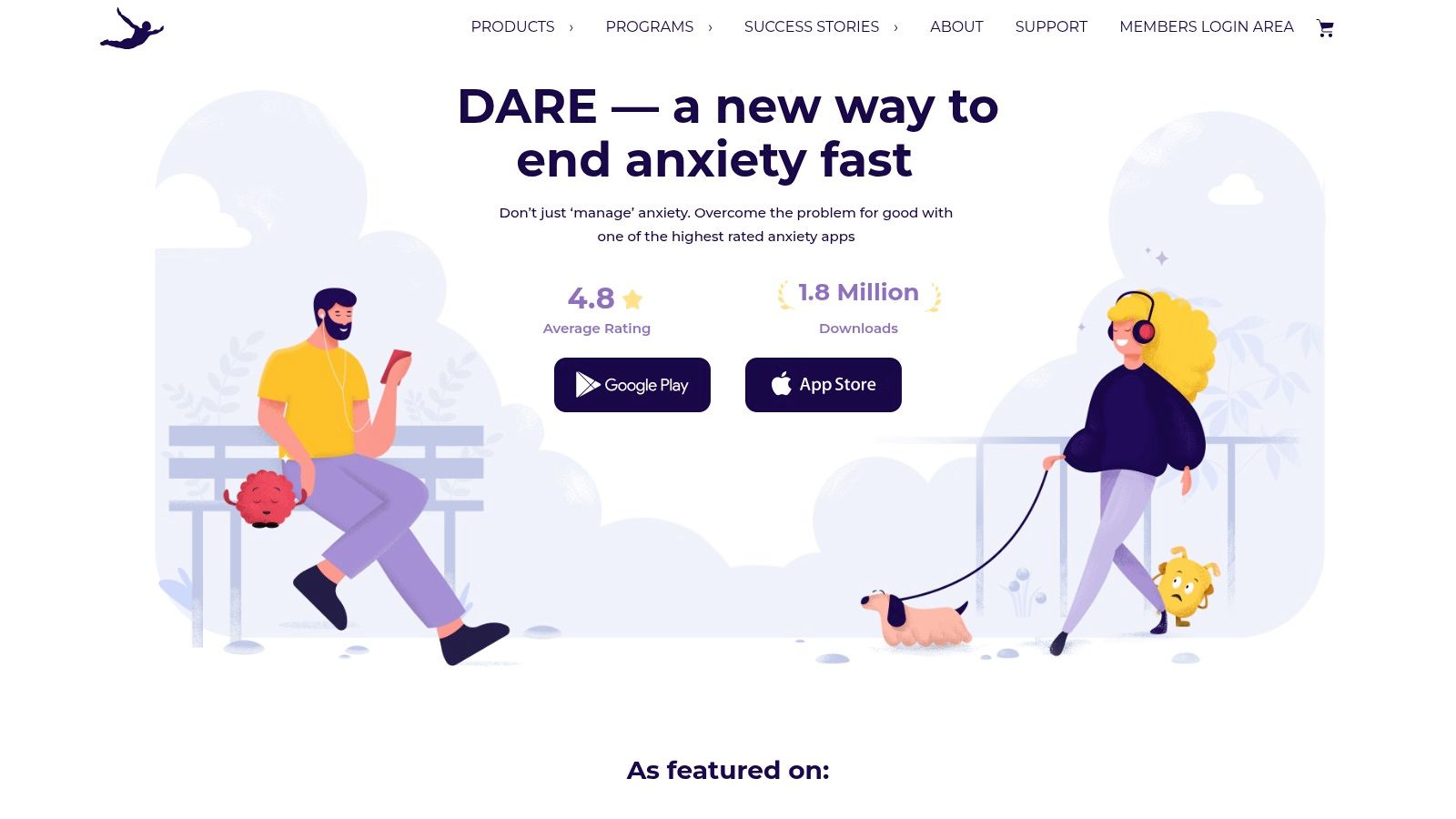
DARE is more focused than most apps on this list. It's not trying to be your meditation studio, sleep library, and journal all at once. It's built for panic, anticipatory anxiety, and the kind of physical fear that can make your world smaller over time.
That narrow focus is a strength. If panic attacks are your main issue, a broad mindfulness app can feel too passive. DARE is more direct.
Best for panic and fear of sensations
The audio-led method helps you change your relationship with anxious sensations instead of only trying to make them disappear. That's an important distinction. Many people get stuck in a cycle of fearing the feeling itself, which keeps the alarm running.
If you need immediate support for spiraling thoughts, this practical guide on how to calm anxious thoughts pairs well with what DARE teaches. And if you're trying to sort out whether what you're dealing with is anxiety or something overlapping, this overview on guidance on ADHD and autism assessment can help frame the conversation more clearly.
- Best at: Panic-specific audio guidance and exposure-friendly thinking
- Less strong at: Broad wellness content beyond anxiety and panic
- Who should skip it: People who mainly want meditation variety or sleep storytelling
How to integrate it: Save your go-to panic audios before you need them. During a spike is the worst time to start searching.
7. Breathwrk
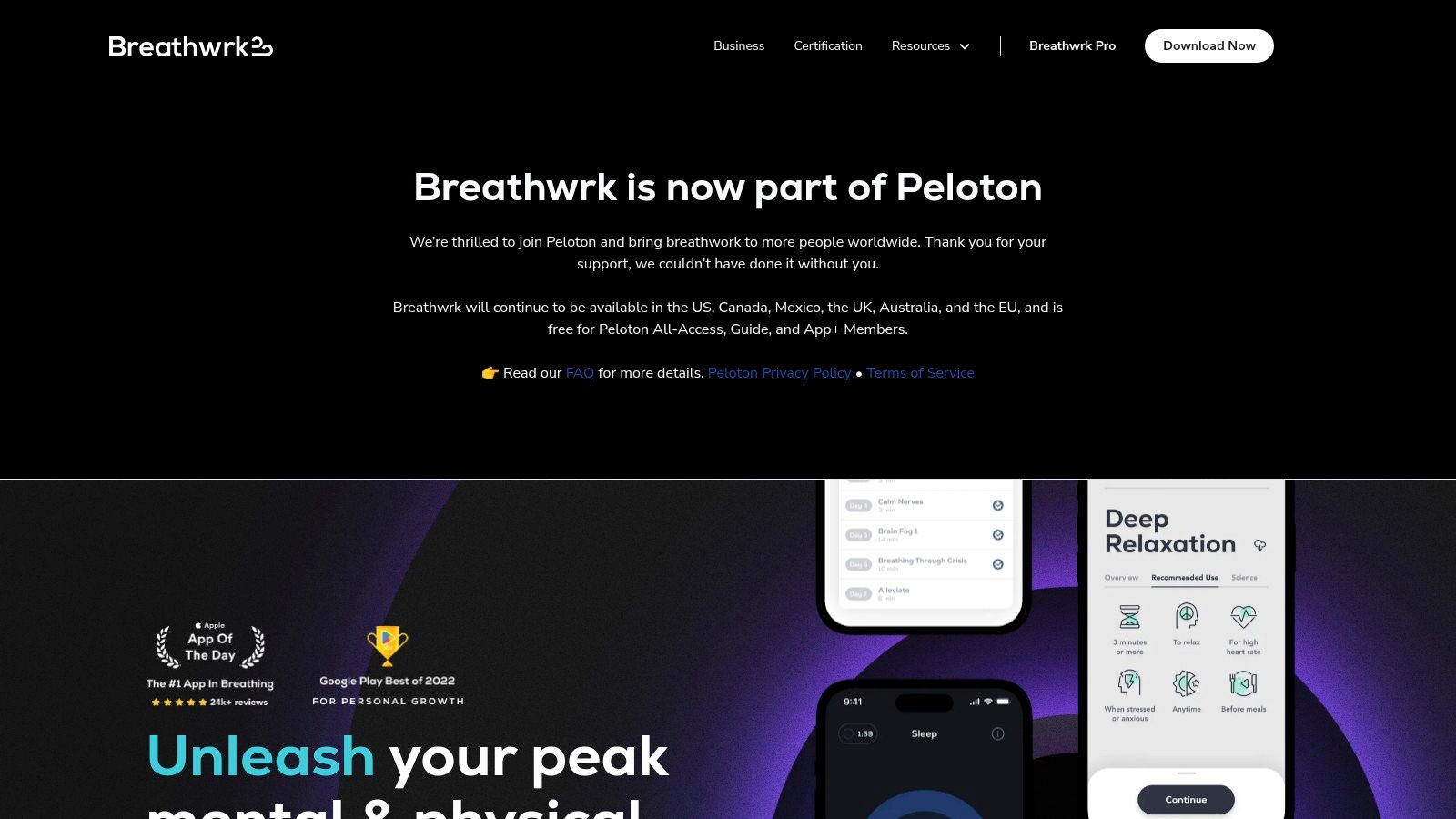
Breathwrk is one of the simplest apps to use when anxiety is physical first and mental second. If your body is buzzing, your chest feels tight, or your thoughts are moving too fast to journal, guided breathing can be the shortest path back to steady.
What I like about Breathwrk is that it doesn't overcomplicate the job. Open the app, choose a goal like calming or sleep, and start. That speed matters during anxious moments.
Best for fast nervous system downshifts
Some apps are for reflection. Breathwrk is for intervention. The short sessions make it practical during work breaks, before meetings, or anytime you need a quick reset without headphones and a dark room.
If you want to understand a slower breathing rhythm that many people find grounding, this explanation of the 6 breaths per minute technique is a helpful companion.
Short breathing drills work best when you practice them before you need them. Anxiety is not the ideal moment to learn a new pattern.
The downside is that breathwork alone won't cover every kind of anxiety. It's great for regulation, but it won't necessarily help you unpack recurring thoughts or build a bigger mindset shift. That makes it a strong supporting app rather than a full replacement for broader tools.
How to integrate it: Use the same one-minute or short calming exercise every day for a week. Repetition makes it easier to access under stress.
8. Balance
Balance is a good middle ground between rigid structure and endless choice. It personalizes sessions through short check-ins, then adjusts the plan based on your goals and responses. For people who want guidance but don't want to sort through a massive library, that's a nice balance in itself.
The app feels intentional from the start. You're not thrown into a content warehouse. You're given a path that adapts.
Best for personalization without clutter
This is one of the more approachable apps to help with anxiety if you want your meditation practice to feel personalized without becoming complicated. The 10-day plans are especially useful for people who stay consistent when there's a small built-in arc.
The trade-off is familiar. If you want the full library, you'll run into a subscription. And if you dislike onboarding questions, even light personalization can feel like extra work. Still, for many people, the customized feel increases follow-through.
- Strongest point: Guided personalization that reduces decision fatigue
- Weakest point: Less spontaneous exploration than a giant free library
- Best user: Someone who wants calm guidance and a clear next session
How to integrate it: Treat the app like a course, not a buffet. Follow one plan through before judging whether it works for you.
9. Ten Percent Happier
Ten Percent Happier is a smart choice for people who want meditation without a lot of wellness fluff. Its tone is practical, grounded, and often appealing to skeptics who want something useful more than something mystical.
That voice makes a difference. Some people bounce off meditation apps because the language feels too airy. This one usually doesn't.
Best for skeptics who still want depth
The courses and teachers are strong, especially if you're looking for practical instruction around stress, anxiety, relationships, and habit building. It's less about instant relief and more about developing a steadier relationship with your mind over time.
That also means it's not always the best app during a live spike of anxiety. It's better as a regular practice than an emergency tool. If you want something for panic-button moments, Rootd or DARE will likely feel more directly useful.
How to integrate it: Use it when you have a little more space and attention. Morning practice or a weekend reset is usually a better fit than an anxious work interruption.
10. Rootd Panic Attacks and Anxiety Relief
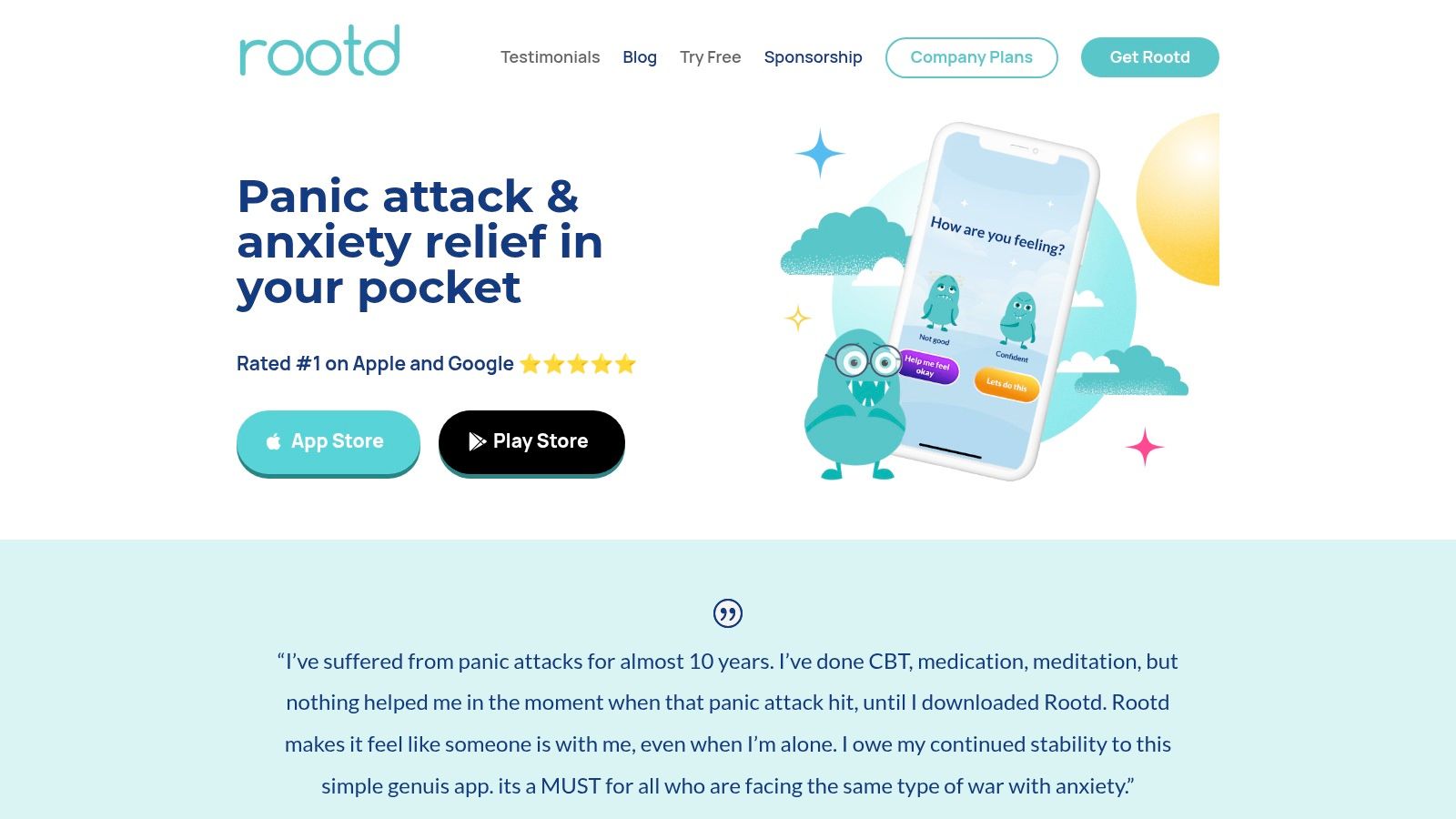
You are shaky, your chest is tight, and you do not want a lesson library. You want one clear action. Rootd is designed for that moment.
Its standout feature is the panic button, which guides you through a live anxiety spike without forcing extra choices first. For people who deal with panic attacks, that design matters. In practice, fewer taps and less decision-making can make the app easier to use when your brain is already overloaded.
Rootd also includes breathing exercises, educational content, and a journal, so it can support both prevention and recovery. Still, its clearest role in this list is Panic Relief. It is the app I would point to for someone who wants immediate reassurance before they want reflection.
Best for panic-specific support
Some anxiety apps are strongest as a daily habit. Rootd is strongest in the middle of a hard moment. That is a meaningful distinction, and it helps explain why the app resonates with users who need fast grounding rather than a broader mindfulness program.
Analysts at Grand View Research reported that the global mental health apps market reached USD 7.48 billion in 2024 and is projected to reach USD 17.52 billion by 2030, with depression and anxiety management holding the largest application share at 28.7% in 2024. Rootd fits that demand well because its purpose is obvious from the first screen.
How to integrate it: Put Rootd on your first home screen and open it once when you are calm, not just when panic starts. A quick trial run helps you trust the flow before you need it.
Top 10 Anxiety-Relief Apps: Feature Comparison
| Product | Core features ✨ | Experience / Quality ★ | Price & Value 💰 | Target audience 👥 | Unique selling points 🏆 |
|---|---|---|---|---|---|
| I Become 🏆 | ✨ Personalized affirmations, Lock Screen widgets, read/speak/listen/write modes, streaks | ★★★★☆ Elegant visuals; gentle, timely nudges | 💰 Free + optional premium libraries & themes | 👥 Busy professionals, students, habit builders | 🏆 ✨ Tailored Lock Screen delivery; simple daily ritual; beautiful themes |
| Calm | ✨ Guided meditations, Daily Calm, Sleep Stories, breathing exercises | ★★★★★ Polished production; extensive content | 💰 Subscription-heavy; clear paid/free split | 👥 Users needing sleep support & variety | ✨ Industry-leading sleep content & soundscapes |
| Headspace | ✨ Structured courses, bite-size sessions, progressive learning | ★★★★☆ Highly structured; beginner-friendly | 💰 Subscription; student & family discounts | 👥 Beginners who prefer step-by-step programs | ✨ Thematic learning paths & strong onboarding |
| Insight Timer | ✨ Huge free library, talks, courses, community challenges | ★★★☆☆ Massive catalog; variable quality | 💰 Mostly free; MemberPlus for offline/premium | 👥 Explorers wanting vast no-cost content | ✨ Exceptional free access; large teacher community |
| Wysa | ✨ 24/7 AI chat (CBT/DBT), journaling, optional human coaches | ★★★★☆ Privacy-focused; clinically informed | 💰 Free AI tools; paid coaching tiers | 👥 Users who want CBT-style self-help & privacy | ✨ AI-guided CBT + research-backed tools |
| DARE: Panic & Anxiety Relief | ✨ Short audio trainings for panic, skills toolkit, community | ★★★★☆ Focused, actionable for acute panic | 💰 Generally lower annual price than many meditation apps | 👥 People needing in‑the‑moment panic relief | ✨ Targeted DARE method audios for spikes |
| Breathwrk | ✨ One‑minute breath techniques, themed sessions, Peloton integration | ★★★★☆ Fast, practical; easy to use during spikes | 💰 Some free; best value with Peloton membership | 👥 Users who rely on breathwork for quick calm | ✨ Rapid down‑regulation techniques; Peloton access |
| Balance: Meditation & Sleep | ✨ Dynamic plans from daily check‑ins, 10‑day programs, sleep content | ★★★★☆ Personalized, award‑winning UX | 💰 Subscription for full library; store-dependent pricing | 👥 Users wanting guided personalization & simplicity | ✨ Adaptive daily check‑in personalization |
| Ten Percent Happier | ✨ Practical courses, daily videos, teacher-led practices | ★★★★☆ No‑nonsense instruction for skeptics | 💰 Annual membership; org partnerships may offer access | 👥 Skeptical learners who prefer pragmatic tools | ✨ Down‑to‑earth teaching from respected instructors |
| Rootd: Panic Attacks & Anxiety Relief | ✨ Panic button flow, guided breathing, lessons & journaling | ★★★★☆ Designed for immediate support & learning | 💰 Free tier limited; subscription for full access | 👥 Those who need in‑the‑moment panic coaching | ✨ Instant "Rootr" panic flow + SOS features |
Your Journey to Calm Starts With a Single Step
It's 9:47 p.m., your chest is tight, and the last thing you need is another app that feels like homework. The best anxiety app is usually the one that matches the moment you need help. Calm or Headspace may fit a bedtime routine. DARE or Rootd often make more sense during a spike. If anxiety shows up in your body first, Breathwrk gives you a fast, practical reset.
That is why function matters more than feature count. Meditation apps help with steady practice. CBT-based tools can help you question anxious thought patterns. Panic-relief apps are built for acute moments. Affirmation apps support the quieter, ongoing work of changing your inner dialogue.
Many people do better with a small stack than a single all-purpose app. A simple setup works well: one app for daily support, one for high-stress moments. Analysts in a Frontiers study on user engagement with anxiety apps found that users stayed more engaged with apps that offered varied content, customization, and thoughtful design. That tracks with what I see in practice. If an app feels clunky or generic, people stop opening it, even if the content is solid.
Start smaller than you think.
Downloading six apps at once usually creates friction, not relief. Pick one primary tool based on your main pattern, bedtime spirals, daytime overthinking, panic, or physical tension. Then add one support app only if it fills a clear gap.
If you want a gentle starting point, I'd begin with I Become. It fills a different role from meditation apps, and that distinction matters. Instead of asking you to step out of your day for a full session every time, it brings affirmation-based self-care into the day you already have. The widgets, prompts, and practice modes make it easier to build repetition, and repetition is what turns a comforting idea into a believable one.
A practical way to integrate it is simple. Use I Become in the morning to set the tone, then return to one short prompt in the afternoon when stress starts to climb. Pair that with a panic or breathing app only if you need in-the-moment regulation.
You do not need a perfect routine. You need one you will repeat. If you want anxiety support that feels warm, simple, and easy to keep up with, I Become is a strong place to start. It helps you build a daily affirmation practice through personalized prompts, Lock Screen widgets, and flexible modes like Read, Speak, Listen, and Write, so support shows up in the moments you need it.
Found this helpful? Share it with someone who might benefit.