
8 Powerful Daily Affirmations for Anxiety
Find calm with our list of daily affirmations for anxiety. Learn how to reframe your thoughts, ground yourself, and build lasting resilience. Start today.
It’s 3 AM and your mind is racing. Or maybe it’s the second before you hit send on an important email, and suddenly your chest tightens, your jaw locks, and your thoughts sprint ahead of you. Anxiety has a way of showing up uninvited, then acting as if it owns the room.
Daily affirmations for anxiety can help interrupt that spiral. Not because they magically erase stress, and not because repeating a sentence makes life easy. They help because the right words, repeated consistently and paired with the right action, can change how you relate to anxious thoughts. A 2025 meta-analysis of 67 studies involving over 17,700 participants found statistically significant, modest improvements in self-perception, well-being, and anxiety reduction from self-affirmation interventions, with benefits on anxiety holding up over time in follow-ups, according to Psychology Today’s summary of the meta-analysis.
That matters if your anxiety tends to sound like urgency, self-criticism, or worst-case forecasting. The phrases below aren’t meant to fight your mind. They’re meant to steady it.
If you’ve tried affirmations before and they felt cheesy or fake, that usually means the wording was too far from what you could honestly hold. Good affirmations feel grounding, believable, and usable in real life. They meet you where you are, then gently pull you somewhere calmer.
1. I am safe in this moment
This is one of the most effective daily affirmations for anxiety because it brings your mind out of imagined danger and back to present reality. Anxiety often drags attention into the future. This phrase does the opposite. It asks one simple question: right now, in this exact moment, am I safe?
That distinction matters. Your body may feel alarmed even when no immediate threat is present. Repeating “I am safe in this moment” can help you separate a stress response from actual danger.
How to use it when panic rises
Try this during a work presentation, before opening your inbox, or on a crowded commute. Don’t just repeat the words mechanically. Anchor them to something physical.
- Feel your feet: Press both feet into the floor and notice the pressure.
- Name what’s real: Mentally identify a few things you can see, hear, or touch.
- Say it slowly: In I Become’s Speak mode, saying the phrase out loud can make it feel more embodied than just thinking it.
Practical rule: Practice this affirmation when you’re already calm, not only when you’re spiraling. That’s how it becomes easier to access under stress.
A short practice can still be meaningful. A 2024 Berkeley study of anxiety-prone college students found that 20 seconds of daily self-affirmations over one month improved mental health outcomes, with the intervention group showing gains in self-compassion and emotional well-being and lower stress, as reported by Fox News’ coverage of the Berkeley study.
Make it part of your day
Use this one before checking email in the morning. Put it on your Lock Screen through I Become so it appears during the part of the day when your nervous system usually ramps up. If commuting makes you tense, set a reminder that arrives before the stress peak, not after it.
A grounded affirmation works best when it feels like a cue to return to your body, not an argument with your mind.
2. This anxiety does not define me
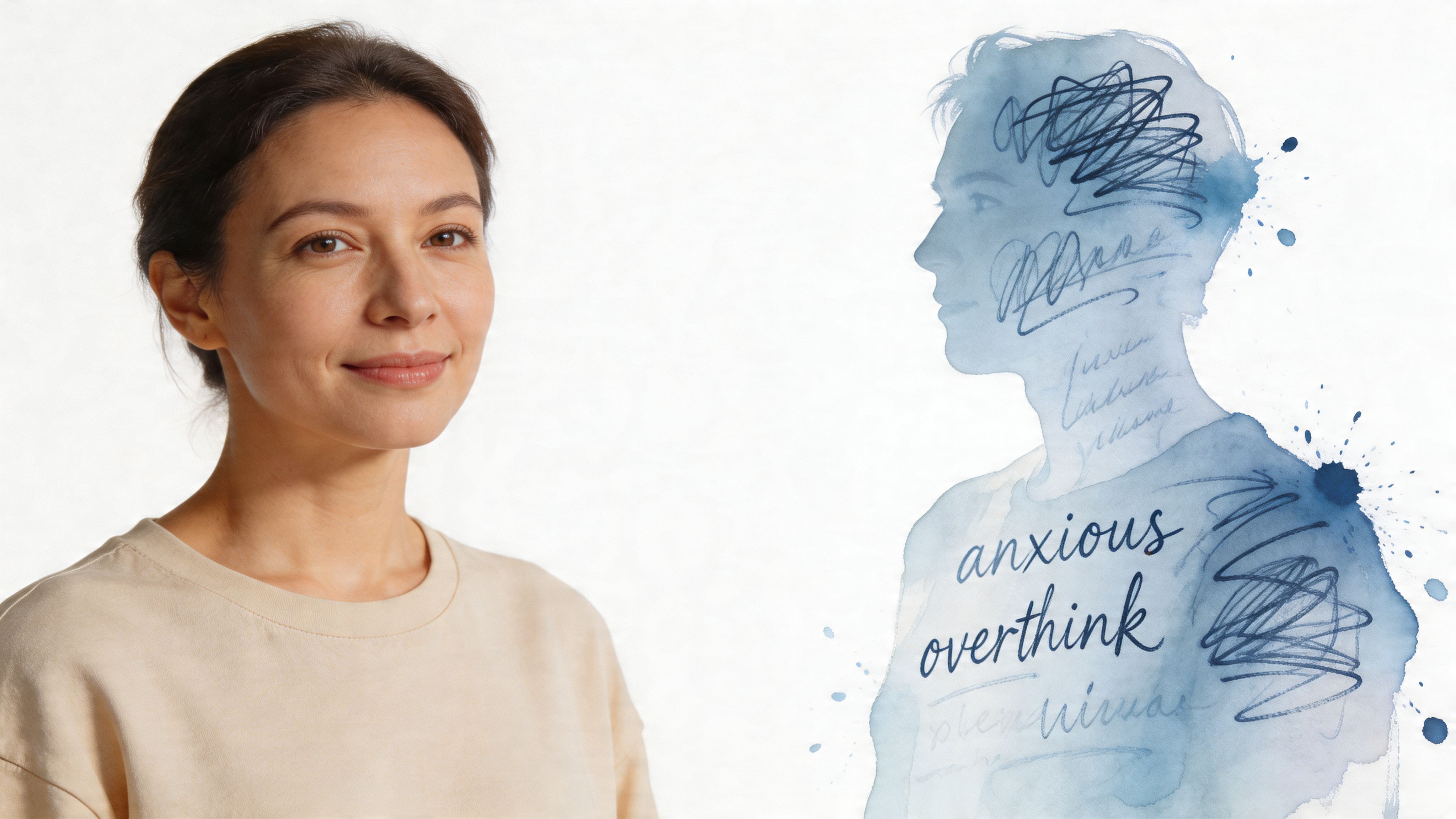
Anxiety loves identity language. It says, “I’m a mess,” “I’m bad at this,” “I’m just an anxious person.” This affirmation breaks that pattern. It creates space between you and what you’re feeling.
That space is powerful. When you stop treating anxiety as your identity, you can respond to it with more skill and less shame. You’re no longer saying, “This is who I am.” You’re saying, “This is something I’m experiencing.”
Use it to separate symptoms from self-worth
A professional with social anxiety might say, “I’m having anxious thoughts about this presentation, but I’m still a capable communicator.” A student can use it before an exam. A parent can use it in the middle of a hard week and remember that anxiety does not erase their care, competence, or love.
Writing helps. Open I Become’s Write mode and finish these prompts:
- What anxiety says about me: Write the harsh story in one sentence.
- What’s true: Replace identity labels with observable facts.
- Who I am underneath anxiety: Name values like kindness, persistence, loyalty, or creativity.
If negative thinking has become automatic, it helps to learn how those loops form. The article on changing negative thought patterns is a useful companion to this affirmation.
Anxiety is an experience. It isn’t a personality.
What works and what doesn’t
What works is a believable version of the statement. “This anxiety does not define me” is strong, but if that feels too sharp on a hard day, soften it to “I am more than what I’m feeling right now.”
What doesn’t work is using the phrase to invalidate yourself. You don’t need to pretend anxiety isn’t affecting you. The point is to remove its authority over your identity, not deny that it’s present.
3. I choose to focus on what I can control
Some anxiety comes from uncertainty. Some comes from trying to manage things no human can fully manage. Other people’s opinions. Outcomes. Timing. The future. This affirmation brings your energy back to the few things that are actually yours.
It’s practical, not poetic. That’s why it helps.
Turn worry into direction
If you’re job hunting, you can’t control the market or when someone replies. You can control preparation, follow-up, and how you care for yourself between interviews. If you’re worried about your health, you can’t control every possible outcome. You can control sleep, movement, appointments, and what you do with today.
Use I Become’s Write mode for a two-column reset:
- In my control: preparation, boundaries, effort, rest, asking for help
- Outside my control: instant certainty, other people’s reactions, perfect outcomes, every future scenario
That simple sort often quiets rumination because it gives the mind a job. Anxiety hates a blank space. It tends to soften when action replaces spinning.
A helpful way to repeat it
Say the affirmation before a planning session, not after you’ve already spent an hour spiraling. Pair it with one concrete step. “I choose to focus on what I can control. Today I will send the email, study for one hour, or take the walk.”
Market behavior around affirmations suggests many people are already trying to build this kind of daily mental routine. A survey of 2,000 Americans found that 25% use daily positive affirmations, according to this report on affirmation habits among Americans. The gap usually isn’t desire. It’s consistency.
That’s where reminders help. A well-timed notification can interrupt worry before it gathers momentum.
4. My body knows how to relax
For many people, anxiety starts in the body before it becomes a thought. Tight shoulders. Fast breathing. A clenched stomach. Restlessness that feels almost electrical. This affirmation works best when anxiety is physical because it reminds you that your body isn’t broken. It still knows how to settle.
Here’s a visual cue for that softer state:

Bring the phrase into your muscles
Use this one during morning stretching, while lying down before sleep, or before a stressful meeting. Place one hand on your chest and one on your belly. Then repeat, “My body knows how to relax,” while lengthening your exhale.
This style of self-affirmation overlaps nicely with self-compassion practices. In a Berkeley randomized trial, undergraduates practicing daily self-compassion affirmations showed stress reductions and gains in emotional well-being and self-compassion, as summarized in this coverage of the Berkeley trial and affirmation behavior.
Pair it with soothing input
I Become’s Listen mode is especially useful here because body-based anxiety often responds better to sound and pacing than to silent repetition. Let the phrase play while you stretch, breathe, or do a body scan.
A short guided practice can help this sink in:
Let the body lead for a minute. Your mind doesn’t have to solve everything before you can start calming down.
What doesn’t help is forcing relaxation. If you say this affirmation while internally demanding instant calm, your body often resists more. Use it as an invitation, not a command.
5. I have overcome challenges before, I can do this
Anxiety shortens memory. It makes you forget every hard thing you’ve already survived. This affirmation restores context. It reminds you that fear is speaking from the present, but strength has a history.
That history is evidence. Evidence matters when the anxious mind starts insisting you can’t cope.
Build a personal evidence bank
Make this affirmation specific. “I have overcome challenges before, I can do this” becomes more convincing when you attach real examples to it. A student might remember a previous exam season. Someone returning to work after a difficult period might recall another transition they managed better than they expected. A parent might look back at other seasons that once felt impossible and are now part of their story.
Open I Become’s Write mode and create a short resilience list:
- A challenge I got through: Name it plainly.
- What helped me then: skills, support, rest, persistence, faith
- What that proves now: I can adapt, I can ask for help, I can keep going while afraid
If you want to deepen this practice, the guide on building mental resilience fits naturally with this affirmation.
Make the words believable
If “I can do this” feels too broad, narrow it. Try, “I can do the next part of this.” That often lands better with anxious minds because it feels honest.
A 2023 APA press release described a meta-analysis showing self-affirmation interventions reduced anxiety by an average of 0.28 standard deviations, with effects persisting beyond immediate practice, according to the APA release on self-affirmations and well-being. That kind of result fits what many people notice in practice. Repetition doesn’t erase difficulty, but it can make difficulty feel more manageable.
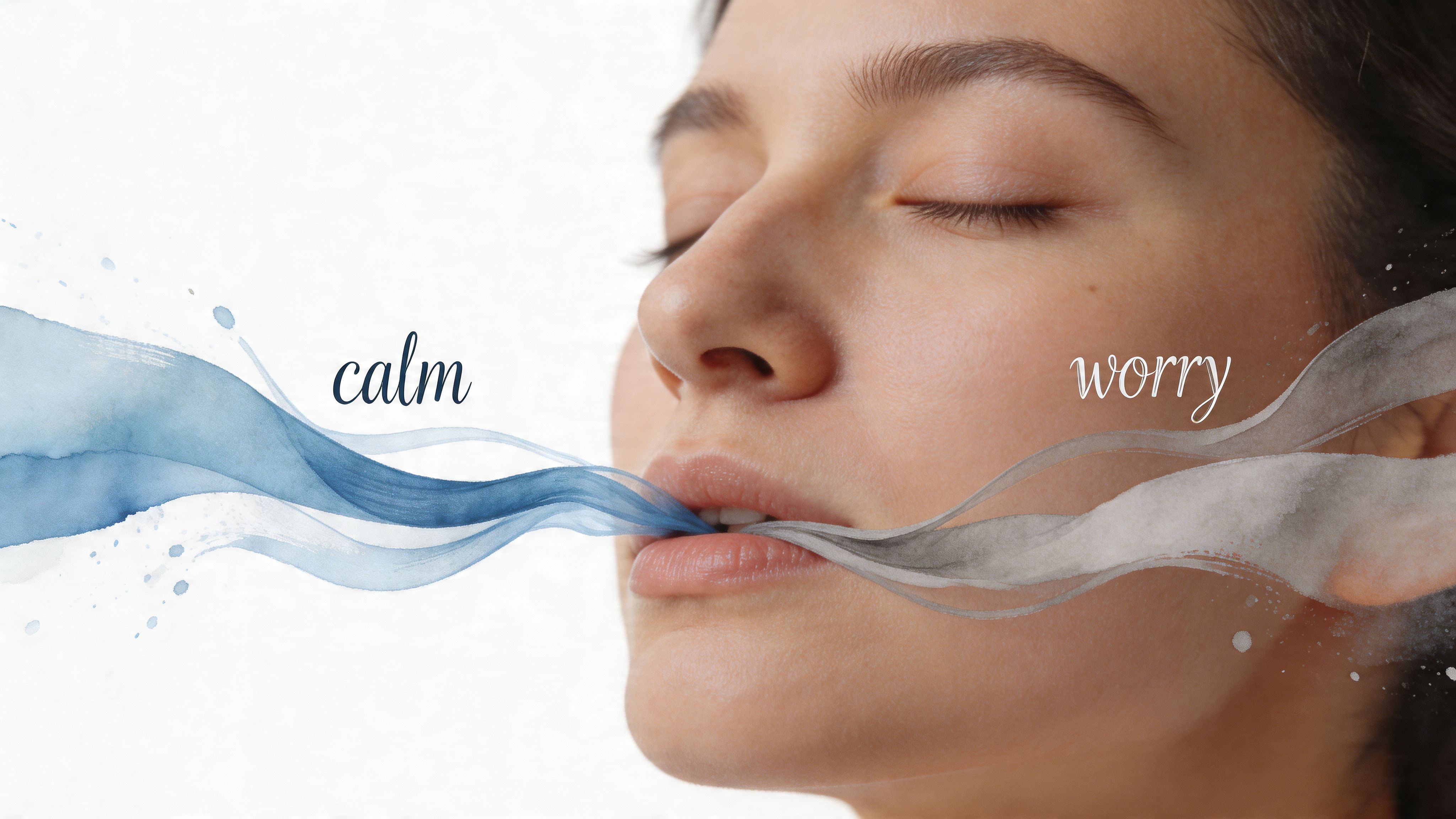
6. I breathe in calm, I breathe out worry
This is one of the easiest daily affirmations for anxiety to use in the moment because it gives your brain and body something to do at the same time. The words ride on the breath. That matters when your thoughts are too fast for logic alone.
Use the inhale for the first half of the phrase. Use the exhale for the second.
A rhythm that helps
Try it in traffic, before speaking in public, or in the middle of a nighttime spiral. Breathe in gently while thinking, “I breathe in calm.” Then exhale a little longer while thinking, “I breathe out worry.”
If you like structure, use a paced pattern such as a slow inhale, a brief pause, and a longer exhale. Don’t get rigid about counts. The goal is steadiness, not perfection.
For a deeper breathing-focused practice, the collection of deep breathing affirmations offers phrases you can rotate through in I Become.
Why this one often sticks
Breath-based affirmations are portable. You can do them without anyone noticing. They also reduce the mental load because you aren’t trying to think your way out of anxiety. You’re giving your nervous system a cue.
“Slow exhale first. The mind usually follows the body more willingly than the other way around.”
What doesn’t work is turning this into a performance. If you breathe too aggressively or try to force a dramatic release, you may feel more activated. Keep it gentle and repeatable.
7. I am stronger than my anxiety
This affirmation is about agency, not denial. It doesn’t say anxiety is small or easy. It says your capacity is bigger than the wave you’re in.
That distinction makes it useful before challenging situations. A person with social anxiety can say it before speaking in a group. Someone working through fear of open spaces can say it before a small, planned exposure. A professional can use it before a presentation when nerves are high but avoidance would cost more than discomfort.
Ground strength in proof
This phrase works best when you connect it to lived evidence. Strength is not a mood. It’s something you demonstrate through action.
Use a short prompt in I Become after each tough moment: “What did I do today even though I felt anxious?” Your answer might be simple. I went to class. I made the call. I stayed in the meeting. I drove there anyway.
That’s how confidence grows. Not from waiting to feel fearless, but from watching yourself function while fear is present.
Use the app to reinforce momentum
I Become’s streak tracking can support this affirmation because consistency creates its own proof. Every day you return to the practice, you build a quieter kind of confidence. Not “I never feel anxious.” More like “I know how to meet anxiety now.”
One caution matters here. The available evidence suggests affirmations need to feel personal and realistic. Some reporting on self-affirmation research notes that poorly matched affirmations can backfire for people with low self-esteem, especially when the statement feels too far from what they can personally relate to. So if “I am stronger than my anxiety” feels too intense, scale it to “I am learning to be stronger than this moment.”
That still counts.
8. This feeling is temporary and will pass
Anxiety often tells a lie about time. It says, “This will last forever,” “I’ll always feel like this,” or “If this started, it won’t stop.” This affirmation interrupts that fear. It reminds you that emotional states move.
For someone in a panic spike, that reminder can be a lifeline. For someone awake in the middle of the night, it can stop the extra layer of fear that comes from believing the feeling itself is permanent.
Use time as a calming ally
If your anxiety rises sharply, set a simple timer and repeat, “This feeling is temporary and will pass.” Don’t use the clock to monitor yourself harshly. Use it to witness change. Many people notice the intensity shifts when they stop treating the sensation as endless.
This works well with grounding. Hold something cool. Name objects in the room. Sip water. Walk slowly. Let time and attention do some of the work.
A report highlighting an underserved angle in affirmation content argues that people benefit when they track progress rather than just repeat phrases, as discussed in Rick Hanson’s page on affirmations for anxiety. That’s a useful idea here. Keep notes after anxious episodes so you can see that they do, in fact, pass.
A better way to say it on hard days
If “will pass” feels too absolute in the moment, try “This feeling will change.” Sometimes that lands better because it asks for less trust while still pointing toward impermanence.
This is also a good fit for I Become’s Listen mode. Hearing the phrase at timed intervals can feel steadier than trying to generate it alone while distressed. During calmer moments, revisit old entries or memories of episodes that resolved. You’re teaching your brain a gentler truth about time.
8-Point Daily Anxiety Affirmations Comparison
| Affirmation | 🔄 Complexity (implementation) | ⚡ Resource / Effort required | ⭐ Expected effectiveness (quality) | 📊 Ideal use cases | 💡 Key tips |
|---|---|---|---|---|---|
| I am safe in this moment | Low, simple present-moment grounding | Minimal, usable anywhere with brief practice | ⭐⭐⭐⭐, strong for immediate calming | Panic attacks, acute anxiety, commutes, presentations | Pair with 5-4-3-2-1 grounding; practice when calm; use 'Speak' mode |
| This anxiety does not define me | Moderate, requires cognitive defusion practice | Low–Moderate, journaling and repetition help internalize | ⭐⭐⭐⭐, effective long-term for identity separation | Chronic anxiety, shame reduction, therapy settings | Use 'Write' mode to personalize; morning framing; reinforce with streaks |
| I choose to focus on what I can control | Moderate, needs discernment of controllables | Moderate, planning and action lists improve impact | ⭐⭐⭐⭐, reduces rumination and increases agency | Professional/academic stress, decision-making, preparation | Create controllable vs uncontrollable lists; combine with action plans |
| My body knows how to relax | Low–Moderate, somatic focus plus practice | Moderate, guided breathing/body scans amplify benefit | ⭐⭐⭐⭐, especially effective for physical anxiety symptoms | Panic disorder, performance prep, chronic tension | Pair with body scan or progressive muscle relaxation; use 'Listen' mode |
| I have overcome challenges before, I can do this | Low, recall-based resilience technique | Low–Moderate, requires reflection and evidence collection | ⭐⭐⭐⭐, strong for boosting self-efficacy | Resilience-building, performance anxiety, return-to-work situations | Build an "evidence bank" in 'Write' mode; make affirmation specific |
| I breathe in calm, I breathe out worry | Low, combines breathing with short phrase | Low, immediate use; practice to sync breath and words | ⭐⭐⭐⭐, immediate physiological + cognitive effects | Acute anxiety, panic, pre-performance, middle-of-night spirals | Sync phrase with breath (e.g., 4-7-8); use 'Speak'/'Listen' modes |
| I am stronger than my anxiety | Low–Moderate, assertive reframing needs grounding | Low, best with corroborating evidence and practice | ⭐⭐⭐, motivating for confidence-building | Gradual exposure, performance settings, long-term resilience work | Pair with past-success evidence and streak tracking; vocalize with conviction |
| This feeling is temporary and will pass | Low, time-oriented cognitive reframe | Low, may use timers or brief reminders | ⭐⭐⭐⭐, highly effective in acute episodes | Panic attacks, short-lived anxiety spikes, 3am rumination | Use timers to observe natural decay; combine with grounding techniques |
Building a Lasting Habit of Inner Calm
These affirmations matter most when they become part of a rhythm, not a rescue tool you remember only after anxiety has fully taken over. Consistency beats intensity here. You don’t need a long ritual. You need a repeatable one.
Start with one affirmation, not all eight. Choose the line that makes your shoulders drop a little when you read it. If you wake up tense, “I am safe in this moment” might be the right first anchor. If your anxiety is tied to self-judgment, start with “This anxiety does not define me.” If your mind runs toward future outcomes, use “I choose to focus on what I can control.”
Then attach the affirmation to a moment that already exists. Right after brushing your teeth. Before opening email. During your commute. While waiting for coffee to brew. The easier it is to remember, the more likely it is to become real.
A lot of people want their affirmation practice to stay digital because it’s convenient, but pure convenience can also make it easy to ignore. Reporting on affirmation habits has noted that digital-only users often forget goals, while physical reminders such as sticky notes and printed prompts stay more visible, according to Psychology Today’s discussion of self-affirmation research and adherence patterns. The best setup is often a mix. A phone reminder for timing, plus a visible phrase somewhere you naturally look.
That’s where I Become is especially useful. You can store the affirmations that fit your season, then practice them in the way that feels most natural to you. Read them when you want simplicity. Speak them when you want more emotional conviction. Listen when your body needs soothing. Write when you need to make the phrase personal and believable. The Lock Screen widgets and reminders help the words meet you in real moments, not just in good intentions. And the streak tracker gives you a gentle sense of momentum, which can be reassuring when progress feels subtle.
Keep your expectations kind. Affirmations aren’t a test, and they aren’t a substitute for deeper support if your anxiety feels severe or persistent. They are a steadying practice. A small daily way to teach your mind and body a different pattern.
Choose one phrase today. Put it where you’ll see it. Use it for a week before judging whether it “worked.” Calm usually grows that way. Gradually, and with more repetition than drama.
Ready to begin? Download I Become from the App Store and start building your personalized practice.
If you want daily affirmations for anxiety to become something you use, not just something you save and forget, try I Become. The app makes it easy to practice through Read, Speak, Listen, and Write modes, with Lock Screen reminders and widgets that bring the right words to you at the right time.
Found this helpful? Share it with someone who might benefit.