
How to Organize My Life: A Compassionate Guide to Inner Calm
Feeling overwhelmed? Learn how to organize my life with a gentle guide to clarifying values, setting goals, and building sustainable routines that work for you.
Feeling like you're trying to get your life organized isn’t about buying the perfect planner or creating color-coded spreadsheets. It's a deeply compassionate act of self-care. It's about gently clearing away the mental and physical clutter so you have the space to breathe, think, and just be. This guide is your path to finding that clarity, starting from the inside out.
Your Gentle Start to an Organized Life

That feeling of juggling everything but catching nothing? It's more common than you think. If you've ever felt overwhelmed by the pressure to "get organized," you know that rigid rules and complex productivity systems often miss the mark. They promise control but end up delivering another layer of stress.
The truth is, lasting organization doesn't start with a new app—it starts with your mindset. It's about trading self-criticism for self-compassion and realizing that a calm inner world is the only real foundation for a tidy outer world.
The real journey to an organized life isn't about becoming a productivity machine. It's about creating a life that feels authentic, peaceful, and aligned with what truly matters to you.
Why Traditional Systems Fail Us
So many organizational methods completely overlook the human element. They assume we operate like computers, ready to execute tasks perfectly without ever accounting for our emotions, fluctuating energy levels, or the simple need for rest. When these systems inevitably fail, we blame ourselves, feeding a frustrating cycle.
Here’s why we need a new approach:
- They Ignore Your Inner State: True organization gets to the root of the chaos, which so often stems from anxious thoughts and a lack of inner clarity. If your mind feels cluttered, your desk, inbox, and schedule will almost certainly follow. To dig deeper into this, you might find our guide on how to calm anxious thoughts really helpful.
- They Promote Rigidity Over Flexibility: Life is wonderfully unpredictable. A system that shatters the moment an unexpected meeting pops up or you're just feeling low on energy isn't a system at all—it’s a trap.
- They Focus on "Doing" Over "Being": An endless to-do list can leave you feeling perpetually busy but deeply unfulfilled. A more compassionate approach prioritizes activities that actually energize you and align with your values, not just tasks that need to be checked off.
This guide will walk you through a gentler, more mindful way to bring order to your life. We'll start by tuning into your inner world before we even think about building practical, sustainable systems for your outer world. Imagine waking up with a sense of purpose instead of panic.
As you start this journey, pay close attention to how you speak to yourself. The I Become app can be a wonderful companion here, helping you gently rewire your thoughts with daily affirmations. It’s a simple way to start building a positive internal foundation from day one. You can download I Become from the App Store to start cultivating the calm, focused mindset you deserve.
Find Your Why Before You Plan Your What
Before you buy a single new planner or clear out a closet, let’s do something radical. Let's pause.
I know the temptation is to jump straight into action, but the secret to an organized life that actually sticks has very little to do with color-coded files or fancy apps. It’s about building a life that feels like it’s truly yours, from the inside out. This whole process starts not with a to-do list, but with a little self-discovery.
We need to figure out your “why.” Think of this as finding your personal North Star. Once you know what truly matters to you—your core values—every other decision becomes infinitely simpler. You'll know what to keep, what to let go of, and what deserves your precious time and energy.
Uncovering What Truly Matters
True organization is simply a tool to create more space for what brings you joy, peace, and a sense of purpose. If you don't know what those things are, you’re just shuffling clutter around. So, let’s get quiet and ask some better questions.
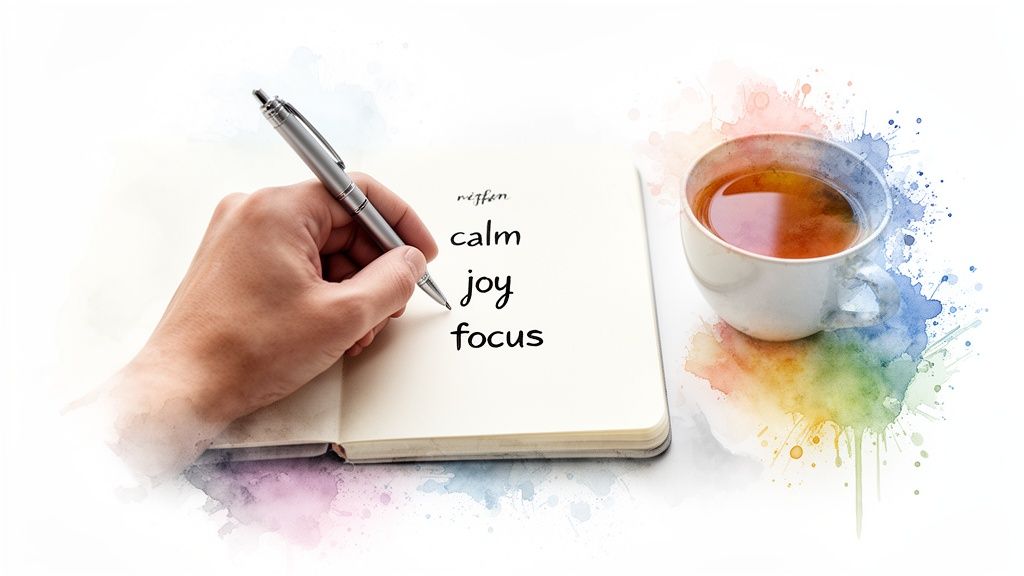
Grab a notebook and find a spot where you can think without interruption. There are no right or wrong answers here—just your honest truth. It’s time to listen to that quiet voice inside you that already knows what you need.
Ponder some of these prompts:
- The Feeling Test: What three feelings do you want to experience most days? Think words like calm, creative, or connected.
- Your Energy Account: What activities consistently drain you? And what makes you feel alive and recharged? Be brutally honest.
- The Gift of a Free Hour: If you suddenly had a totally free hour, with no obligations, what would you do just for you?
- A Happy Memory: Think back to a time you felt completely content and at peace. What were you doing? Who was with you?
Just write. Don’t edit or judge what comes up. You might be surprised by the patterns you see. Maybe you’ll notice a deep need for more creativity, quiet moments in nature, or meaningful conversations with the people you love. These aren't just preferences; these are your values talking.
Organization isn’t about control; it’s about alignment. It’s the art of curating your life to reflect who you are and what you hold dear. This is where the real magic happens.
This isn't about setting some massive, intimidating goal. It's about spotting the small, essential ingredients of a life that feels good. The goal might not be "run a marathon" but rather "feel strong in my body." The first is a huge undertaking, but the second is a value that can guide a thousand small, positive choices every day.
Turning Your Values into Action
Once you have a clearer picture of your core values—words like "peace," "connection," or "creativity"—you can start using them as a filter. Organization is no longer a chore; it becomes the bridge between the life you have and the life you really want.
So, how do you make this real?
Start by turning your values into simple, guiding statements. If you value peace, your mantra could be, "I choose to create pockets of calm in my day." This isn’t just a nice thought; it’s a directive for how you plan your time and space.
Now, look at your home. If "creativity" is a key value, how can your environment support that? Maybe it’s as simple as clearing a small corner for your painting supplies so they’re always ready, or just keeping a journal on your nightstand.
And what about your schedule? If "connection" is a priority, your weekly plan should reflect that. This is when organization becomes about intentionally scheduling a coffee date with a friend or protecting your time for a family dinner—not just cramming in more tasks.
This foundational work is everything. It makes sure you aren't just tidying up your life, but that you're actively making room for more joy.
To keep these values front and center, you can use a simple tool to reinforce them daily. An app like I Become is perfect for this. You can create your own affirmations based on your newfound "why," like "My home is a peaceful sanctuary" or "I make time for what nourishes my soul." Seeing these on your phone’s widgets transforms this big idea into a small, daily practice. It's a powerful way to embed your values into the actual rhythm of your day.
Now that you have a clear sense of your values, it's time to bring them to life. This is where the big-picture "why" meets the daily "how." We're going to design a weekly rhythm that truly supports you—one built around your natural energy, not a rigid, color-coded spreadsheet that shatters the moment life happens.
Forget the endless to-do list. We're aiming for something far more sustainable: a structure that serves your well-being just as much as your productivity.
Why Your To-Do List Isn't Working
Ever get to the end of a long workday and wonder where the time went? You're not just imagining it. It’s a common feeling, this sense of being busy but not truly productive.
The hard truth is that most office workers average just 2 hours and 53 minutes of genuinely focused work during an 8-hour day. The rest is often lost to distractions, context-switching, and low-impact tasks. This is precisely why a simple to-do list so often fails us. It treats all tasks as equal and completely ignores our most valuable resource: our energy.
Get to Know Your Energy Flow
Before you can architect a better week, you have to understand your own personal energy patterns. The first step, and this is a game-changer, is to figure out what actually fuels you and what leaves you running on empty. Think of it as a personal energy audit.
For one week, just pay attention. Keep a simple note on your phone or in a journal. Which conversations or tasks left you feeling drained? Which ones made you feel inspired and alive? This isn't about judgment; it's about gathering data.
You can use a simple framework like this to start spotting patterns.
Your Daily Energy Audit Drainers vs Energizers
Use this simple framework to identify which daily activities deplete your energy and which replenish it, helping you structure your day for better balance.
| Activity | Energy Impact (Drainer or Energizer) | Action to Take (Minimize, Delegate, or Prioritize) |
|---|---|---|
| Example: Answering emails first thing in the morning | Drainer | Minimize (Move to a specific time block later in the day) |
| Example: 30-minute walk at lunch | Energizer | Prioritize (Schedule it like a non-negotiable meeting) |
| Example: Weekly status update meeting | Drainer | Delegate (See if a team member can attend and report back) |
| Example: Brainstorming a new creative project | Energizer | Prioritize (Schedule during your peak creative hours) |
Once you see your own personal list of drainers and energizers, you can start making conscious choices to protect and amplify your energy.
Your energy, not your time, is your most precious currency. Learning to manage it is the true secret to an organized and fulfilling life.
This awareness is the foundation. Now, you can start building a week that works with your natural rhythms instead of constantly fighting against them.
Protect Your Focus with Time Blocking
Time blocking is my favorite method for turning good intentions into real, tangible progress. Instead of staring at an overwhelming list of tasks, you make appointments with your priorities by assigning specific "blocks" of time for them in your calendar.
It’s a powerful shift from being reactive to being proactive. You're essentially telling yourself, "For the next 90 minutes, this one thing is all that matters."
Here’s a practical way to start:
- Schedule Your "Energizers" First. Seriously. Block out time for that workout, your morning meditation, or that creative hobby. Protecting this time is what makes you resilient enough to handle everything else.
- Create "Deep Work" Blocks. Identify your peak energy hours from your audit and reserve 90-minute to 2-hour chunks for your most demanding, high-focus work. This is non-negotiable, distraction-free time.
- Batch the Small Stuff. Group all the little administrative tasks together. Instead of letting emails interrupt you all day, create a 45-minute block to clear your inbox and be done with it.
- Leave Room to Breathe. Don't fall into the trap of scheduling every single minute. White space in your calendar is essential for handling unexpected issues, transitioning between tasks, or simply taking a moment to reset.
Anchor Your Day with the Right Mindset
Even the most perfectly organized schedule is fragile without the right mindset to sustain it. How you start your day sets the tone for everything that follows. The good news? It doesn't require a complicated, hour-long routine. Even two minutes of intention can make all the difference.
One of the most powerful ways I've found to anchor my mornings is with a simple affirmation practice. Before I even think about my inbox or my schedule, I open the I Become app. I take a moment to read, speak, or listen to the affirmations I've set for myself.
It’s a small ritual that primes my brain for positivity and reconnects me with my values before the world starts making its demands. It's a gentle but firm reminder of who I'm choosing to be, which makes it so much easier to honor the intentional schedule I've designed.
When you start your day with that kind of clarity, you’re better equipped to navigate anything that comes your way. If you want some more ideas, our morning ritual builder can help you structure a routine that feels right for you.
Craft Sanctuaries for Your Mind in Your Physical and Digital Worlds
Have you ever noticed that a messy desk can make your thoughts feel just as cluttered? It’s a feeling we’ve all had. Our external world is often a mirror of our internal state. When your space is chaotic and your phone is constantly demanding your attention, finding that sense of inner calm can feel next to impossible.
This isn’t about striving for some sterile, magazine-perfect home. Far from it. This is about intentionally designing environments—your sanctuaries—that actively support your peace and focus. By bringing order to your surroundings, you clear away the mental friction, creating a solid foundation for a more centered life.
Design Your Physical Space for Peace and Focus
Think of every room in your home as having a job to do. When a space is designed with its purpose in mind, it just feels right. A bedroom filled with work emails and overflowing laundry baskets fights against rest, while a living room buried under clutter makes it hard to truly connect and relax.
You don't have to overhaul your entire home overnight. Just start with one small, high-impact area. Your desk is a great place to begin.
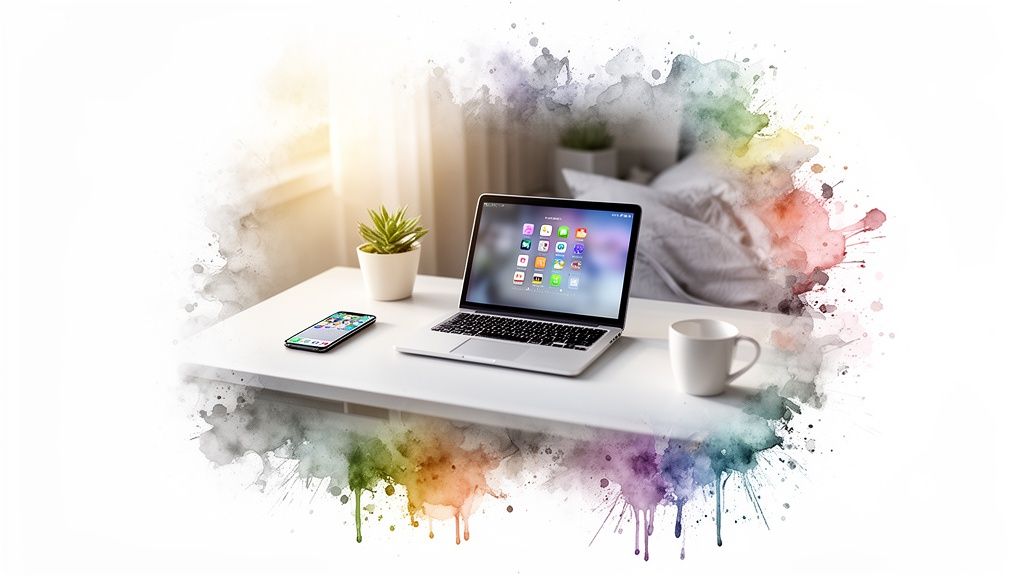
- Your Workspace: Aim for a clean slate that invites deep work. Keep only the absolute essentials within arm’s reach—your laptop, a notebook, a good pen, maybe a plant for a touch of life. Everything else needs a home, tucked away but easy to find when you need it.
- Your Bedroom: This is your haven. It should be dedicated to rest and rejuvenation. Clear out anything that doesn't belong, like work papers or that looming pile of clothes. A simple two-minute habit like making your bed each morning can completely shift your mindset, signaling a fresh start to the day.
- Your Living Area: Ask yourself what you want to feel in this space. If it’s connection, arrange the furniture to encourage conversation. If it’s relaxation, make sure you have soft blankets and warm lighting for cozying up with a book.
Your environment should make the right choices feel effortless and the wrong ones feel like a hassle. A clear desk naturally invites focus, just as a peaceful bedroom invites rest.
This is so much more than just tidying up. It’s a conscious act of removing the external noise that fuels our internal stress. When your physical space is in order, you reclaim the mental energy you were spending just trying to navigate the chaos.
Tame Your Digital World
These days, digital clutter can be even more draining than physical mess. The constant pings, the overflowing inbox, the endless scroll—it all adds up to a state of low-grade anxiety that hums in the background of our lives. Taking back your focus means getting intentional with your digital spaces, too.
This kind of digital noise directly impacts our ability to engage with what matters. When our attention is scattered, we can't truly connect with our work or our lives. It's no surprise that recent studies show only 21% of workers around the world feel engaged in their jobs. This is a huge drain on both personal happiness and overall productivity. You can see more on how this trend affects the economy in these employee productivity statistics.
Here are a few simple ways to start building your own digital sanctuary:
- Curate Your Phone’s Home Screen. Your home screen sets the tone. Move all but your most vital apps into folders on a second screen. Let that first screen be a place of calm, featuring only the tools that genuinely add value to your day.
- Go on an Unsubscribe Bender. This one is life-changing. Open your email and mercilessly unsubscribe from every promotional list and newsletter that you don't truly love or use. You’ll be amazed at how much quieter your days become.
- Create a Simple File System. On your computer, a basic folder structure like
Work,Personal, andArchivecan work wonders. Take just 15 minutes at the end of each week to file away new documents and downloads before they pile up. - Practice Mindful Notifications. Turn off all non-essential alerts. Ask yourself: do you really need a notification for every single social media 'like'? Be ruthless. Only allow alerts from the people and apps that are genuinely important.
By simplifying your digital world, you’re not disconnecting—you’re taking back control of your own attention. You're making sure your technology works for you, not the other way around.
To take it a step further, you can turn your phone from a source of distraction into a tool for encouragement. With the I Become app, you can place beautiful widgets with positive affirmations right on your home screen. Imagine unlocking your phone and seeing "I am focused and at peace" instead of a bunch of red notification bubbles. It’s a powerful way to make your digital space a true partner on your journey.
You can download I Become from the App Store and start creating a more intentional digital environment today.
Build Supportive Habits That Actually Stick
True, lasting organization isn’t born from a frantic weekend cleaning spree or a sudden jolt of inspiration. It’s something much quieter and more profound. It's built from the small, consistent things you do every single day.
If you want a life that feels genuinely organized, the secret is to weave in supportive habits that feel less like a chore and more like a natural part of your day. Forget about heroic willpower. The real magic comes from tiny, manageable steps that fit into the life you’re already living.
Start So Small It's Impossible to Fail
Big, ambitious goals can be paralyzing. It’s why so many New Year's resolutions are gathering dust by February. The trick is to start so small that it feels almost silly not to do it. This is the heart of building "atomic habits"—tiny actions that become the foundation for incredible change.
Don't commit to a one-hour meditation session; just sit and breathe deeply for 60 seconds. Instead of vowing to write three pages in a journal, just write one single sentence. These micro-habits might feel insignificant, but they are your secret weapon.
When a habit is easy and satisfying, you no longer have to rely on motivation. You start to build momentum.
This tiny-step approach brilliantly sidesteps your brain’s natural resistance to change. A two-minute task doesn't sound any alarms or trigger the fear of failure. It just builds a little bit of confidence, creating a launchpad for you to build upon when you’re ready.
"Habit Stack" to Make It Effortless
One of the best life hacks I've ever learned is linking a new habit to something I already do on autopilot. This is called habit stacking. Your existing routines—making coffee, brushing your teeth, changing into workout clothes—are powerful anchors for the new behaviors you want to introduce.
Take a look at your current routine. Where could you insert a new, tiny action?
- After I pour my morning coffee, I will read one affirmation.
- After I brush my teeth at night, I will write down one thing I’m grateful for.
- After I put on my running shoes, I will do two minutes of stretching.
You're essentially piggybacking the new habit onto an existing one, using your brain's well-worn pathways to make the new behavior feel automatic over time.
Find a Rhythm That Feels Like You
A habit will only stick if it genuinely feels good—or at least satisfying. This is where you get to be the architect of your own system. The only organizational method that works is the one that clicks with your unique personality.
Take affirmations, for example. To build a consistent practice, you have to find a method that resonates with you. This is why the I Become app gives you four different ways to engage.
- Read: If you’re a visual person, quietly reading your affirmations can feel calm and meditative.
- Listen: For those always on the move, listening to affirmations on your commute or during a walk is a game-changer.
- Speak: Saying the words out loud can be incredibly powerful, helping you truly feel and embody the message.
- Write: If you connect through the physical act of writing, typing out your affirmations reinforces them in a focused, tactile way.
By playing around with what works, you discover how to make a habit feel less like a task and more like a small gift to yourself. That feeling is what will keep you coming back. If you want to dig deeper, we share more ideas in our article on building a daily practice that lasts.
Track Your Wins and Embrace the Wobbles
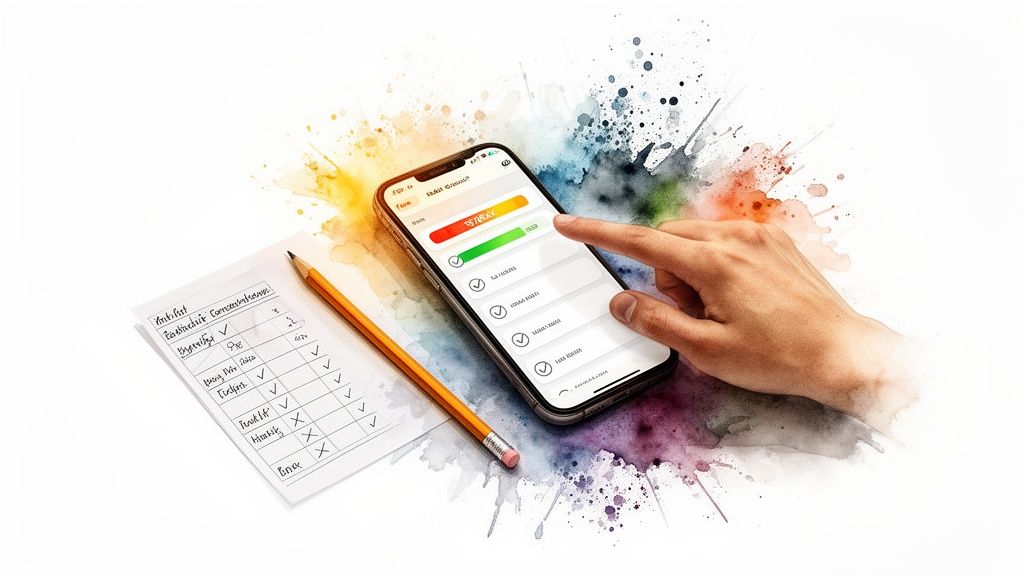
Nothing fuels motivation quite like seeing how far you’ve come. It’s a tangible reward that makes you want to keep the momentum going. This is why tracking your habits, even in the simplest way, is so powerful.
The Streak feature in the I Become app does this beautifully. It creates a visual chain of your accomplishments, giving you a satisfying little jolt of pride each day you show up for yourself. As the streak grows, so does your desire not to break the chain.
But what happens when you miss a day? Life happens. This is where most people give up. The all-or-nothing mindset screams that you’ve failed and might as well stop. Don't listen.
Missing one day is a blip. Missing two days is the beginning of a new, unhelpful habit. The goal isn't perfection; it’s just showing up again. The most important rule is to get back on track as quickly as possible, without judgment. A truly organized life is built on resilience, not a flawless record.
Ready to build habits that finally feel good and actually stick? Download I Become from the App Store and start your first streak today.
Maintain Your Flow with Gentle Check-Ins
Getting organized isn't a one-and-done project you can check off a list. It's a living, breathing process you tend to with intention and grace. You’ve already done the hard work of digging deep into your values, designing your ideal week, and building systems that actually support you. Now, it's about learning to adapt as life inevitably ebbs and flows.
Think of the systems you've built not as rigid cages, but as flexible trellises. They’re there to support your growth, not to confine you. This final piece of the puzzle isn't about perfectly sticking to a plan; it's about gently course-correcting with self-compassion and staying connected to your "why."
This is how you ensure all your hard work pays off for the long haul, creating a system that serves you through every season and challenge.
The Power of the Weekly Review
One of the most powerful habits I’ve ever adopted for staying organized is the Weekly Review. This isn't just another chore to dread. It’s a quiet, reflective appointment with yourself—a chance to see what's working, what isn't, and what needs to shift.
Carve out just 30-45 minutes each week. I like to do mine on Sunday evenings with a cup of tea. It’s a simple ritual where you can pause, breathe, and ask yourself a few honest questions:
- What went well this week? Take a moment to celebrate your wins, no matter how small. Did you protect your energy? Did you finally stick to that morning routine? Acknowledge it.
- Where did I feel friction? Think about what felt challenging or clunky. This isn't about blaming yourself. It's about spotting the pain points so you can smooth them out.
- What one or two small adjustments can I make for the week ahead? Based on your reflections, what needs to change? Maybe you need to block off more focus time, or perhaps schedule a bit more rest.
This simple act keeps your systems grounded in your current reality. It’s your defense against the slow, creeping return of chaos, keeping you in the driver’s seat of your own life.
Embracing Imperfection and Celebrating Progress
Let's get one thing straight: there will be days when your beautifully crafted schedule completely falls apart. There will be weeks when you feel like you’re right back where you started. This isn't failure. It's just being human.
The goal was never perfection; it’s always been about progress. It’s about being kind to yourself when you stumble and remembering how to gently guide yourself back to your intentions. Every small choice you make, every time you choose a supportive habit, is a victory worth celebrating.
An organized life isn't about a perfect track record. It's about building the resilience to get back on track with grace and compassion after life inevitably happens.
This mindset is everything. It’s what turns organization from a stressful chase for perfection into a sustainable act of self-care. It's the difference between a system that breaks under pressure and one that simply bends.
Your Lifelong Companion for an Organized Mindset
Staying organized is less about managing your calendar and more about managing your mind. The world feels increasingly chaotic, and protecting your inner calm is more critical than ever. It's no surprise that on a global scale, productivity growth has slowed to a crawl—recent OECD data showed a mere +0.4% increase across dozens of countries in 2024. So many of us are losing huge chunks of our day to mental clutter and inefficiency. You can see more on how these trends are impacting us all in this insightful report from Fortune.
As you continue to evolve, having tools that support your mental well-being isn't a luxury—it's a necessity. Your personal growth is a lifelong journey, and your mindset is the engine that drives it all.
This is where I Become can be your constant companion. As your priorities shift and new goals emerge, the app moves with you, providing the steady encouragement you need to stay centered. By reinforcing your core values and positive intentions every single day, it helps you maintain the organized, peaceful, and authentic life you've worked so hard to create.
Download I Become from the App Store and make a positive mindset your most sustainable habit.
Found this helpful? Share it with someone who might benefit.