
10 Best Gratitude Journal Templates for 2026
Discover 10 printable & digital gratitude journal templates to build a daily practice. Find free, guided, and minimal designs to cultivate mindfulness.
Somewhere between “I should be more grateful” and “I forgot again,” many individuals get stuck. The page is too blank, the prompt feels cheesy, or the habit lasts three days and disappears. That's why gratitude journal templates help. They remove the hardest part, which is deciding what to write and when to write it.
The format matters more than most template roundups admit. Gratitude journaling was popularized through positive psychology work in the early 2000s, especially the Emmons and McCullough research program. In those studies, participants kept weekly gratitude journals for 10 weeks and wrote down five things they were grateful for, with measurable benefits compared with control groups. Modern guidance still reflects that structure, recommending up to five things, around 15 minutes per day, and practice at least three times per week for at least two weeks through Greater Good in Action's gratitude journal practice. That's a useful reminder that good gratitude journal templates aren't just pretty pages. They're habit scaffolding.
If you also like pen and paper, a simple hardcover matte journal can pair well with any printable template on this list.
What follows isn't just a list of nice-looking options. It's a practical comparison of what sticks, what feels good for a week but fades, and which tools work best when you want to pair journaling with a daily mindset practice like affirmations.
1. Day One
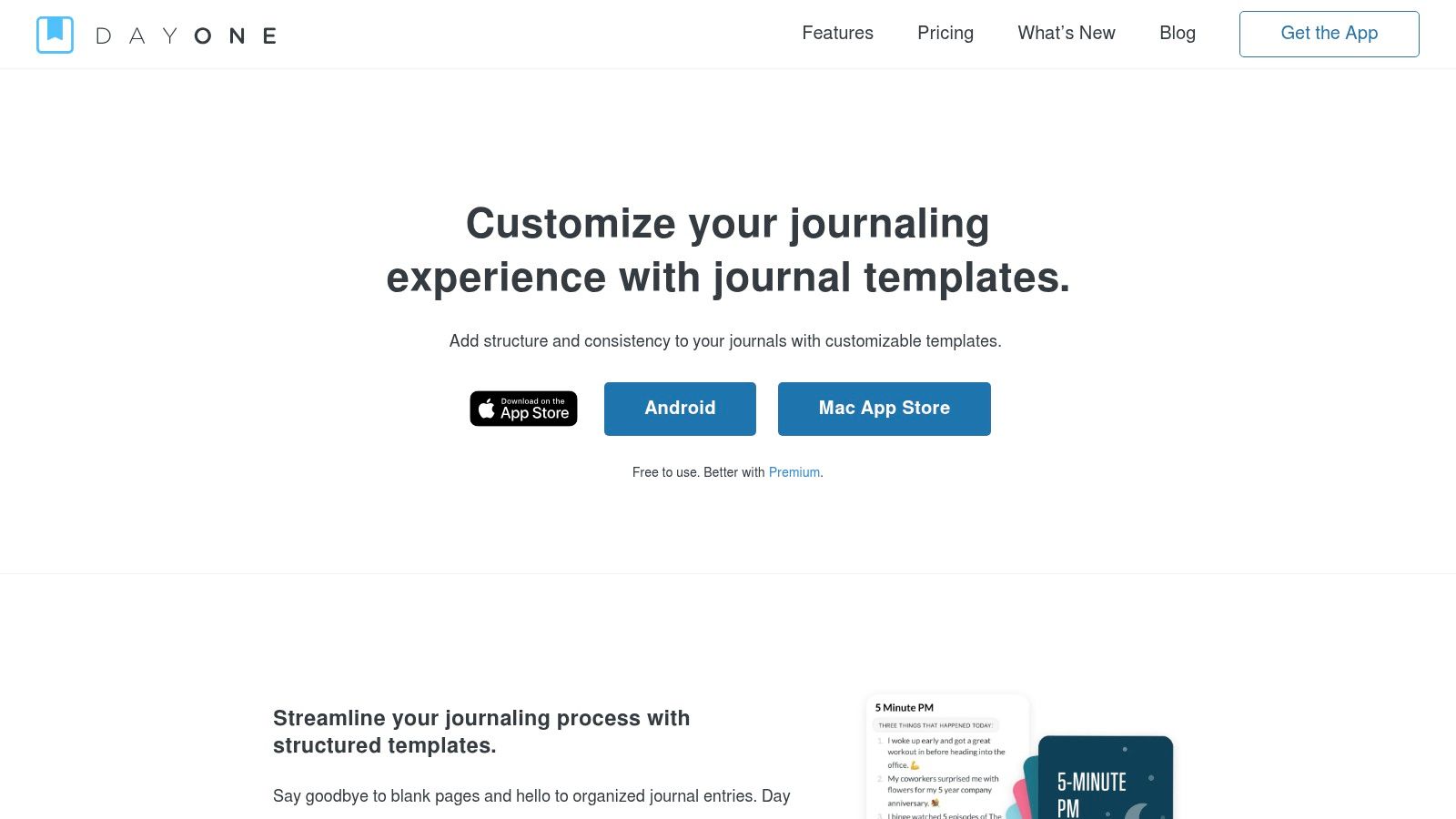
Day One is the best fit for people who don't need another printable. They need a system that nudges them to show up. Its journal templates feature includes ready-made formats like Daily Gratitude, plus scheduling, reminders, media attachments, search, and sync across devices.
What makes Day One different is that it reduces setup friction after day one. A static PDF can look lovely, but if it lives in your Downloads folder and never pings you, it won't build much of a habit. Day One moves the template closer to your real life through widgets, notifications, and quick capture on your phone.
What works best here
This is the strongest option for reminder-driven journaling. That matters because one of the biggest gaps in gratitude content is adherence. Prompting, reminders, and low-friction templates can help completion, while long-term consistency remains a common hurdle. The shift toward automation is easy to see in workflows like Day One's template and reminder setup.
Practical rule: If you skip habits because you forget, choose a template system that can interrupt your day gently.
A few trade-offs are worth being honest about:
- Best for app users: Day One shines inside its own app. If you want a simple printable sheet, this isn't the point of the product.
- Best for short entries: It works well when you capture a few specific moments quickly, especially with photos.
- Less ideal for deep customization: You can customize templates, but the experience is still guided by the app's structure.
If your goal is consistency over aesthetics, Day One is one of the easiest gratitude journal templates to keep using after the first burst of motivation fades.
2. Notion
Notion works best when gratitude is part of a larger personal system. Its official Gratitude Journal template gives you a prebuilt page or database you can duplicate, then adjust with your own fields, views, and prompts.
This is the tool for people who already live in Notion. If your habits, goals, weekly reviews, and reflection pages are all there, adding gratitude to the same workspace makes sense. If you don't use Notion yet, it can feel heavier than it needs to.
Where Notion beats simpler templates
Notion's real advantage is organization. You can tag entries by mood, season, theme, or area of life, then filter later when you want patterns. That's useful if you're trying to make gratitude less vague and more reflective.
Research and practice guidance have converged around smaller, structured entries. Summaries in reference material note that 3 to 10 items per entry tends to balance benefit with avoiding boredom, while the Greater Good Science Center recommends up to five items, with specificity and depth over volume. The same body of guidance notes associations between structured gratitude journaling and more gratitude, positive mood, optimism, and better sleep compared with journaling about hassles or ordinary events, as summarized in the gratitude journal overview on Wikipedia. Notion makes that easy to operationalize with prompts like “I am grateful for ___, because ___.”
For daily practice ideas, this pairs naturally with how to practice gratitude daily.
- Best for systems thinkers: Great if you want your gratitude log next to goals, habits, and reviews.
- Best for customization: Easy to adapt prompts without designing from scratch.
- Not ideal for low-tech users: Databases and properties can feel like admin if you just want to write.
Notion is powerful, but only if the structure motivates you instead of turning reflection into project management.
3. Goodnotes Marketplace
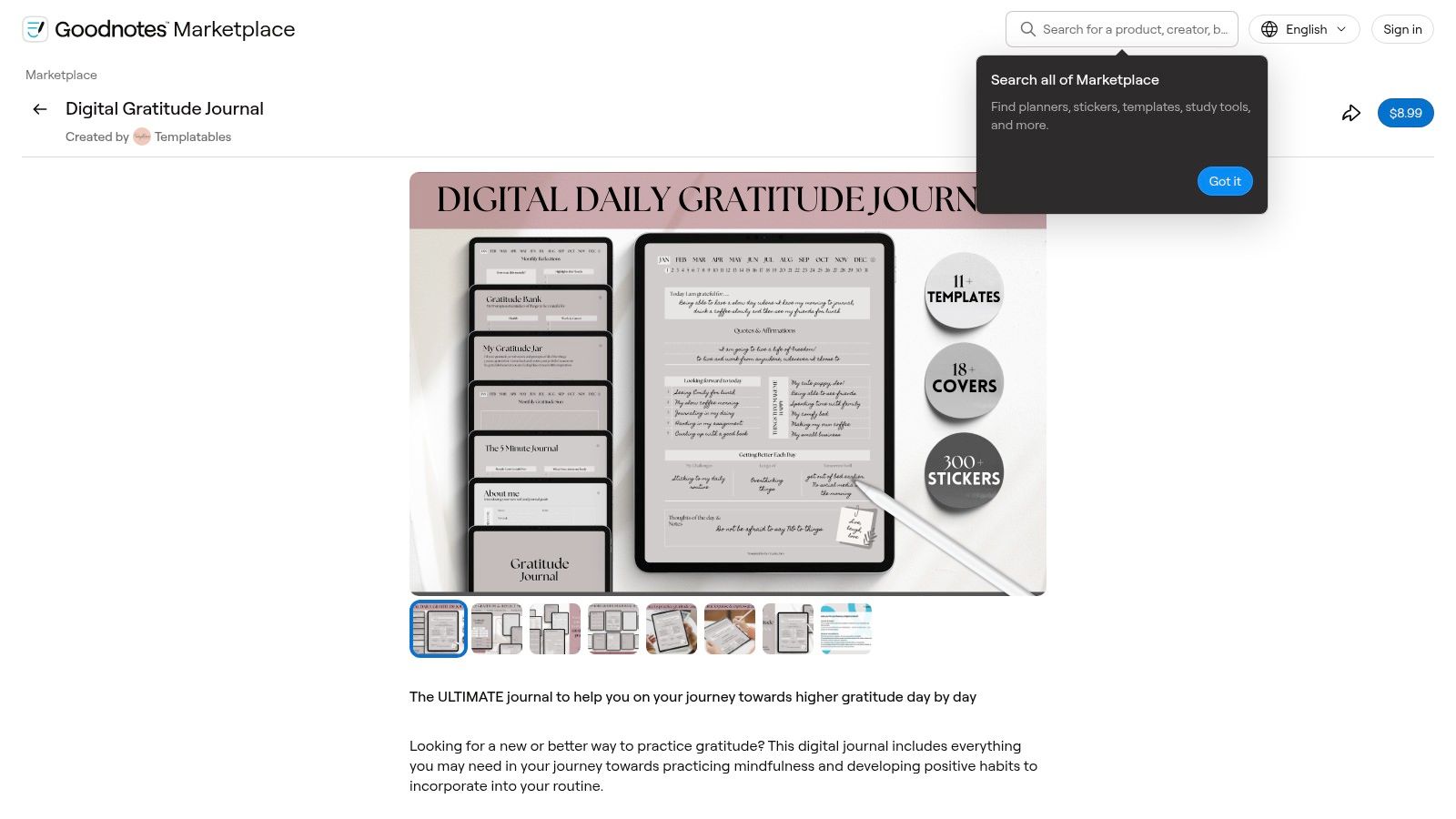
Some people think better when they handwrite. If that's you, the Goodnotes Marketplace digital gratitude journal is a strong option. These template notebooks are designed for stylus use, with linked pages and layouts that feel closer to a paper journal than an app dashboard.
The biggest advantage here is emotional texture. Handwriting slows you down. It can make gratitude feel less like another checkbox on your phone and more like a small ritual. For many people, that matters.
The real trade-off
The downside is speed. A Goodnotes gratitude journal is lovely when you have your iPad and a few quiet minutes. It's less convenient when you're standing in line, commuting, or trying to capture a quick thought before it disappears.
This category fits the broader rise of digital journaling. An industry report estimates the digital journal apps market at USD 5.1 billion in 2024 and projects growth to USD 13.58 billion by 2033, while noting uses that include self-improvement, mental health tracking, and gratitude journaling in the digital journal apps market report from Straits Research. That growth helps explain why digital handwriting templates keep getting better.
Handwritten templates feel more personal. They also ask more from you. That's the trade.
Choose Goodnotes if the act of writing by hand helps you stay present. Skip it if typing and reminders are what keep you consistent.
4. Canva
Canva is for people who want to build their own gratitude journal templates without starting from a blank document. Its journal template library gives you editable layouts, drag-and-drop design tools, and exports for print or digital use.
This one is less a finished gratitude tool and more a design workshop. That can be great if you want a journal that matches your style, brand, or routine. It can also become a procrastination trap if you spend more time choosing fonts than writing.
Best use case
Canva works well when you already know what kind of prompts help you. For example, you might build a page with three small gratitude lines, one “because” prompt, and one affirmation box. That bridges nicely between reflection and mindset practice.
What doesn't work as well is treating Canva as the habit engine. It isn't built to remind you, track a streak, or guide you back when life gets busy. It's best at producing polished pages, not carrying the behavior.
- Strongest for visual people: Easy to create something that feels attractive enough to revisit.
- Strongest for printable workflows: Export to PDF and keep a physical binder or notebook.
- Weakest for adherence: You'll need your own reminder system.
If you've ever thought, “I'd journal more if the page felt like me,” Canva can solve that. Just don't confuse beautiful setup with a finished practice.
5. Microsoft Create
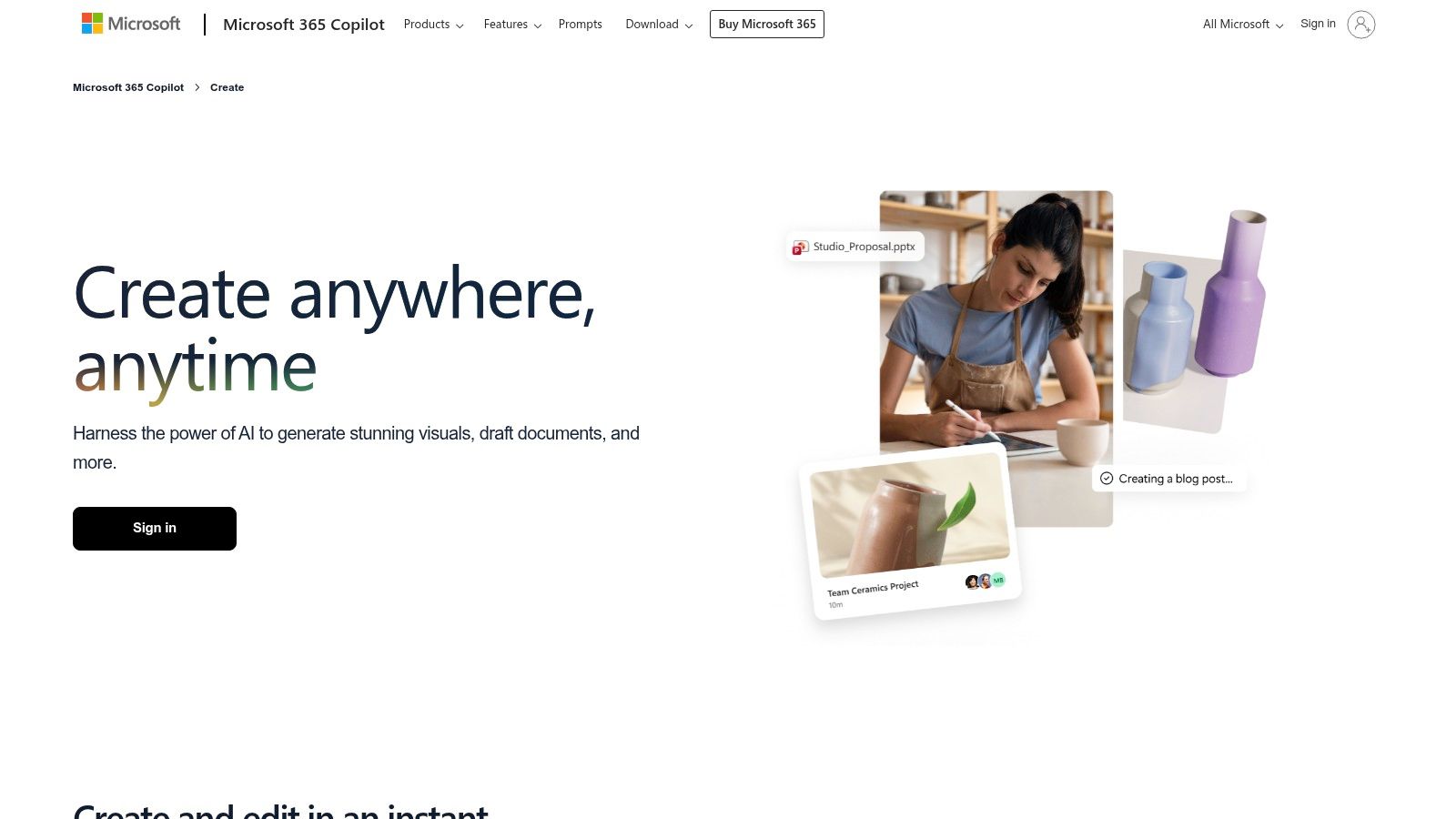
Microsoft Create is the practical choice. Its free journaling templates are editable in familiar tools like Word and PowerPoint, then easy to print or save as PDFs.
This option doesn't have the personality of a dedicated journaling app, but that's also why it works for some people. If you're already comfortable in Word, you can open a template, swap prompts, and start immediately. No learning curve, no new subscription, no redesign spiral.
Why simple can win
A lot of gratitude journaling advice overcomplicates the tool. In practice, many people stick with whatever feels boring in a good way. Microsoft Create is boring in that good way. It's stable, familiar, and easy to store in OneDrive.
The weak spot is guidance. These templates aren't usually built specifically for gratitude, so you may need to add your own prompts or adapt a general journal page. If you want ideas for what to write, this goes well with journal prompts for reflection and clarity.
- Best for office-tool users: Great if Word already feels natural.
- Best for printable files: Easy to keep digital and paper copies.
- Less ideal for emotional engagement: The templates can feel generic unless you personalize them.
If dedicated gratitude journal templates feel too niche, Microsoft Create gives you a flexible middle ground.
6. 101 Planners
If your main filter is “free and ready right now,” 101 Planners' gratitude journal collection is one of the easiest places to start. It offers 50+ pages of printable and digital gratitude layouts, including daily, weekly, and themed options.
That variety is helpful when you don't yet know your best format. Some people do well with a daily list. Others prefer a weekly page because daily repetition starts to feel forced. A big free library lets you test both without overcommitting.
What this is actually good at
This isn't the most cohesive design system on the list, but it's excellent for experimentation. You can print a few pages, annotate them in a PDF app, or mix formats until one feels sustainable.
The downside is that too many options can become its own form of friction. If you keep switching templates every few days, you never settle into a rhythm.
Use variety to find your format, not to avoid consistency.
For beginners, 101 Planners is generous and practical. For long-term use, users often eventually narrow down to one or two page types and stop browsing.
7. The Happiness Planner
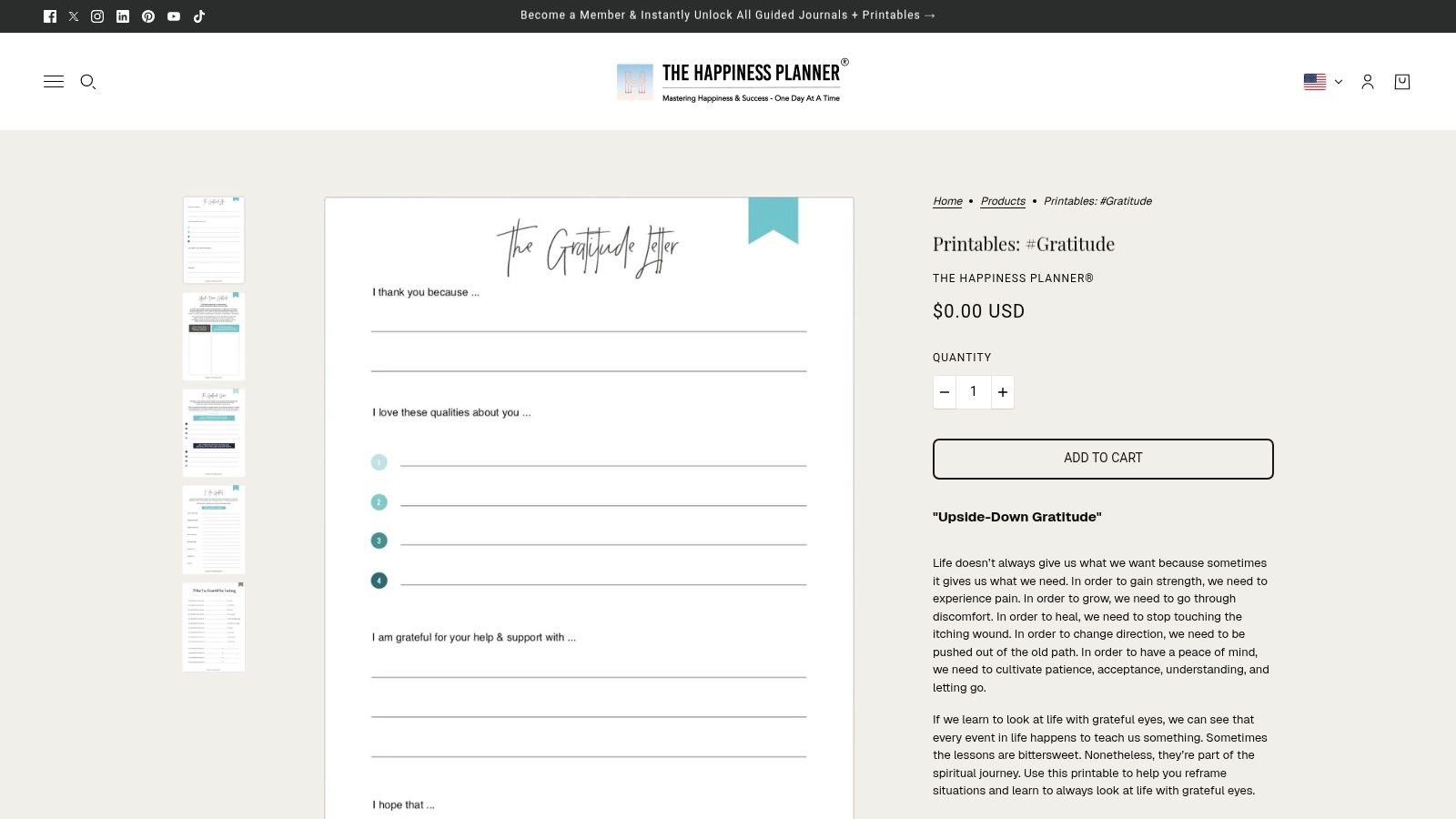
The Happiness Planner's gratitude printables are more reflective than logistical. Instead of giving you a large planner pack, it gives you targeted worksheets and gratitude-letter style pages that help with appreciation and reframing.
That narrower focus is the selling point. Some gratitude journal templates are too broad, which sounds flexible but often leads to thin, repetitive entries. A focused worksheet can pull out a better response.
Best for emotional depth
This is a good fit when you want gratitude to feel more meaningful than “coffee, sunlight, my dog.” Those small things count, but sometimes a stronger prompt helps you slow down and notice relationships, effort, support, or recovery.
The trade-off is scope. You won't get a full long-term journaling system here. Think of this more as a supplement pack or occasional reset than your forever journal.
- Good for reflective sessions: Better for intentional writing than for quick daily logging.
- Good for gifts or resets: Nice when you want a polished printable to revisit after a hard week.
- Less good for habit building: Static PDFs won't carry the routine for you.
When gratitude feels flat, The Happiness Planner can add some needed depth.
8. Intelligent Change
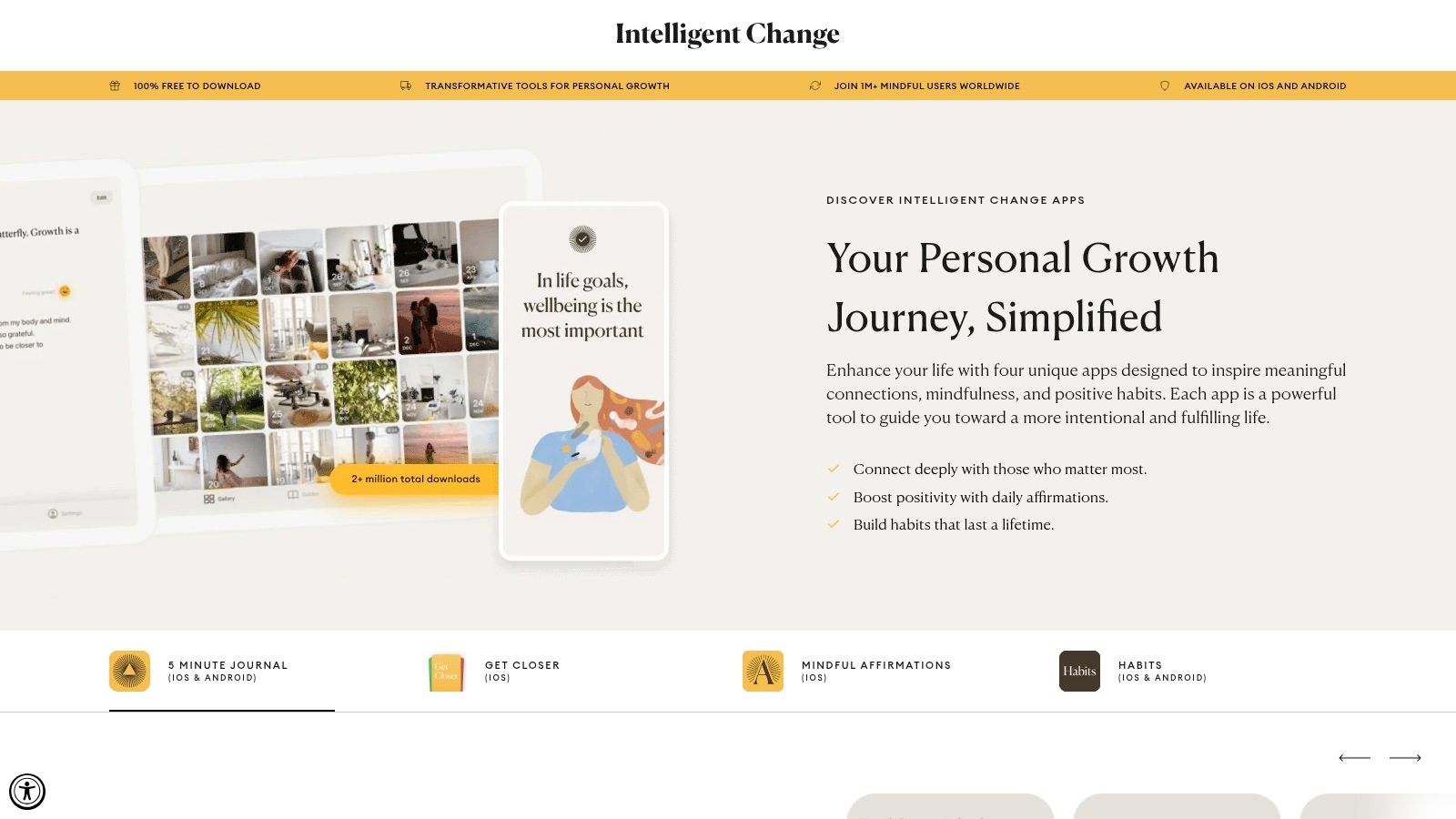
Intelligent Change's Five Minute Journal is one of the clearest examples of a repeatable gratitude template that became a full product ecosystem. You get a fixed morning and evening structure in print or app form, with very little room to overthink the process.
That's why it works. The prompts are stable. You don't have to choose a page, build a database, or redesign anything. You open it and answer.
Why constrained prompts often work better
There's credible evidence that structured gratitude interventions improve gratitude outcomes. A systematic review and meta-analysis found gratitude interventions improved gratitude scores on the GQ-6 by 3.67 percent across 1,486 participants, and another pooled analysis of 1,802 participants using numerical scales found a 5.7 percent higher gratitude score. The same review also highlights Berkeley guidance favoring short, specific prompts over blank pages in the systematic review on gratitude interventions.
That doesn't mean every guided journal will suit every person. It means structure isn't a compromise. It's often the mechanism.
- Best for habit-first users: Low friction, repeatable, clear.
- Best for morning and evening routines: Especially if you like bookending the day.
- Less ideal for customization lovers: You're buying into a method, not building your own.
If blank pages make you freeze, this is one of the safer bets.
9. OnPlanners
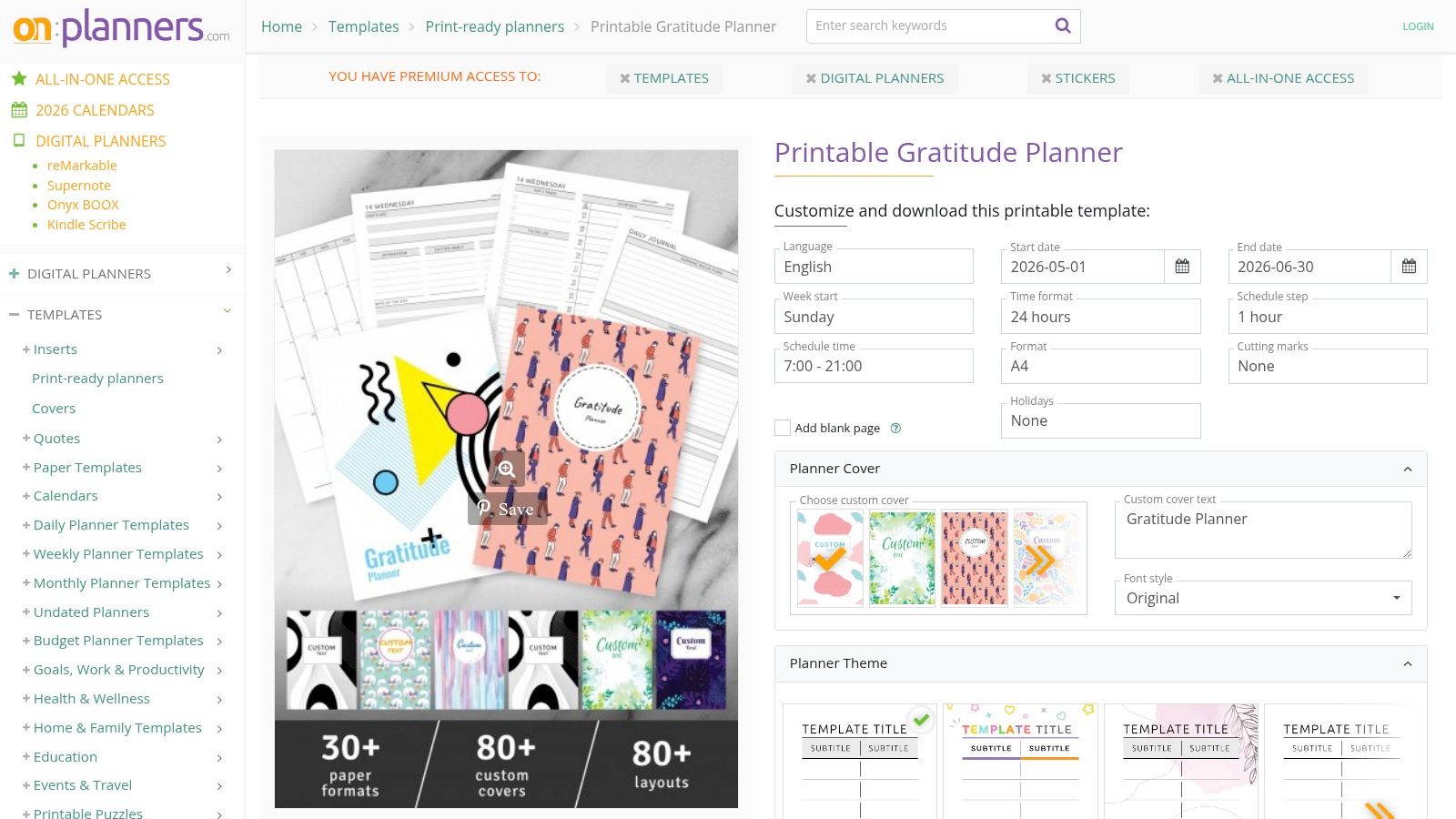
OnPlanners' printable gratitude planner sits in a useful middle space. It's more polished than a basic free PDF, but less locked-in than a dedicated app. You can customize pieces like size, cover, and start settings before export, then print it or import it into a note-taking app.
This works especially well for people who want a cohesive paper-like journal without designing one themselves. You get the clean aesthetic and structure without spending an evening in Canva.
Where it fits best
OnPlanners is strongest for people who already know they like printable systems. If you're someone who enjoys a binder, planner inserts, or an iPad annotation workflow, this feels neat and intentional.
The limitation is that once you export the file, it's static. If you later decide a prompt doesn't fit, you'll need to regenerate or replace the template rather than tweak it on the fly.
A polished static template can still work well if your routine is stable. It struggles when your energy or schedule changes a lot.
Choose this one for design consistency. Skip it if you need reminders, adaptive prompts, or frequent changes.
10. Maple Planners
Maple Planners' Reframe My Thoughts Gratitude Journal is a simple worksheet, not a full journaling system. That's exactly why it deserves a spot on this list. Sometimes the best gratitude journal templates aren't the ones that ask for more writing. They're the ones that lower emotional resistance.
This worksheet pairs gratitude with cognitive reframing. Instead of only asking what's good, it gives you space to notice a negative thought and actively shift it. For people dealing with stress, low mood, or inner criticism, that can feel much more accessible than trying to force upbeat gratitude from scratch.
A strong companion to affirmations
Few template roundups talk about matching the format to your emotional bandwidth. That's a miss. Newer template collections increasingly include weekly, monthly, prompt-based, and “best of the day” styles, suggesting cadence and structure matter. Guidance also points toward micro-gratitude and lower-resistance reflection formats for overwhelmed users in this collection of gratitude journal prompts.
Maple Planners stands out. It's quick, grounded, and realistic when you're not in a big expansive mood.
If you want to pair the worksheet with supportive self-talk, these gratitude affirmations are a natural match.
- Best as a supplement: Great add-on to a daily affirmation or journaling routine.
- Best for hard days: Especially useful when “write five things” feels like too much.
- Not a full solution: You'll likely want another tool for longer-term consistency.
Top 10 Gratitude Journal Templates Comparison
| Product | Core features | UX / Quality (★) | Price / Value (💰) | Target audience (👥) | Unique selling point (✨ / 🏆) |
|---|---|---|---|---|---|
| Day One | Template gallery, scheduled prompts, media & sync | ★★★★☆ | 💰 Free + Premium | 👥 Mobile journaling users who want templates & privacy | ✨ Robust templates & scheduling · 🏆 Strong privacy & backup |
| Notion (Gratitude Template) | Free duplicable DB template, views & filters, sync | ★★★★☆ | 💰 Free (Notion account) | 👥 Notion power users & productivity enthusiasts | ✨ Highly customizable databases & integrations |
| GoodNotes Marketplace | Handwriting‑optimized PDFs, hyperlinked tabs | ★★★★★ | 💰 Paid per template | 👥 iPad/tablet note‑takers, Apple Pencil users | ✨ Best handwriting experience · 🏆 Clean, notebook‑like layouts |
| Canva (Journal Templates) | Drag‑and‑drop editor, export PDF/images, assets | ★★★★☆ | 💰 Free + Pro assets | 👥 Designers & DIYers who want polished pages fast | ✨ Fast design with large asset library |
| Microsoft Create | Word/PowerPoint editable templates, easy export | ★★★☆☆ | 💰 Free (MS 365 compatible) | 👥 Word users & print‑oriented creators | ✨ Familiar Word editing & OneDrive sync |
| 101 Planners | 50+ printable/digital PDF pages, prompts & themes | ★★★☆☆ | 💰 Free | 👥 Budget‑conscious users wanting ready PDFs | ✨ Large free collection ready to download |
| The Happiness Planner (Printables) | Gratitude worksheets & letters, mindset prompts | ★★★★☆ | 💰 Free (small pack) | 👥 Reflection seekers & mindset practitioners | ✨ Brand‑backed, targeted gratitude worksheets |
| Intelligent Change (Five Minute Journal) | Structured AM/PM prompts, guided app & print | ★★★★★ | 💰 App/Print paid options | 👥 Habit builders wanting low‑friction routine | 🏆 Proven, science‑backed framework for daily habit |
| OnPlanners (Printable Planner) | Customizable PDF export (size, cover, start date) | ★★★★☆ | 💰 Paid (varies) | 👥 Users wanting professional printable planners | ✨ Customizable, cohesive minimalist design |
| Maple Planners (Reframe My Thoughts) | One‑page gratitude + reframing worksheet (PDF) | ★★★☆☆ | 💰 Free | 👥 People pairing affirmations with cognitive reframing | ✨ Quick reframe + gratitude worksheet for immediate use |
Final Thoughts
The best gratitude journal templates aren't necessarily the prettiest ones. They're the ones you'll still use when you're tired, distracted, or not feeling especially reflective. That usually means shorter prompts, less friction, and a format that matches how you already live. If you're on your phone all day, an app with reminders may beat a printable. If handwriting helps you slow down, a Goodnotes or printable option may feel more natural.
The bigger shift is moving from static journaling to a living mindset practice. A gratitude page helps you notice what's good. An affirmation practice helps you reinforce what you want to believe more consistently. Put together, they work on two levels. One helps you reflect on reality. The other helps you shape your inner dialogue going forward.
That pairing matters because gratitude alone can become observational. You write down what you appreciate, then close the page. Affirmations add repetition and direction. After journaling about a supportive friend, a small moment of peace, or a challenge you handled better than expected, it helps to reinforce the identity underneath it with statements that support calm, confidence, or self-trust.
For many people, the sweet spot looks simple:
- Use a template for structure: Keep the journaling part specific and light.
- Use affirmations for continuity: Let mindset support continue after the entry is done.
- Choose for adherence, not ambition: The best tool is the one that survives busy weeks.
If you want a physical format that feels lasting, handcrafted leather journals for everyday use can make a simple gratitude ritual feel more grounded.
One last practical note. Don't assume the “best” gratitude journal template is the one with the most pages or prompts. For a lot of people, the better choice is the one that asks less and gets answered more often. A few specific lines, repeated regularly, usually beat a beautiful system you avoid.
If you're deciding where to start, keep it easy. Day One is excellent for reminders and app-based consistency. Notion is best if you want gratitude inside a bigger life system. Goodnotes and printable options are strongest if handwriting keeps you engaged. Maple Planners is a smart support tool when emotional resistance is high. And if you want a fixed structure that removes decision fatigue, the Five Minute Journal style still holds up well.
You don't need a perfect template. You need one that makes showing up feel doable.
If you want to turn gratitude from an occasional journal entry into a daily mindset practice, download I Become from the App Store. It pairs beautifully with gratitude journal templates by helping you reinforce supportive thoughts through personalized affirmations, Lock Screen widgets, and simple Read, Speak, Listen, and Write modes. A short gratitude entry in the morning or evening, followed by a few minutes in I Become, is a gentle way to build reflection and self-belief into the same routine.
Found this helpful? Share it with someone who might benefit.