
How to Get Some Rest: A Gentle Guide to Reclaiming Energy
Feeling burnt out? Learn how to get some rest with practical, step-by-step strategies for your mind and body. A gentle guide for busy people.
You answer one last message, then stare at your phone in bed because your body is tired but your mind is still sprinting. You promise yourself you’ll rest after this task, after this email, after tomorrow’s deadline. Then rest keeps moving farther away.
A lot of people live in that state now. According to the CDC summary cited here, more than one-third of U.S. adults, about 35%, report sleeping less than the recommended seven hours per night. If you feel stretched thin, foggy, or oddly wired at the exact moment you most need to slow down, you’re not failing at life. You’re living in a culture that often rewards constant availability and leaves very little room for recovery.
The good news is that rest doesn’t have to begin with a perfect night, a silent house, or a full free weekend. You can practice it in smaller ways. You can build it as a skill. You can get some rest in minutes, not only in ideal conditions.
You Truly Deserve to Get Some Rest
Many exhausted people have learned to dismiss their own signals. They say they’re “fine,” keep functioning, and treat tiredness like a personality trait instead of a need. I see this often with high achievers, caregivers, students, and people doing emotional labor all day. They aren’t lazy. They’re overextended.
That’s why permission matters. Rest starts before sleep. It starts with allowing yourself to stop gripping every moment so tightly.
When tired becomes normal
You might know the feeling. You finish work but can’t settle. You sit down to relax and instantly remember five unfinished things. You go to bed physically depleted and mentally alert. That disconnect can make rest feel strangely out of reach.
For many people, the first shift is emotional, not logistical. They need to hear that needing rest is not weakness, poor discipline, or a lack of ambition. It’s basic maintenance for a human nervous system.
Rest is not a reward for finishing everything. If you wait until life is fully handled, you’ll stay tired.
Sometimes a small mindset cue helps soften that inner pressure. If you need one, the reflection in this “you are” affirmation piece can be a gentle reminder that your worth isn’t tied to how constantly productive you appear.
Rest is bigger than sleep
Sleep matters, of course. But people often get stuck because they turn rest into an all-or-nothing goal. If they can’t get a full night, they assume the day is lost. If they can’t take a full break, they take none.
That approach usually backfires.
A more workable view is this:
- Sleep is foundational: It supports physical recovery and cognitive clarity.
- Micro-rest helps during the day: Brief pauses can lower mental strain before it snowballs.
- Emotional rest counts too: Releasing self-pressure, comparison, and constant vigilance can be restorative.
- Sensory rest matters: Less noise, less scrolling, less input often helps more than people expect.
When you get some rest in small, repeatable ways, your body starts trusting that it doesn’t have to stay braced all day. That shift can make deeper rest easier later.
Find Rest in Minutes Not Hours
You do not need a retreat, a blank calendar, or a perfect meditation habit to feel some relief. Short practices work best when they’re easy enough to use in real life. Think of them as rest snacks. Brief, ordinary moments that interrupt the stress cycle before it takes over.

A useful reminder here comes from a 2025 mindfulness study discussed in this article, which found that 5-minute affirmation breaks reduced perceived fatigue by 28% more than traditional naps for remote workers. The point isn’t that naps are bad. It’s that mental downshifting can be surprisingly effective when time is tight.
Four ways to reset quickly
Use a two-minute breathing downshift
Sit back, drop your shoulders, and make the exhale a little longer than the inhale. Don’t aim for a dramatic experience. Aim for less internal noise.Try this:
- Inhale gently
- Exhale slowly
- Repeat until your jaw unclenches and your thoughts stop rushing quite so hard
Do a 5-4-3-2-1 grounding pass
This works well when stress feels mental and floaty. Bring attention back to the physical world.Notice:
- Five things you can see
- Four things you can feel
- Three things you can hear
- Two things you can smell
- One thing you can taste
Take a standing stare break
Step away from the screen. Look at something far away, a window, a tree, the horizon, the end of the hallway. Let your eyes stop working at close range for a minute. People underestimate how taxing constant visual focus can be.Use a short affirmation reset
This isn’t about pretending you’re full of energy. It’s about giving the mind a less harsh script.Try lines like:
- I’m allowed to pause without falling behind.
- Rest helps me return with more clarity.
- I don’t need to earn this breath.
- My body deserves kindness today.
What works better than forcing calm
Some people turn rest into another performance. They try to “do mindfulness correctly,” get frustrated, and end up more tense than before.
A softer approach usually works better:
| Situation | Better response | Less helpful response |
|---|---|---|
| Racing mind between meetings | One minute of slower breathing | Scrolling for stimulation |
| Afternoon slump | A brief walk, water, or quiet sit | Pushing through while distracted |
| Emotional overload | A grounding exercise | Telling yourself to just tough it out |
Practical rule: Choose the smallest restful action you’ll actually do today, not the most impressive one.
If you want to get some rest consistently, build these pauses into existing moments. Before opening your laptop. After parking the car. While waiting for tea to steep. While the elevator rises. Rest becomes more available when it stops competing with your whole schedule.
Design Your Gentle Wind-Down Ritual
Nighttime rest begins long before your head touches the pillow. If the day ends in bright screens, leftover tension, and unfinished mental loops, the body often receives a mixed message. You’re in bed, but your system still thinks it’s on duty.
A wind-down ritual helps because it creates a repeated cue. Not a strict rulebook, just a sequence your mind starts to recognize as safe and quiet.
Build from a menu, not a mandate
A person doesn’t need a complicated bedtime routine. They need one they’ll repeat. That means choosing activities that feel calming instead of idealized.
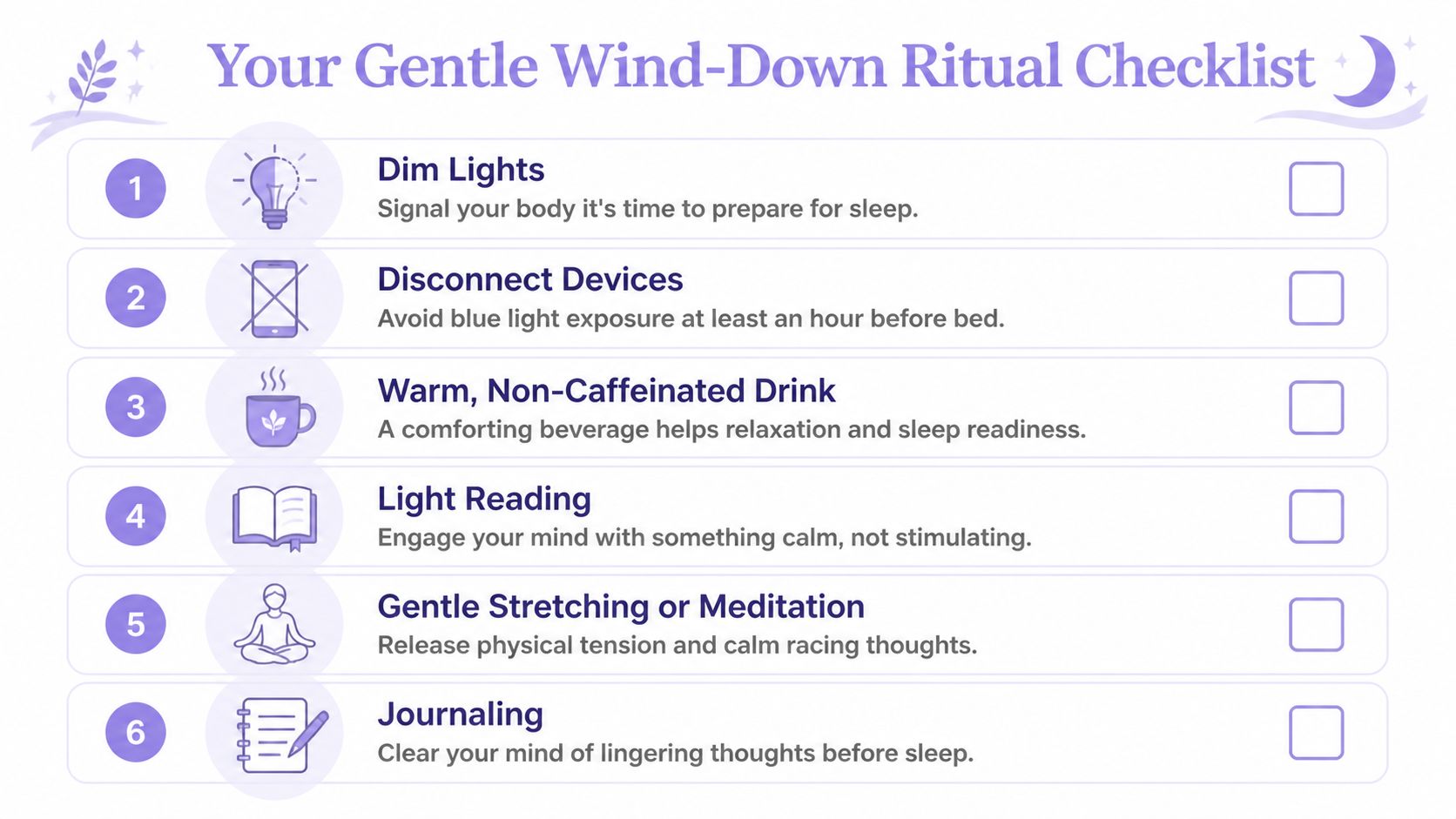
A simple menu might include:
- Dimmer lighting: Softer light can make the room feel less activating.
- A warm non-caffeinated drink: Something familiar and soothing.
- Light reading: Gentle, not gripping.
- A few stretches: Enough to release the day from the neck, jaw, and hips.
- Journaling: Put loose thoughts somewhere other than your head.
- A quiet audio track or silence: Whichever settles you faster.
If evenings feel especially jagged, keep the ritual short. Consistency beats ambition here. For extra inspiration, this evening wind-down affirmation collection can help you shape a calmer mental tone before sleep.
A sample thirty-minute rhythm
You don’t need to copy this exactly. Use it as a sketch.
Evening example
Minute 1 to 5: Lower lights and put your phone on charge outside arm’s reach.
Minute 6 to 10: Wash your face, brush your teeth, and let that mark the end of “doing.”
Minute 11 to 20: Read a few pages, stretch lightly, or sip a warm drink.
Minute 21 to 30: Write down tomorrow’s top tasks, then one sentence of reassurance such as “Nothing else needs my attention tonight.”
That last step matters. A lot of people don’t need more productivity tricks at bedtime. They need closure.
Keep the ritual easy to return to
A good wind-down routine survives imperfect days. If you miss part of it, do the smallest version instead of abandoning it completely.
That might mean:
- Full version: reading, stretching, journaling
- Medium version: dim lights and write tomorrow’s list
- Minimum version: put the phone away and take three slow breaths in bed
Some nights, the most restorative routine is the one with the least friction.
What doesn’t work well is turning bedtime into a test. The more you monitor whether you’re “doing rest right,” the more alert you often become. The better aim is gentle predictability. A sequence that tells the body, over and over, you can let go now.
The Art of the Intentional Power Nap
A lot of adults feel guilty about napping. They associate it with laziness, lost time, or the fear of waking up even groggier than before. But a power nap can be a useful tool when you’re drained and still need to function well for the rest of the day.

The key is intention. A nap works best when it’s brief, timed reasonably, and treated as support rather than escape.
Why naps sometimes go wrong
Most nap complaints come from one of three things:
- Too long: You wake up heavy and disoriented.
- Too late: Then bedtime feels harder.
- Too stimulated beforehand: You lie down, but your mind keeps scrolling through the day.
That doesn’t mean naps are the problem. It usually means the setup needs adjustment.
A simple pre-nap phrase can help settle guilt and resistance: Rest now, return gently, continue with clarity.
The power nap rules worth keeping
If you want a nap to refresh you rather than derail you, keep it simple.
- Keep it short: Aim for a brief nap rather than a long sleep.
- Choose early afternoon if possible: That tends to fit the body more naturally than late evening rest.
- Lower stimulation first: Close the laptop, dim the room, or use an eye mask.
- Don’t chase perfection: Even lying still with eyes closed can help your system downshift.
This short video is a helpful companion if you want a calming visual cue before resting.
If naps leave you feeling worse, treat that as information, not failure. You may need a shorter rest, a quieter environment, or a non-sleep reset instead. The goal is energy management, not proving that you can power through fatigue.
Soothe Your Mind to Unlock Deeper Rest
Sometimes the body is exhausted and the mind refuses to cooperate. That’s the kind of tiredness people find most confusing. They know they need rest, but every time they stop moving, thoughts get louder.
That pattern often has less to do with effort and more to do with mental momentum. A busy mind doesn’t always calm itself just because the day is over. It needs a bridge.

One reason cognitive tools matter is that they help reduce the struggle with thoughts rather than trying to eliminate thinking entirely. In a study on the REST protocol for insomnia, participants who completed the program saw sleep scores drop below clinical insomnia thresholds, which shows how powerful structured cognitive techniques can be for improving rest.
Stop arguing with every thought
Anxious minds often do two things at night. They rehearse and they predict. They replay what went wrong, then forecast what might go wrong next.
Trying to force those thoughts away usually makes them stickier. A better move is thought diffusion. Notice the thought, name it, and reduce its authority.
Examples:
- “I’m having the thought that tomorrow will be a disaster.”
- “My mind is generating urgency again.”
- “This is a worry loop, not a command.”
That language creates a little space. Space is often enough to lower the internal volume.
Give worries a container
A worry journal helps because it keeps concerns from circling endlessly. Before bed, write down what’s pressing on you. Then sort each item into one of two groups.
| Type of thought | What to do with it |
|---|---|
| Actionable tomorrow | Write the next step |
| Not actionable tonight | Write it down, then release it for now |
This is simple, but it’s effective because it gives the brain evidence that the concern has been stored somewhere reliable.
If you want extra support for that inward quieting, the practices in this guide to meditation for the inner self pair well with a bedtime reflection routine.
Your mind may not become silent. It can still become softer.
Rest follows safety
People often chase sleep directly when what they need is a felt sense of safety. Safety in the body. Safety in the schedule. Safety in the inner voice.
That’s where cognitive practices help most. They teach the mind that every thought is not an emergency. Once the internal alarm lowers, deeper rest becomes much more available.
Making Rest a Core Part of Who You Are
The deepest shift happens when rest stops being something you squeeze in and starts becoming part of your identity. Not a luxury. Not a backup plan. A standard of care for your life.
That identity is built in ordinary ways. A short breathing reset instead of another scroll. A wind-down ritual that signals closure. A power nap used strategically. A notebook that catches worries before bed. These choices look small, but repeated choices shape the kind of person you’re becoming.
Track the trend, not a perfect night
If you like concrete feedback, sleep efficiency can be a helpful concept. It means the percentage of time you’re asleep while in bed. According to this overview of sleep efficiency and tracking, 85% or higher is considered good, and consistent routines and tracking can improve variability and support better rest.
Use that information gently. Data is useful when it helps you notice patterns. It becomes unhelpful when it turns bedtime into a scorecard.
A more grounded way to track progress is to ask:
- Am I settling faster at night?
- Do I recover better after stressful days?
- Am I noticing tiredness earlier and responding with care?
- Do I return to rest practices more easily after disruptions?
Become someone who lets rest in
You don’t need to master rest all at once. You need a relationship with it. One that feels supportive, repeatable, and kind.
When you practice rest in small ways, you tell your body something powerful: we don’t have to live in emergency mode all the time. That message, repeated often enough, changes how you move through your day and how you return to yourself at night.
If you want help turning restful thinking into a daily habit, download I Become from the App Store. It’s a simple iOS affirmation app designed for busy lives, with personalized affirmations, Lock Screen widgets, and Read, Speak, Listen, and Write modes that make calm, encouraging thought patterns easier to practice throughout the day.
Found this helpful? Share it with someone who might benefit.