
Meditation for Inner Self: Find Peace & Reconnect
Meditation for inner self - Unlock your inner peace with meditation for inner self. Our guide provides practical steps, scripts, and tips to reconnect and find
Some days, you can move through your whole routine and still feel oddly far from yourself.
You answer messages. You finish tasks. You scroll a little too long. By evening, your mind feels full, but your inner world feels unattended. That quiet sense of disconnection is often what leads people to search for meditation for inner self. Not because they want to become someone new, but because they want to come back to who they already are.
Meditation can help with that return. Not by forcing silence, and not by asking you to be perfect. It offers a small pause where you can notice your breath, your body, your thoughts, and the deeper part of you that isn't defined by the day's noise.
Finding Stillness in a World of Noise
You might know this feeling well. You wake up already thinking ahead. Your phone lights up before your feet hit the floor. By lunchtime, your attention has been pulled in six directions, and by night, you can barely tell what you feel.
That doesn't mean you're doing life wrong. It means you're human.
Meditation for inner self begins in that ordinary moment of overload. Not on a mountaintop. Not after you've fixed everything. It starts when you notice, "I haven't checked in with myself today."
What inner connection really means
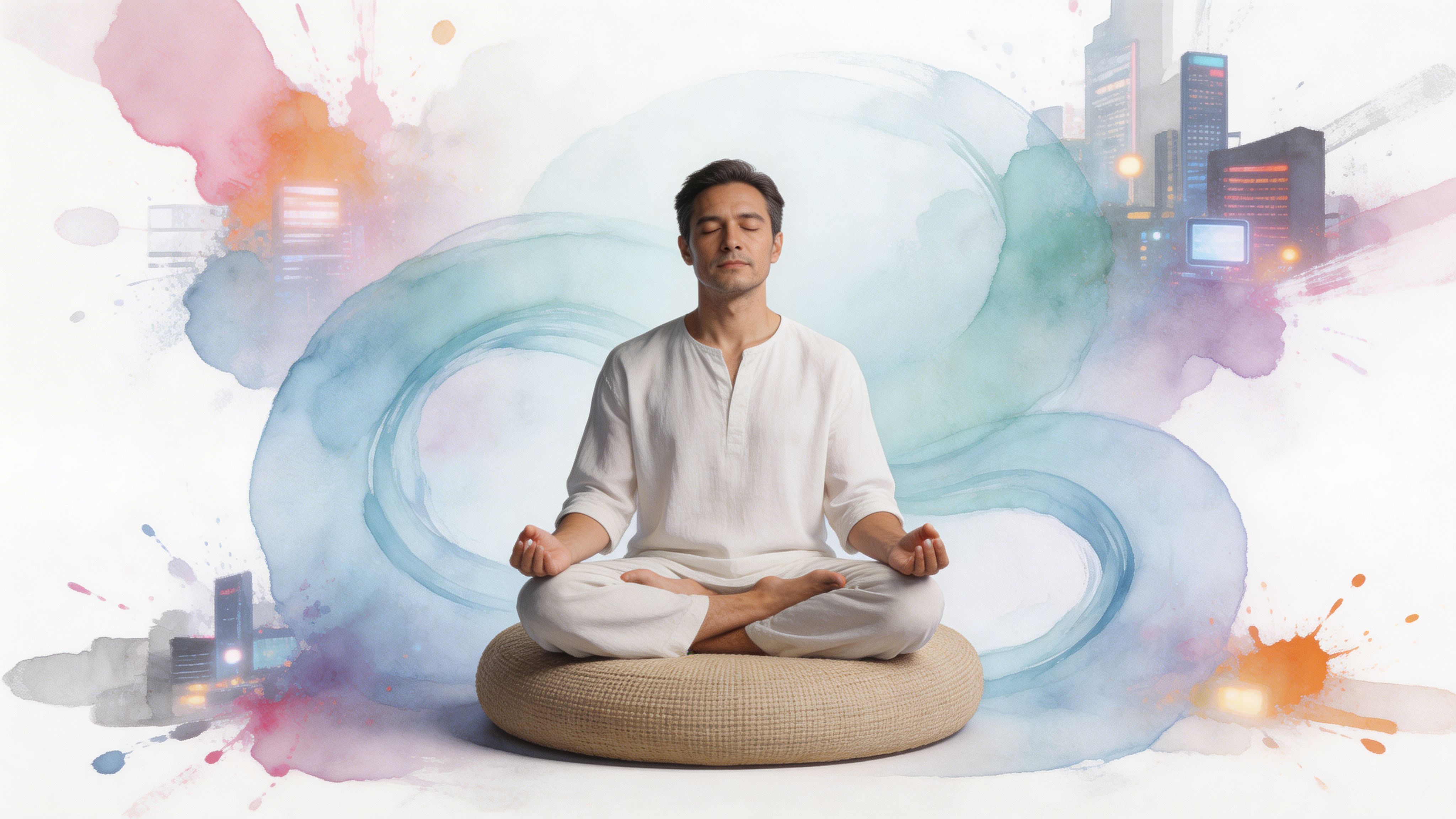
People sometimes hear "inner self" and assume it must be mystical or complicated. It doesn't have to be.
In simple terms, your inner self is the part of you that notices. It senses when you're tense. It knows when you're speaking harshly to yourself. It often has a quieter voice than stress, fear, or habit, so it gets buried easily.
Meditation helps you hear that quieter voice again.
Meditation isn't about becoming blank. It's about becoming available to your own experience.
That shift matters because many people are looking for exactly this kind of reconnection. In the United States, meditation practice more than doubled from 7.5% in 2002 to 17.3% in 2022, making it the most popular complementary health approach, according to meditation statistics summarizing National Health Interview Survey findings.
A gentler way to think about practice
If you've avoided meditation because it sounded strict, try a softer definition.
Meditation is a practice of returning. Returning to breath. Returning to the body. Returning to the present moment. Returning to yourself.
A few examples make this easier to grasp:
- After an argument: You sit for a few minutes and notice your chest is tight. Instead of replaying the conversation, you let yourself feel the hurt underneath it.
- Before work: You pause with one hand on your heart and take a few calm breaths. You remember that productivity isn't your whole identity.
- At night: You notice your mind racing. Rather than fighting it, you observe each thought and let it pass.
None of these moments require expertise. They require willingness.
Why people stay with it
The first gift of meditation for inner self is often not dramatic peace. It's honesty.
You start noticing what you've been carrying. You hear the tone of your inner dialogue. You recognize when you're running on autopilot. From there, calm becomes more possible because awareness comes first.
If you're new to this, you don't need a perfect routine. You just need one small opening in your day where you can stop performing and start listening.
Preparing Your Space and Mindset for Meditation
Before you close your eyes, make the experience easy to enter.
A good meditation space doesn't need to look impressive. It needs to feel safe enough that your nervous system can soften a little. That might be a chair by the window, the edge of your bed, or even your parked car before you walk into work.
Create a small place that says pause
Pick one spot and use it often. Repetition helps your body recognize: "Here I slow down.""
A simple setup can include:
- A stable seat: Choose a cushion, chair, or folded blanket. Comfort matters more than looking traditional.
- Lower stimulation: Silence notifications, dim a light, or face away from visual clutter.
- One grounding object: A candle, plant, journal, or soft scarf can remind you that this moment is different from the rest of the day.
If your home is busy, don't wait for perfect quiet. Work with what you have. A corner can become a sanctuary when you return to it consistently.
Set an intention, not a performance goal
A lot of beginners carry this unspoken fear: "What if I do it wrong?""
That pressure creates tension before the meditation even begins. Instead of aiming to empty your mind or have a special experience, choose a simple intention.
Try one of these:
- I want to listen inward.
- I want to meet myself with kindness.
- I want to slow down enough to notice what I feel.
An intention gives your practice direction. It doesn't demand a result.
Practical rule: Start with curiosity, not control.
Prepare your mind the way you would greet a friend
Harshness doesn't help meditation. If you sit down already criticizing yourself, the session can feel like another test.
A better mindset is gentle observation. You're not showing up to judge your thoughts. You're showing up to notice them.
Here's a helpful contrast:
| Approach | How it feels |
|---|---|
| "I need to be calm right now" | Tight, pressured, disappointed |
| "I'll notice what is here" | Open, steady, more honest |
That second approach creates room for a real connection.
A short pre-meditation reset
Before your session begins, try this brief sequence:
- Unclench your jaw: Many people carry hidden tension there.
- Drop your shoulders: Let them fall away from your ears.
- Exhale slowly: A longer exhale often helps the body settle.
- Name your current state: Tired. Restless. Sad. Scattered. Naming reduces confusion.
- Give yourself permission: You don't need to fix anything during this sit.
This preparation is part of the practice. It tells your mind and body that they don't need to rush.
A Gentle Meditation to Meet Your Inner Self
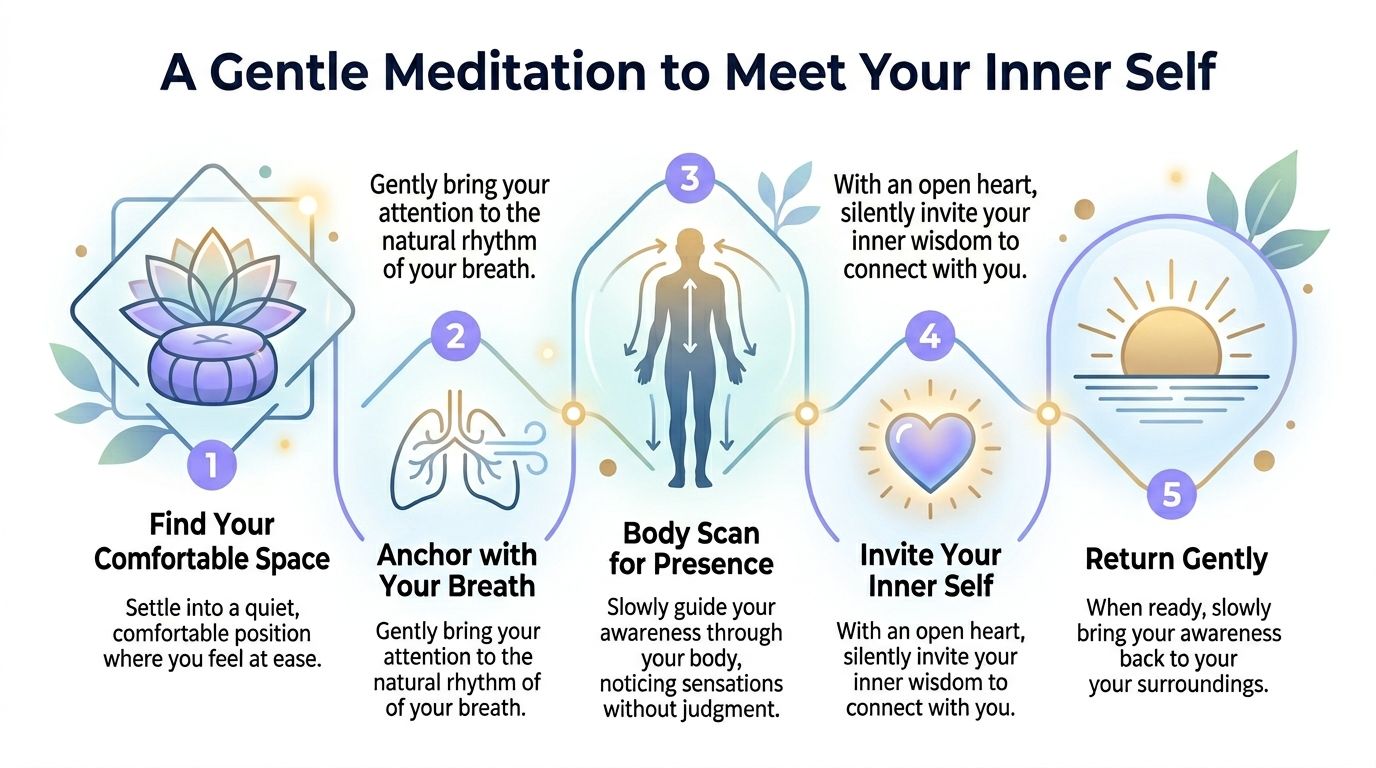
If you're unsure what to do once you sit down, use this simple structure. It gives your mind enough guidance to stay engaged without making the experience rigid.
For beginners, guidance can make a real difference. A 2023 study found that guided meditation had 45% higher adherence rates over 12 weeks than self-guided practice, according to this review of guided versus self-guided meditation.
If you'd like support while you practice, you can use this guided session tool.
Step into the practice slowly
Begin by sitting or lying down in a way you can maintain without strain. Let your hands rest naturally. If closing your eyes feels uncomfortable, lower your gaze instead.
Then follow this sequence.
Notice contact points
Feel where your body meets the chair, floor, or cushion. This gives your attention somewhere solid to land.Find your natural breath
Don't force deep breathing. Just notice the inhale and exhale as they already are.Scan the body gently
Move your awareness from forehead to jaw, shoulders, chest, belly, hips, and legs. Where you find tension, soften what you can.Watch thoughts without chasing them
When a thought appears, label it lightly. "Planning." "Remembering." "Worrying." Then come back to breath.Close with a kind phrase
Try, "May I be well," or "I'm here with myself."
A simple script you can follow
Read this once or twice, then try it from memory.
Settle your body.
Feel the support beneath you.
Let your breath arrive naturally.
Notice the air moving in and out.Bring your attention to your forehead. Soften it.
Relax your jaw.
Let your shoulders drop.
Soften your belly.If thoughts come, let them come.
You don't need to stop them.
Just name them gently and return to the breath.Ask quietly, "What do I need to notice right now?"
Don't force an answer.
Just stay present.Rest here for a few breaths.
End with kindness toward yourself.
When you're ready, open your eyes.
After you've read through the practice, it can help to watch a visual guide and then try the meditation yourself.
How long should you meditate
Keep the answer simple. Start shorter than you think you should.
- If you're brand new: Try five minutes.
- If five minutes feels good: Stay there for several days before increasing.
- If you're experienced: Extend the silent portion and spend more time observing thoughts without reacting.
Consistency matters more than duration. A shorter practice you repeat will shape your inner life more than an ambitious session you avoid.
What you might notice
Some sessions feel spacious. Some feel messy. Both count.
You may notice emotion rising. You may feel peaceful. You may just realize how tired you are. Meditation for inner self isn't about manufacturing a certain mood. It's about learning to stay present with your real experience, kindly and steadily.
Navigating the Common Hurdles of Your Practice
Most beginners assume difficulty means they're failing. Usually, it means they're practicing.
The inner world doesn't become quiet on command. When you finally sit still, you often notice how busy your mind already was.
When your mind keeps wandering
This is the most common frustration, and it's completely normal. Research on Mindfulness-Based Stress Reduction found that the mind wanders about 47% of the time during initial meditation sessions, as noted by the American Psychological Association overview of meditation and mindfulness.
That means wandering isn't proof that meditation isn't working. The return is the practice.
Try this when you drift:
- Use a soft label: Say "thinking" or "wandering."
- Return to one anchor: Breath, body contact, or a hand on the heart.
- Drop the commentary: Don't add, "I'm bad at this."
Every time you come back, you're strengthening attention.
When your body feels restless
Fidgeting can make people quit early. Often, restlessness is energy becoming more noticeable once external distractions stop.
Instead of forcing stillness, adjust skillfully.
- Sit in a chair if the floor makes you ache.
- Keep your spine upright but not stiff.
- Try meditating with eyes softly open if closing them makes you uneasy.
- Shorten the session and end before discomfort turns into dread.
Small adjustments protect the habit.
When you get sleepy or dull
Sometimes meditation reveals fatigue more than peace. That's useful information.
If sleepiness shows up often, experiment with a different time of day. Morning may work better than late evening. You can also sit more upright, open a window, or begin with a few deeper breaths before settling into a natural rhythm.
When it feels like nothing is happening
This one can be surprisingly discouraging.
You sit. You breathe. You finish. No lightning bolt. No deep wisdom. Just a normal few minutes.
That doesn't mean the practice is empty. Inner connection often grows subtly. You may notice it later when you pause before reacting, speak to yourself more gently, or recover from stress a little faster.
A kinder way to measure progress
Don't ask only, "Did I feel calm?"
Ask better questions:
| Helpful reflection | Why it matters |
|---|---|
| Did I show up? | This builds trust with yourself |
| Did I notice my state honestly? | Awareness comes before change |
| Did I return without attacking myself? | Self-connection grows through kindness |
Meditation for inner self becomes sustainable when you stop treating each session like a test and start treating it like a relationship.
Amplify Your Practice with Daily Affirmations
Meditation gives you a quiet meeting point with yourself. Affirmations help you carry that relationship into the rest of the day.
This pairing matters because many people don't struggle with insight. They struggle with remembering that insight when stress returns. A calm moment in the morning can fade fast once emails, deadlines, self-doubt, or family demands start pulling on you again.
That's where affirmations become useful. They act like small reminders of the truth you touched during meditation.
Why this combination works so well
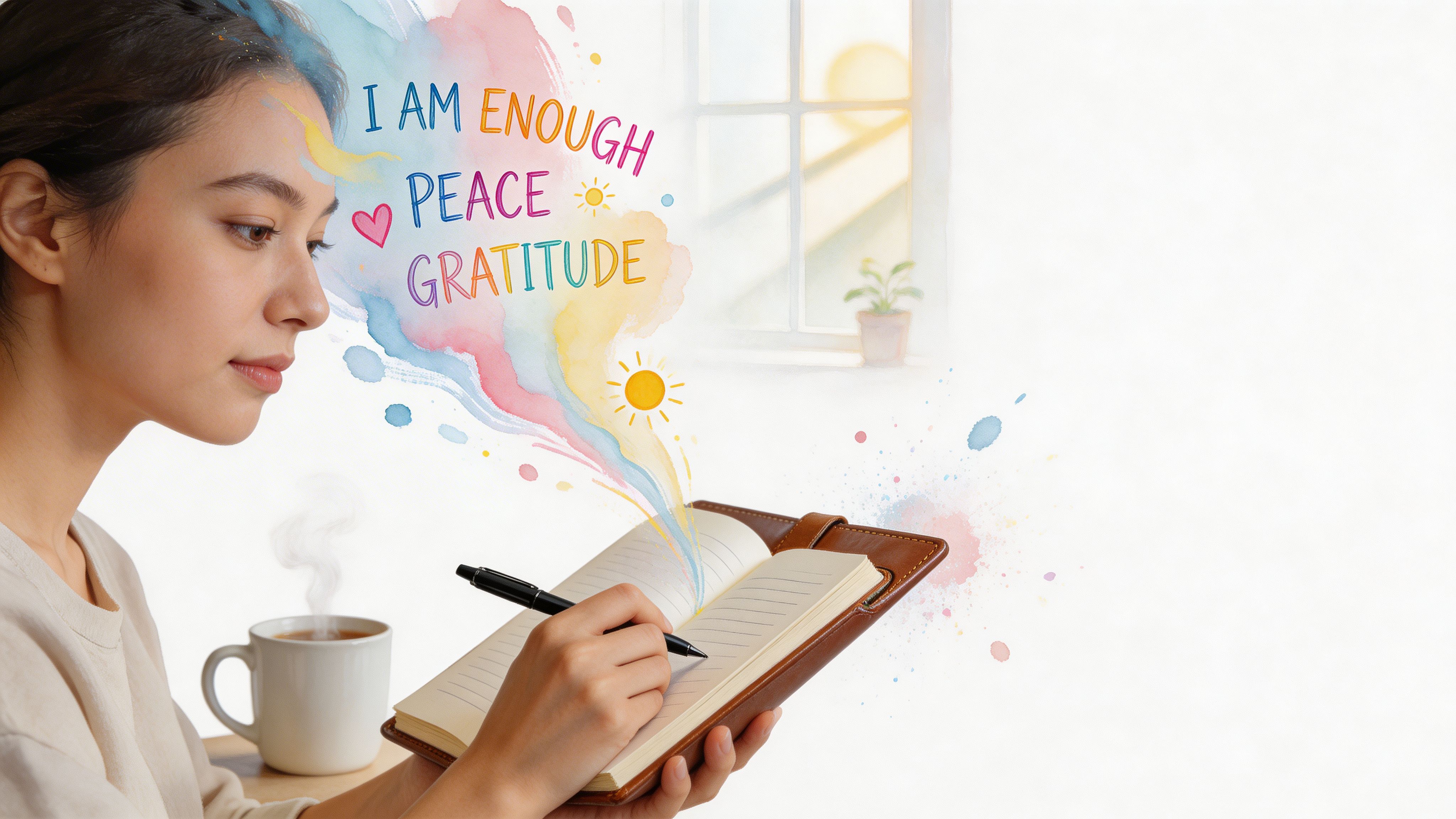
Meditation helps you notice your inner voice. Affirmations help you shape it.
If meditation reveals that your inner dialogue is rushed or critical, an affirmation gives you a healthier sentence to return to. Not as denial, but as direction.
Examples can sound like this:
- After meditation: "I can meet myself with patience."
- Before a stressful meeting: "I stay grounded in who I am."
- During a hard week: "I don't need to earn rest."
- When self-doubt spikes: "My worth isn't up for debate today."
For busy people, this can be especially effective. A 2025 study reported that 5-minute daily affirmation sessions boosted inner self-awareness by 28% more than traditional meditation alone, with 67% of participants reporting sustained calm amid stress, according to the cited video reference discussing the study. Because that finding is future-dated, it's best treated as a reported upcoming research insight rather than settled long-term consensus.
How to build a simple daily rhythm
You don't need a long ritual. You need a repeatable one.
A practical flow might look like this:
Sit for a few quiet minutes
Use your meditation to notice your emotional state without trying to control it.Choose one affirmation that matches what you need
If you feel overwhelmed, pick something regulating. If you feel disconnected, choose something warm and identity-based.Repeat it at transition points
Say it while making tea, waiting for the elevator, or locking your screen.Write it once at night
Writing slows the thought down and lets it land differently.
What makes an affirmation actually helpful
A strong affirmation is believable enough to enter your mind, but supportive enough to shift it.
Compare these:
| Less helpful | More grounding |
|---|---|
| "Everything is perfect" | "I can stay present with what is here" |
| "I never feel anxious" | "I can respond to anxiety with care" |
| "I am enlightened" | "I am learning to trust myself" |
The second column works better because it meets real life.
Use affirmations as anchors, not slogans.
A modern way to keep the practice alive
App-based support can make a difference in these situations. If your day is fragmented, you won't always remember your chosen phrase on your own.
A simple digital tool can place affirmations where you already look. On your phone. On your lock screen. In short, repeatable moments that fit real life.
If you want help generating phrases that match your mood or goals, this daily affirmation generator can give you a starting point.
The most helpful systems also let you interact with the same affirmation in different ways. Reading reinforces familiarity. Speaking builds embodiment. Listening adds rhythm. Writing deepens reflection.
That variety matters because inner connection isn't only something you understand. It's something you practice until it becomes easier to remember under pressure.
Weaving Inner Connection into Your Daily Life
The deepest benefit of meditation for inner self often appears outside the session.
It shows up in the pause before you answer sharply. In the way you notice your body tightening during stress. In the moment you catch an old thought pattern and choose not to follow it all the way down.
Let the practice leave the cushion
A quiet sit is valuable, but daily life is where inner connection becomes lived wisdom.
Try carrying one part of your practice into ordinary moments:
- Use one conscious breath before opening your inbox.
- Relax your jaw and shoulders while standing in line.
- Repeat a steadying phrase when your mind starts spiraling.
- Check in with one honest question: "What am I feeling right now?"
These tiny returns matter. They turn meditation from an isolated habit into a way of relating to yourself.
Keep your rhythm gentle and steady
You don't need to overhaul your life. You need a pattern you can keep.
Some people prefer a short morning meditation and one evening reflection. Others do better with brief pauses spread through the day. If you're building consistency, it can help to support that rhythm with ideas from this guide on building a daily practice.
The shape of your ritual matters less than the tone of it. Let it be kind. Let it be honest. Let it fit your actual life.
A sustainable practice feels like support, not punishment.
Trust the slow change
Inner connection usually grows subtly. You may not notice it in a dramatic moment. You may notice it when you realize you're less at war with yourself.
That is meaningful progress.
You don't have to wait until you're calmer, wiser, or more disciplined to begin. You can start today, exactly as you are, with one breath, one pause, and one small act of attention.
If you want gentle support carrying this practice into everyday life, try I Become. It’s a thoughtful iOS app designed to help you rewire your inner dialogue through personalized daily affirmations, lock screen widgets, and four simple practice modes: Read, Speak, Listen, and Write. If meditation helps you hear yourself more clearly, I Become can help you remember that deeper voice throughout the day. Download it from the App Store and begin building a steadier, kinder relationship with yourself.
Found this helpful? Share it with someone who might benefit.