
10 Best Daily Affirmations App Free Options (2026)
Find your ideal daily affirmations app free of charge. We review the 10 best apps of 2026, comparing features, pros, cons, and who each is best for.
Start Your Day With a Positive Mindset
You wake up, reach for your phone, and before email, group chats, or your running to do list gets a say, you see one clear sentence that steadies you. Maybe it reminds you that you're capable. Maybe it reminds you to soften your inner voice. Maybe it helps you begin the day from intention instead of reaction.
That small interruption matters. A good affirmation app can make positive self-talk easier to remember, easier to repeat, and easier to turn into a real habit. That's a big reason this category keeps growing. Similarweb tracking for Daily Affirmations Life Quote on Google Play showed peak daily active users above 50,000 in Q1 2025, alongside more than 1.2 million installs from January through April 2025 and a 35% month over month download increase during that period.
If you're searching for a daily affirmations app free enough to start without overthinking it, the challenge isn't finding an app. It's finding one you'll use next week, not just today.
Some people need widgets. Some need audio. Some want to write their affirmations by hand on screen. Others want one gentle prompt and nothing more. The picks below focus on what each app does best, where the free version feels generous, and what trade-offs are worth knowing before you commit.
1. I Become
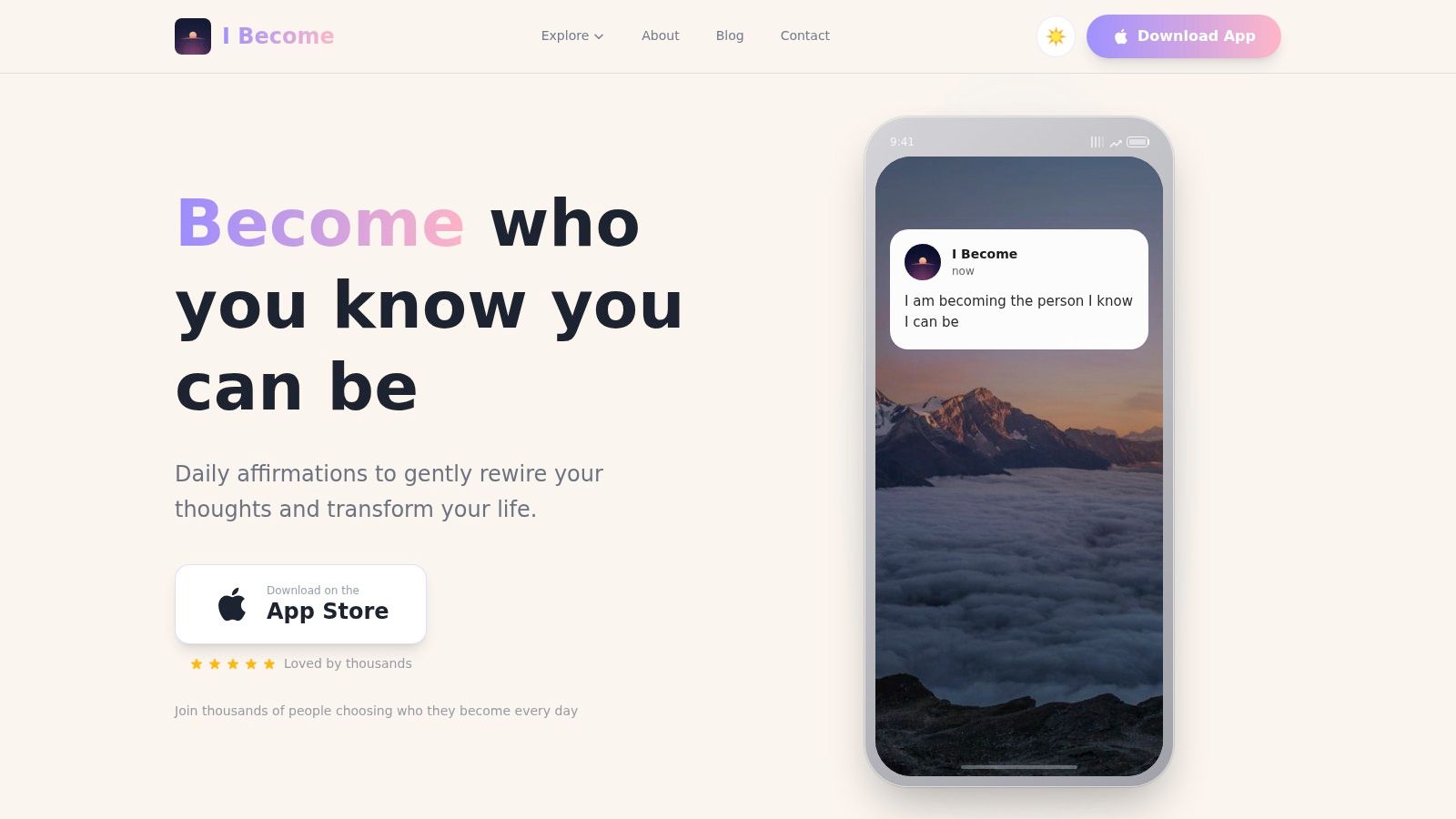
You open your phone before breakfast, and one short prompt is already waiting on your Lock Screen. No searching, no deciding, no extra friction. That is the kind of design choice that makes I Become stand out.
For iPhone users, I Become is one of the best picks here if the goal is to build a real practice instead of collecting motivational quotes you forget to revisit. It supports several ways to work with affirmations: reading, speaking, listening, and writing. That range matters more than it sounds. On busy mornings, reading may be enough. On harder days, speaking or writing often creates more emotional weight and better focus.
Best for intentional daily ritual and mixed learning styles
I recommend this app most often to people who want structure without feeling boxed in. Visual learners can keep affirmations front and center with the widget. Auditory users can listen on a walk or commute. People who build habits through repetition get helpful progress cues and streak tracking.
The strongest feature is still the Lock Screen widget. In practice, that changes behavior. Apps that rely on you remembering to open them often fade after the first week. Apps that show up at the right moment have a better shot at becoming part of your day.
The trade-off is straightforward. This is an iPhone-first option, so Android users should skip ahead to another pick. The free version is good enough to start, but some advanced features and deeper content sit behind premium.
Here is the quick read on where it fits:
- Best for: iPhone users who want a steady morning, midday, or bedtime ritual
- Works especially well for: visual learners, auditory users, and anyone who benefits from switching practice modes
- Most useful feature: Lock Screen reminders that keep affirmations visible
- Main trade-off: iOS only, with some paid content inside the app
One setup tip from experience. Pick one mode for your first three days instead of trying all four at once. Users often do better when the habit gets simpler before it gets deeper. If you want ideas for building a practice around apps like this, this guide to apps for affirmations is a useful next read.
If you want a free starting point that still leaves room to grow, I Become earns the top spot in this list. You can get it from the App Store through the official site.
2. I Am, Daily Affirmations
You download an affirmations app at night, set three reminders, and hope it will still feel helpful by Friday. I Am, Daily Affirmations works well for that exact stage. It is polished, quick to set up, and easy to understand without any fiddling.
The app's advantage is usability. Categories are clearly labeled, reminders are simple to configure, and the overall design feels calm instead of cluttered. For someone who wants to start a practice fast, that matters more than having endless customization.
Best for beginners who want a polished daily routine
I usually point visual routine-builders here first. The widgets are useful, the browsing experience is tidy, and Apple Watch support adds one more place to keep the habit visible. Accessibility support like VoiceOver and Voice Control also gives it a wider practical range than many smaller affirmations apps.
The trade-off is content depth in the free tier. You can build a real habit with the free version, but if you like exploring new themes often, the app starts nudging you toward paid options sooner than some competitors.
Set fewer reminders than you think you need. One good prompt you read is better than four you swipe away.
A practical setup tip. Start with one category that matches your current season, such as confidence, stress, or sleep. Then keep notifications to once or twice a day for the first week. That approach lowers the chance of reminder fatigue and gives the words time to feel familiar. If you want the research behind why repetition and self-relevance matter, this science of affirmations guide is worth reading.
Here is the quick fit check:
- Best for: Beginners who want an attractive app with minimal setup friction
- Works especially well for: visual learners, widget users, and people building a simple check-in habit
- Most useful feature: well-designed widgets and easy category browsing
- Main trade-off: the free version can feel limited if you want a wider content library
If you're comparing polished mainstream options, it's also worth browsing this roundup of apps for affirmations to see how different habit styles line up.
3. ThinkUp, Positive Affirmations
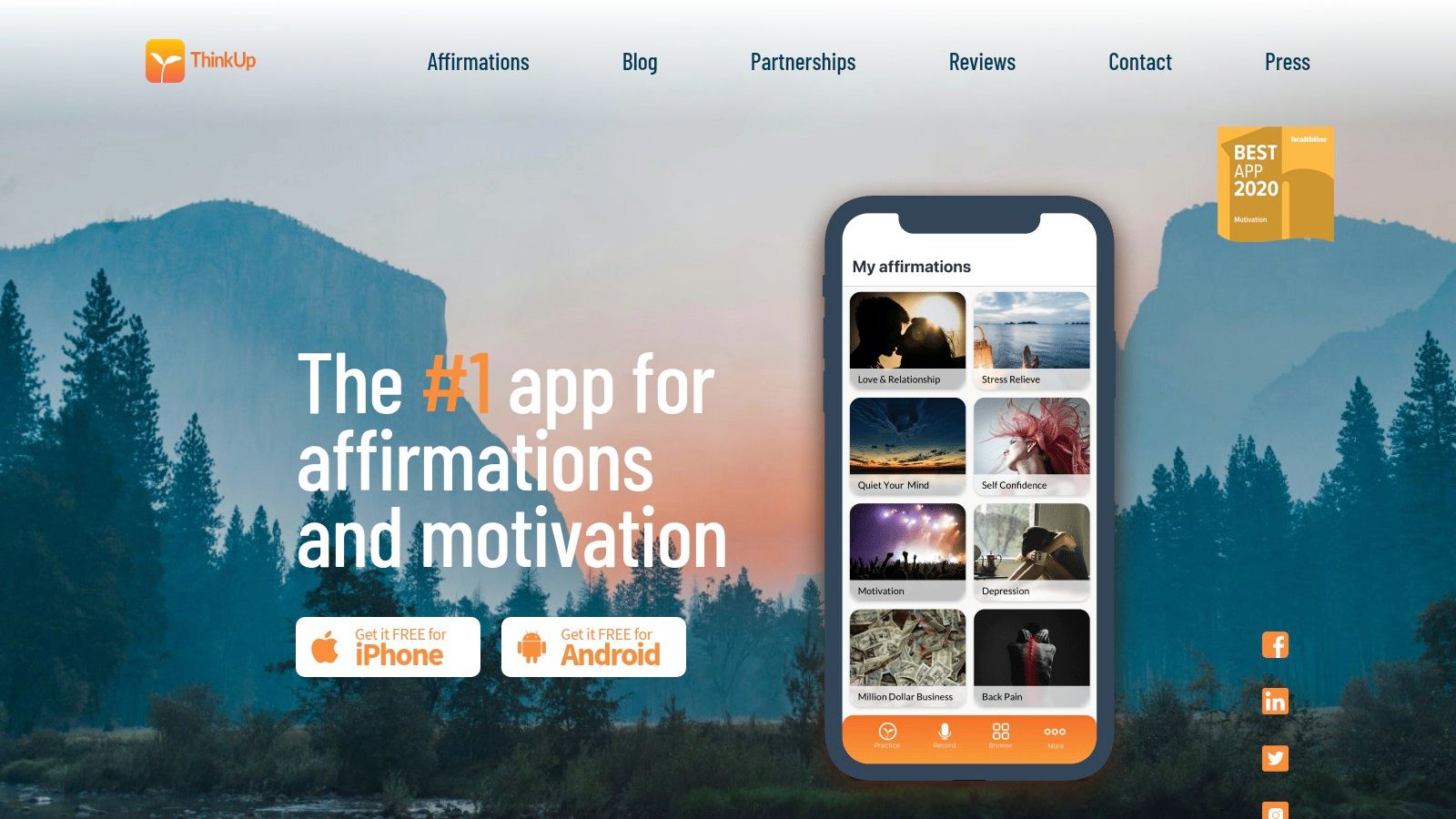
Some people connect with affirmations only when the words sound personal. That's where ThinkUp has a clear advantage. Its core idea is simple and powerful. Record affirmations in your own voice, loop them into playlists, and pair them with music.
That format feels more immersive than reading cards on a screen. It's also one of the few approaches that can fit naturally into a walk, commute, or quiet evening routine. If spoken repetition matters to you, ThinkUp is easy to take seriously.
Best for auditory learners
ThinkUp's free tier lets you test the core method without much setup friction. The app also ties into iOS Health for mindful tracking, which some users will appreciate if they already like keeping wellness habits in one place.
The bigger limitation is that the interface feels more functional than beautiful. That's not fatal, but it matters if design affects whether you'll return. The free plan is also limited enough that you may hit the ceiling fast if the voice-recording approach clicks for you.
Google Play lists ThinkUp as offering 1,000+ affirmations on its app listing, which gives beginners a useful base to personalize from.
Your own voice can make an affirmation feel less like borrowed language and more like a commitment you're choosing.
If you want to understand why some affirmation formats feel more effective than others, this guide on the science of affirmations is worth reading alongside your app trial.
4. Mantra, Daily Affirmations
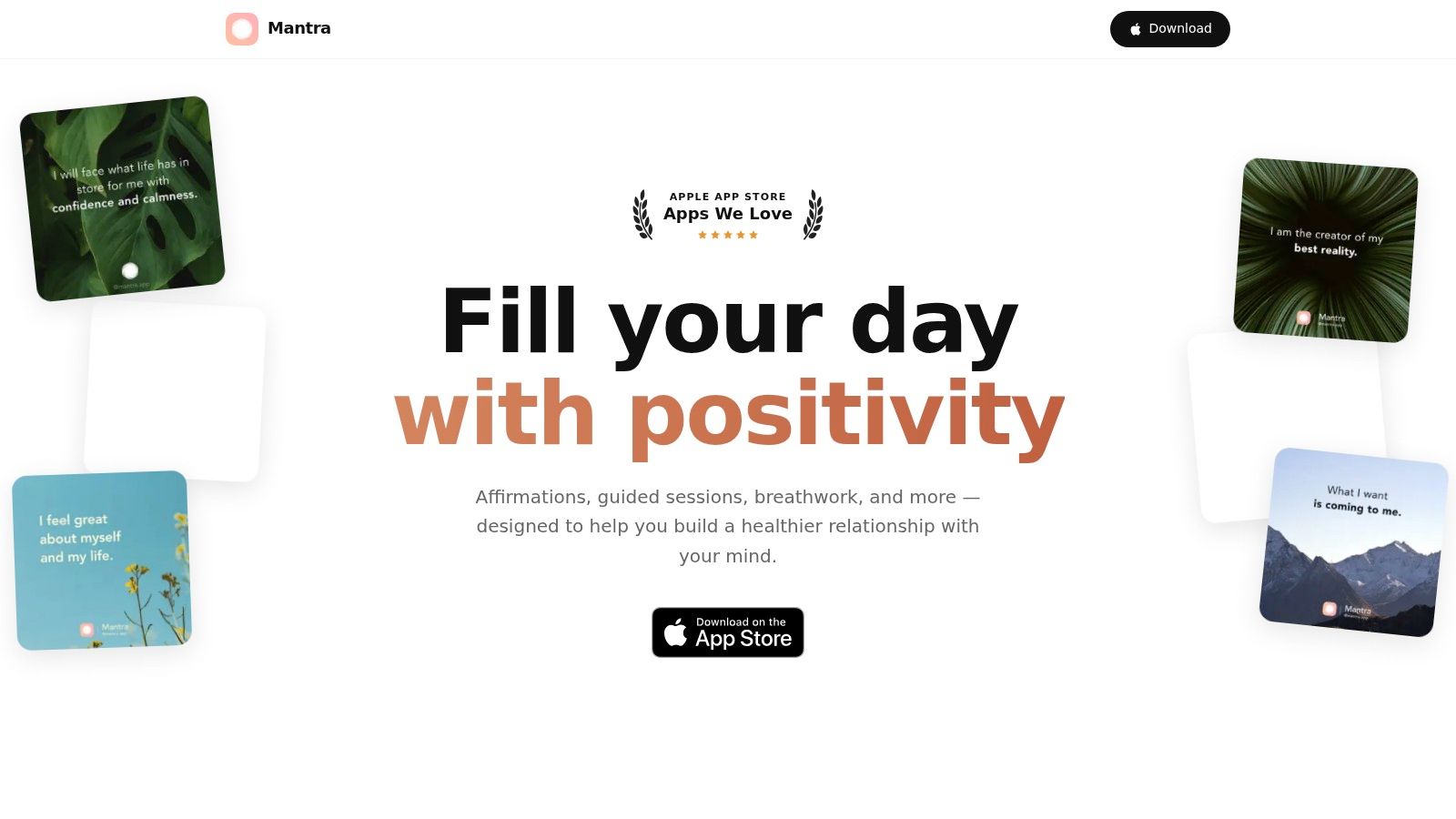
Mantra is one of the better choices if visuals are part of what keeps you engaged. Some apps treat design as decoration. Mantra makes it part of the practice. Themes, widgets, and gentle audio all work together to create a calmer feel from the first session.
This matters more than people admit. If an app feels harsh, crowded, or generic, it can start to feel like another task. Mantra avoids that. It gives you daily notifications and Lock Screen or Home Screen support, but the tone stays soft rather than demanding.
Best for visual learners
The app also mixes text, guided audio, and voice recording well. That gives you more than one path into the habit without making the app feel overbuilt. For users who want an affirmation app that blends into an aesthetically minded self-care routine, that balance is appealing.
Where it falls short is platform flexibility. It's best suited to iPhone users, and like many design-forward wellness apps, much of the richer experience sits behind premium access.
Here's who will probably like it most:
- Best fit: Users who want affirmations to feel calming and beautiful, not purely functional.
- Daily use case: Quick widget check-ins, short audio sessions, and low-friction reminders.
- Main drawback: If you're on Android or want a deep free tier, you'll likely feel constrained.
5. Selfpause, Daily Affirmations & AI Life Coach
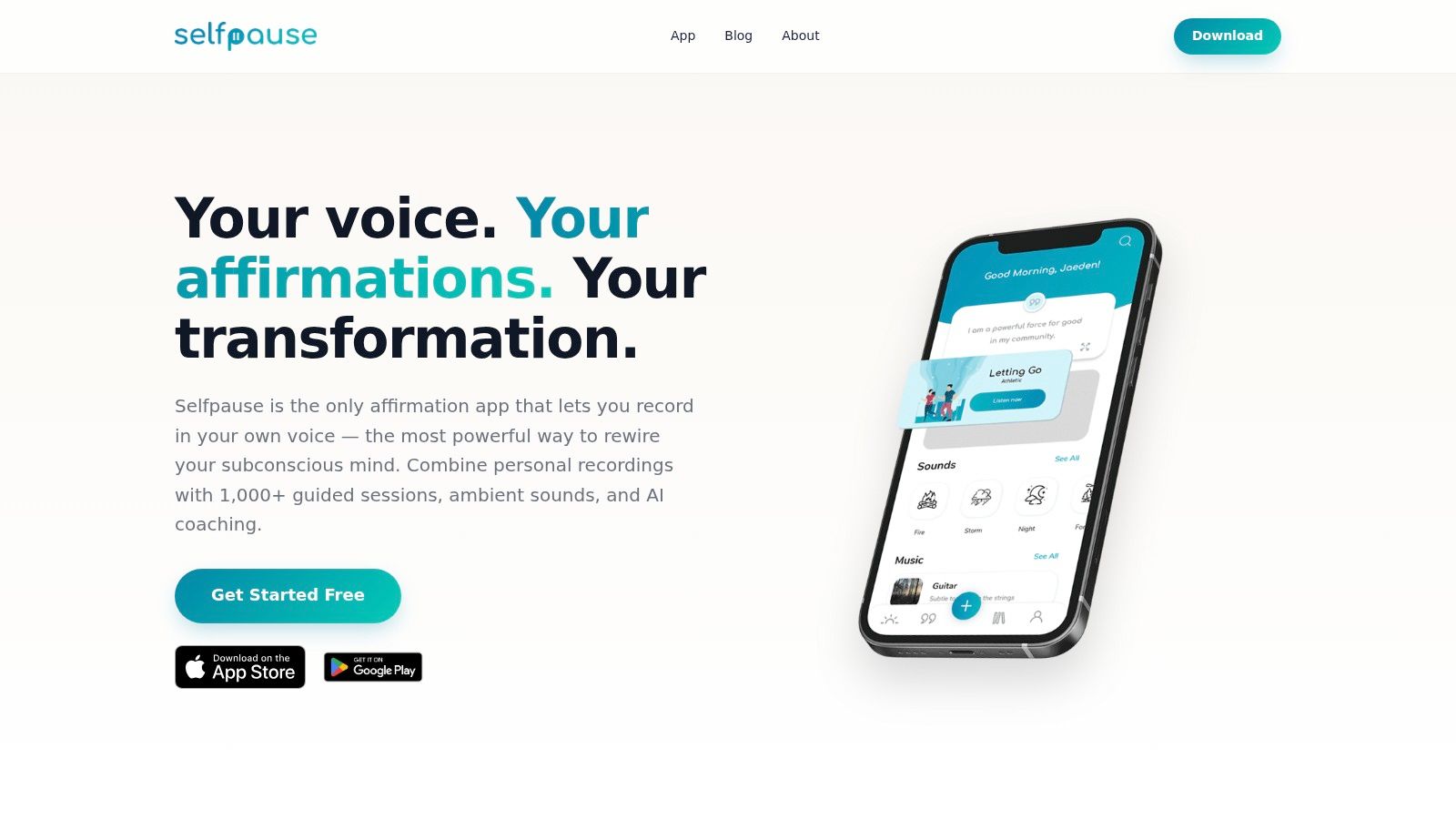
You open an affirmation app hoping for one clear prompt, then end up staring at dozens of topics, recordings, and coaching options. Selfpause works best for the person who sees that range as useful, not distracting.
Selfpause puts customization at the center. You can create your own recordings, choose from a wide topic library, and pair sessions with ambient sound. That makes it a stronger fit for users who want affirmations shaped around a specific problem, such as stress, confidence, sleep, or a current life transition, rather than a generic daily quote.
Best for self-directed personalization
I'd point this one toward routine-builders who like to adjust the practice as their needs change. The AI life coach angle and large session library give you more ways to keep the habit fresh. The trade-off is setup friction. If too many choices make you stall, this app can feel crowded in the first few sessions.
A practical way to start is to ignore most of the library at first. Pick one theme, record two or three affirmations in your own voice, and use those for a week before exploring more. That approach makes Selfpause feel more focused and helps you tell whether the extra features are helping or just adding noise.
- Best for: Users who want custom voice affirmations and broad topic coverage.
- Setup tip: Start with one goal area and a short saved playlist instead of browsing everything.
- Main drawback: The free experience may feel limited if you want frequent access to the more advanced coaching and content.
If you're comparing free tools and trying to decide whether extra features are worth paying for, this guide to affirmation app free vs premium options gives a useful reality check.
6. Gratitude, Journal, Affirmations, Vision Board
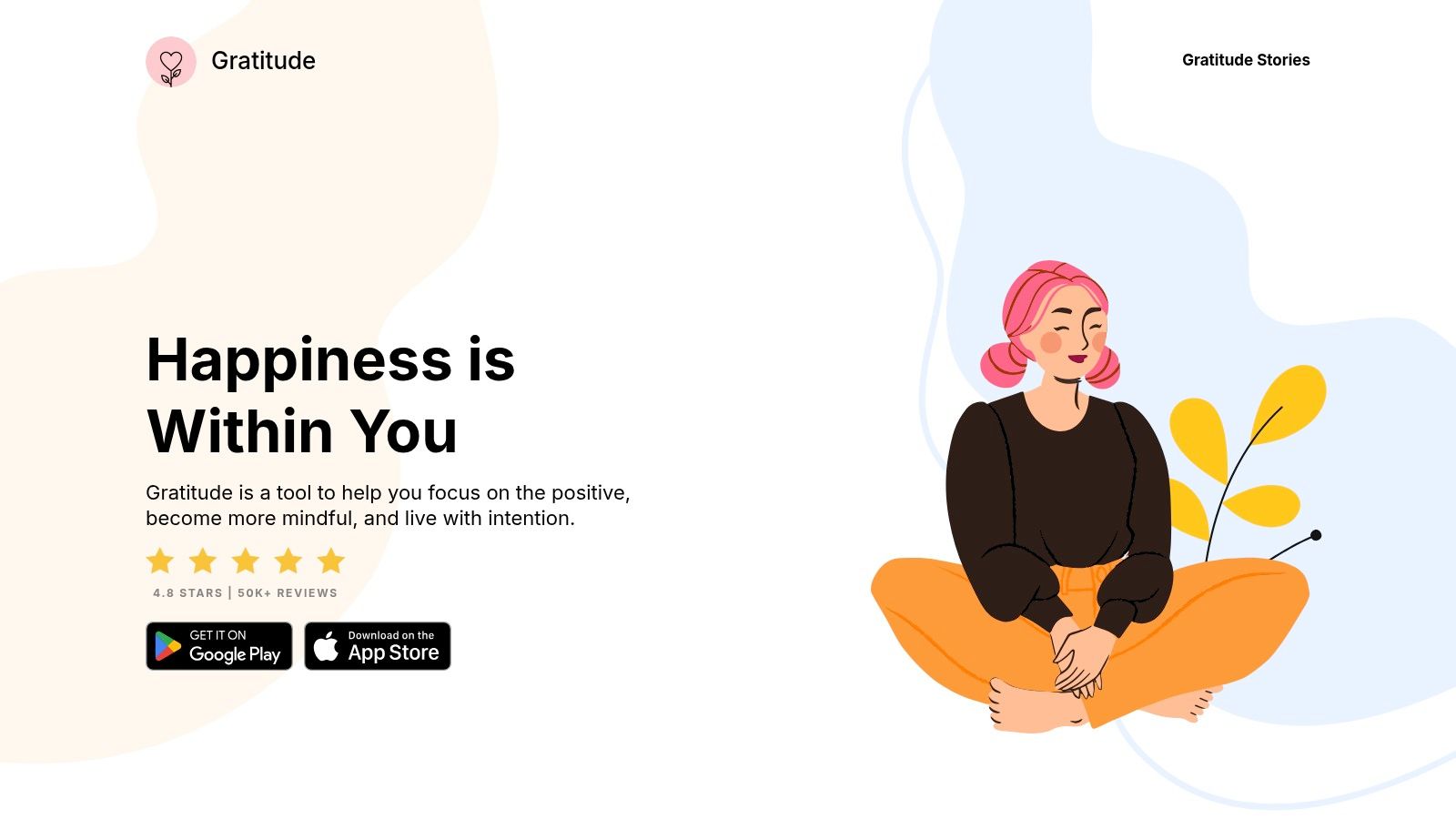
If affirmations are only one part of how you reflect, Gratitude is a smart pick. It combines affirmations with journaling, prompts, streaks, media-rich entries, and a vision board builder. For the right person, that all-in-one setup is more helpful than juggling separate apps.
This is the app I'd point to for someone who already keeps notes about moods, goals, or gratitude and wants affirmations to sit beside those habits. The integration makes the practice feel less isolated. Instead of consuming one uplifting line and moving on, you can connect that line to what you're feeling and building.
Best for journalers
Another practical strength is privacy framing. The app emphasizes local storage with optional cloud backup and sync, which some users will value if journaling is part of the routine.
The trade-off is density. This isn't the cleanest app in the category on day one. It can feel a little busy until you've decided which features you will use and which you'll ignore.
If you already journal, your affirmation app doesn't need to be minimalist. It needs to reduce app switching.
A quick read on fit:
- Best for: People who want gratitude journaling and affirmations in one place.
- Most useful combo: Prompt, journal entry, then affirmation review.
- Less ideal for: Users who want a minimalist one-tap affirmation experience.
7. Believe, Daily Affirmations
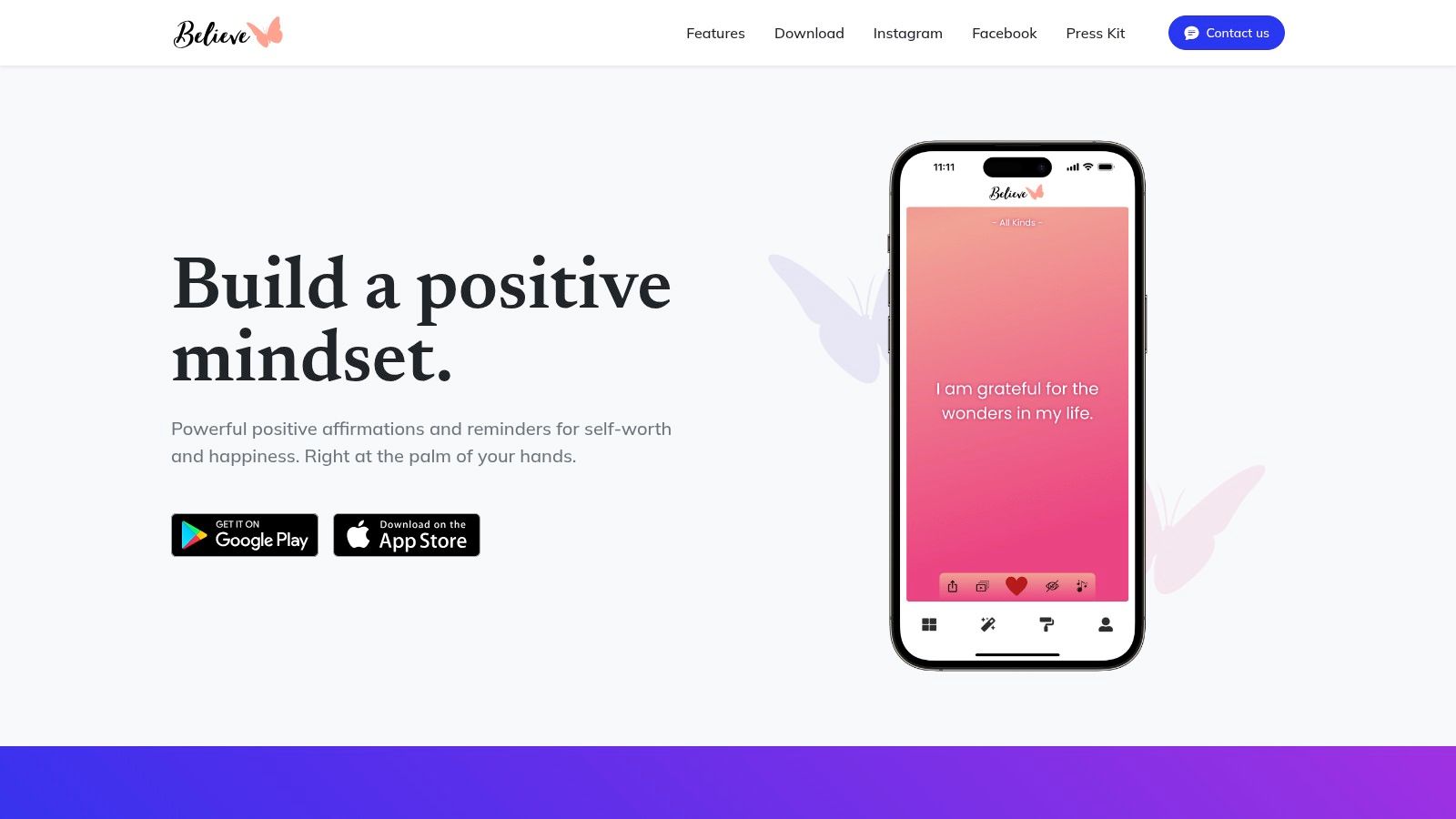
You open an affirmation app, read a line, and forget it ten minutes later. Believe tries to solve that problem by getting you to participate. Believe centers the practice around saying the words out loud, recording them, and repeating them in a more deliberate way.
That difference matters. For users who learn best by hearing themselves speak, passive reading often isn't enough to build a routine that sticks.
Best for active learners
Its standout feature is Affirmation Mirror mode. Looking at yourself while speaking can feel uncomfortable at first, and that is the actual trade-off here. Some people will find that direct approach powerful. Others will bounce off it immediately. I usually recommend this app to anyone who wants affirmations to feel like an exercise, not background inspiration.
Believe also includes widgets, gratitude journaling, and a large category library, so it has more range than its simple presentation suggests. The setup tip is straightforward. Pick one category, save a short list of favorites, and use the mirror or voice feature for a week before exploring anything else. That approach makes it easier to tell whether the app fits your style.
The main limitation is platform support. Believe is iPhone-only, which rules it out quickly for Android users. Some content is also reserved for paid tiers, so free users should expect a good starting experience, but not full access to every theme and tool.
- Best for: Users who remember affirmations better when they say and hear them.
- Setup tip: Start with one category and one interactive mode instead of browsing everything at once.
- Less ideal for: Android users and people who want a very quiet, low-involvement experience.
8. Unique Daily Affirmations

Some people don't need a giant library. They need one sentence a day and no temptation to overcomplicate it. Unique Daily Affirmations is built for that kind of user.
Its single-affirmation approach keeps the experience light. You aren't browsing categories for ten minutes. You aren't choosing between dozens of moods. You open the app, receive the day's statement, and either let it sit with you or save it as a favorite.
Best for minimalists
That simplicity is its main strength and its main limit. If you thrive on novelty, tracking, deep customization, or extensive browsing, this one may feel too bare. If you tend to abandon apps because they ask for too much, it may feel like relief.
Apple Watch support and optional voice recording add just enough flexibility without breaking the minimalist idea.
A practical fit check:
- Best for: People who want one focused affirmation each day.
- Works best when: You prefer consistency over exploration.
- Less ideal for: Users who want a robust self-growth hub.
This is one of the easiest apps on the list to keep using precisely because it asks so little of you.
9. Motivation, Daily Quotes
Motivation, Daily Quotes isn't a pure affirmation app, and that's exactly why some people end up preferring it. If you get bored by repeated first-person statements, a broader stream of quotes, reminders, and encouragement can keep the practice feeling fresh.
The content mix is wider than in a traditional affirmations app. Some users will love that. Others will miss the more direct "I am" structure that makes affirmations feel internal and personal.
Best for quote-driven motivation
The app's configurable notifications and widget designs are strong. It's polished, dependable, and easy to tune into a daily rhythm. On the free Android tier, ads can be part of the experience, and some packs or themes require a subscription.
This app makes the most sense if your real goal isn't formal affirmation practice. It's frequent positive interruption.
A smart way to view this:
- Choose this if: You want uplifting reminders but don't need every prompt to be framed as an affirmation.
- Skip this if: You want a more therapeutic, personalized, or practice-based approach.
- Why it works: Variety can keep motivation alive when repetition starts to blur.
10. Affina, Personalized Daily Affirmations
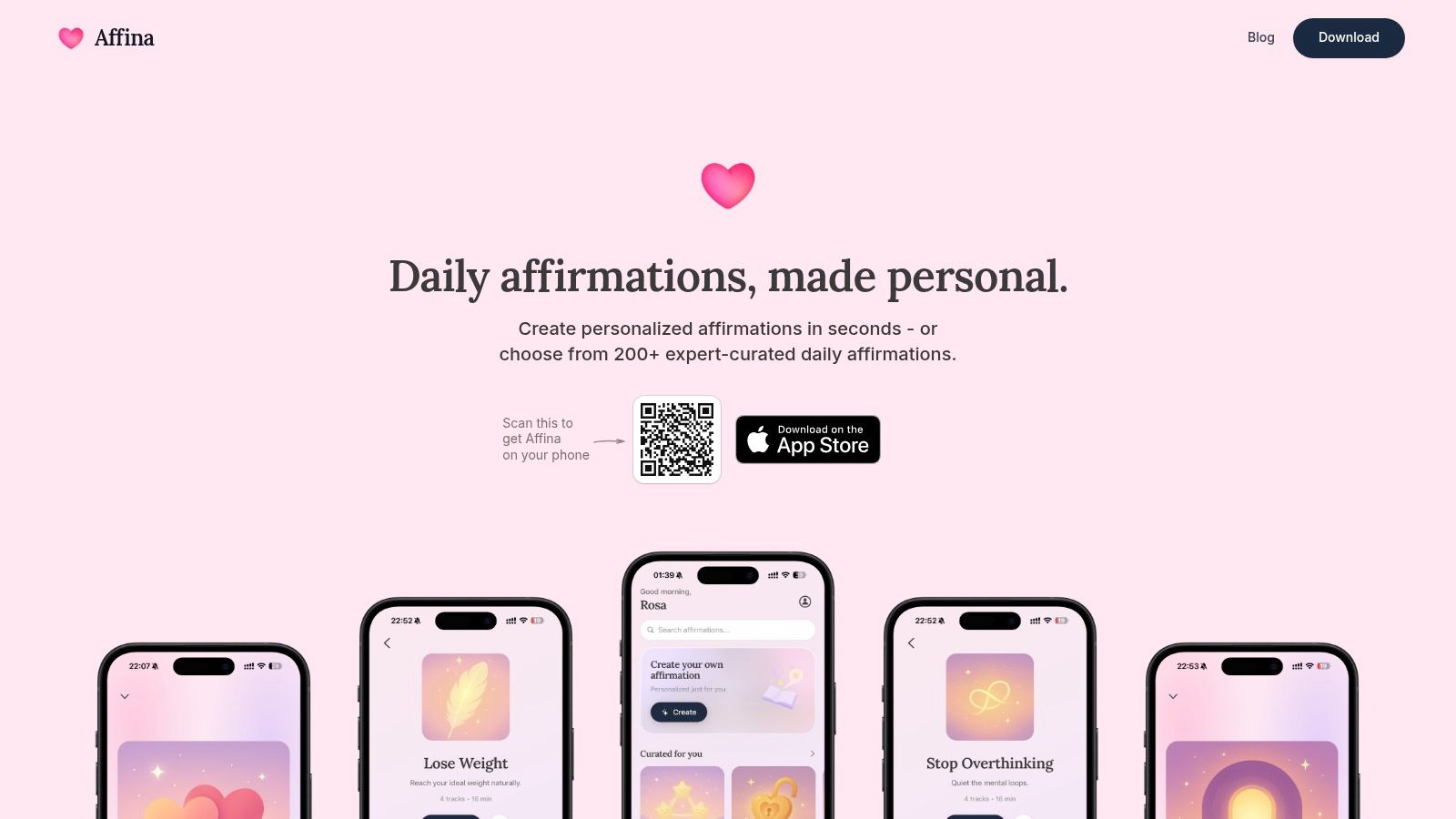
A common problem shows up on day three or four. You want affirmations that sound personal, but recording your own voice feels uncomfortable, and reading text on a screen starts to feel flat. Affina fits that gap well on iPhone because it gets you to spoken affirmations quickly.
Best for personalized audio without recording yourself
Its strongest feature is convenience. The app focuses on generating polished, natural-sounding audio affirmations, so setup feels light and the habit is easier to start. For anyone who learns better by listening than reading, that matters more than having the biggest content library.
There is a trade-off. Affina feels more focused than expansive. You get a guided, audio-first experience, but not the depth of categories, community features, or long-established content collections that bigger apps offer. If you like to test dozens of themes and formats, it may feel a little narrow.
I would point routine-builders to this app if their real blocker is friction. Open the app, choose a topic, save a few favorites, and attach one listening session to something you already do, like a morning walk or your commute. That setup gives Affina its best chance to stick.
The app mentions expert-curated affirmations organized by topic, which helps keep the experience relevant instead of random. For the right user, that focused approach is a strength.
- Choose this if: You want a clean iPhone app that gives you personalized-feeling affirmation audio fast.
- Skip this if: You want a huge free library, cross-platform flexibility, or advanced tracking tools.
- Why it works: It removes one of the biggest barriers in affirmation practice. Getting from intention to actual listening.
Comparison of Top 10 Free Daily Affirmation Apps
| App | Core features | Experience (★) | Price (💰) | Target audience (👥) | Unique selling point (✨) |
|---|---|---|---|---|---|
| I Become 🏆 | Personalized affirmations, Lock Screen widget, read/speak/listen/write, streaks | ★★★★★ | 💰 Free + in‑app premium libraries/themes | 👥 Busy iOS users seeking simple daily practice | ✨ Tailored lock‑screen notifications + multiple practice modes |
| I Am, Daily Affirmations (Monkey Taps) | Large categorized library, widgets, Apple Watch, accessibility | ★★★★☆ | 💰 Free limited → subscription for full access | 👥 Cross‑platform users who want breadth & accessibility | ✨ Massive curated content + strong widget/watch support |
| ThinkUp, Positive Affirmations | Record-your-voice, looping playlists with music, Health mindful tracking | ★★★★☆ | 💰 Free trial/limited free → subscription | 👥 Users who prefer voice playback & immersive sessions | ✨ Personal voice recordings + music-backed loops |
| Mantra, Daily Affirmations (Broftware) | Daily notifications, Lock/Home widgets, guided audio, rich themes | ★★★★☆ | 💰 Freemium; premium for richer content | 👥 Visual/audio learners on iOS | ✨ Design-forward visuals with guided audio sessions |
| Selfpause, Daily Affirmations & AI Life Coach | Unlimited voice recordings, 1,000+ guided sessions, AI coaching, ambient layers | ★★★★☆ | 💰 Free start; upgrade for AI/advanced content | 👥 Users wanting AI help and broad guided content | ✨ AI coaching + extensive guided library |
| Gratitude, Journal, Affirmations, Vision Board (Hapjoy) | Affirmations + gratitude journaling, vision board, widgets, media entries | ★★★★☆ | 💰 Freemium; Pro unlocks exports/themes | 👥 Users combining journaling with affirmations | ✨ Integrated journaling + vision board workflow |
| Believe, Daily Affirmations | Affirmation Mirror, voice playback, 10,000+ affirmations, widgets | ★★★★☆ | 💰 Free + some Premium+ categories | 👥 Users seeking a polished indie iOS app | ✨ Mirror mode for speaking while seeing yourself |
| Unique Daily Affirmations (Gopher Apps) | One focused affirmation/day, press‑hold reveal, favorites, Apple Watch | ★★★★☆ | 💰 Mostly free/lightweight | 👥 Minimalists who want low‑friction practice | ✨ Single daily focus for minimal distraction |
| Motivation, Daily Quotes (Monkey Taps) | Massive quote library, configurable notifications, widget designs | ★★★★☆ | 💰 Free (ads) → subscription/packs | 👥 Quote lovers & heavy discovery users | ✨ Extremely broad content + flexible reminders |
| Affina, Personalized Daily Affirmations (iOS) | Fast personalized audio, 200+ curated affirmations, natural voice options | ★★★★☆ | 💰 Free/basic → subscription for advanced | 👥 Users wanting quick, natural‑sounding audio on iOS | ✨ Rapidly generated natural audio affirmations |
How to Build Your Affirmation Practice Today
You download an app with good intentions, open it for three mornings, then forget it exists by Friday. That pattern is common, and it usually has less to do with motivation than setup.
A useful affirmation practice is simple enough to repeat on an ordinary day. It should still work when you are tired, rushed, distracted, or not feeling especially inspired.
The broader market reflects that interest is growing. Grand View Research values the spiritual wellness apps market at $2.16 billion in 2024 and projects it to reach $7.31 billion by 2033, with a 14.63% CAGR from 2025 onward. Free apps are expected to grow fastest, which fits how many people build this habit. They start with a no-cost option, test what helps, and only pay if the routine sticks.
How to choose the right affirmation app for you
Start with the format you are most likely to return to.
Visual learners usually do better with apps that make the words easy to see throughout the day, such as I Become or Mantra. Auditory users often stay more consistent with ThinkUp, Selfpause, or Affina because listening and speaking feel more natural than reading. People who reflect by writing often get more value from Gratitude or I Become than from an app built around passive playback alone.
The "Best For..." labels in this guide matter here. They save you from picking the app with the biggest library when what you need is a better cue. A routine-builder may need widgets and reminders. A minimalist may stick longer with one short daily prompt. A person who gets bored easily may need variety, categories, and audio options.
Less choice can help.
I have seen people quit a feature-heavy app in a week, then keep a simpler one for months because it asked less of them at the exact moment they were likely to skip.
Free vs premium
A daily affirmations app free to download is enough for beginners at the start. In fact, staying on the free plan for a while is often the smarter move. It helps you prove that you want the habit, not just the idea of the habit.
Paying usually makes sense in three cases:
- You want more personalization. Custom affirmations, extra categories, and more flexible routines matter more after you know your practice is sticking.
- The free limits are getting in the way. Ads, voice caps, locked widgets, or restricted audio can turn into daily friction.
- You have found your long-term fit. Once an app becomes part of your morning or evening routine, a paid plan can feel reasonable.
Many affirmation apps are built on that pattern. The free version gets you started. The paid version is there for people who want more control, more content, or fewer interruptions. There is no rush to cross that line.
What works better than motivation alone
Consistency usually comes from cues, not mood.
Attach the practice to something that already happens every day. Read one affirmation while your coffee brews. Play an audio track during a commute or walk. Speak one sentence before opening your laptop. Write one line after brushing your teeth at night.
Choose the app that supports that moment well. If mornings are chaotic, use a widget-first app. If evenings are quieter, a journaling app may fit better. If you resist long sessions, pick something that delivers one clear prompt instead of twenty options.
Pick the app that lowers friction at the exact moment you usually forget.
That is also where the comparison table helps. Use it as a shortcut. Match the app to your style first, then adjust the settings so the habit has a real place in your day.
Our top recommendation for intentional practice
For iPhone users who want a practice that can adapt to different moods and routines, I Become remains the strongest overall pick in this list.
It works well because it supports more than one kind of session. On a busy morning, you can read. On a quieter evening, you can write. If speaking or listening helps the words feel more believable, those options are there too. That flexibility matters because real routines are not identical every day.
If you decide to try it, start small. Set one reminder. Save one affirmation you would say in your own words. Use one mode for a week before adding more. A steady practice grows faster that way than one built on too many features at once.
If you want an affirmation app that feels supportive instead of demanding, I Become is a strong place to begin. It helps you build a practice around how you already live, with personalized affirmations, Lock Screen reminders, and read, speak, listen, or write modes that make consistency easier.
Found this helpful? Share it with someone who might benefit.