
The 10 Best Apps for Affirmations in 2026
Discover the best apps for affirmations to boost your mindset. Our guide covers top iOS & cross-platform options, with free & premium picks for 2026.

Rewire Your Thoughts, One Affirmation at a Time
Have you ever caught yourself replaying the same harsh thought for hours, then wondered why confidence feels so far away? That loop is familiar to a lot of people. Negative self-talk can get so automatic that it starts to feel like background noise, even when it's shaping your mood, focus, and energy all day long.
Daily affirmations won't solve everything by magic, and they shouldn't be treated like a shortcut past real emotions. What they can do is give you a practical way to interrupt old thought patterns and replace them with words you'd want to live from. The right app helps by making that practice easy enough to repeat when you're busy, stressed, distracted, or just not in the mood to do something complicated.
That's where apps for affirmations can be surprisingly useful. Some are built for quick reminders that pop up on your screen at the right moment. Others lean into audio, guided sessions, journaling, or visualization. A few are best if you want to hear your own voice. Others work better if you want a gentle nudge without having to build a whole routine from scratch.
The best choice isn't always the app with the most features. It's the one you'll use when real life is happening. If your mornings are rushed, you may need widgets and lock screen prompts. If you process things better by speaking out loud, a voice-based app will probably stick more than a pretty quote app. If you like structure, streaks and time-boxed sessions matter.
Below are the apps I'd recommend most, based on the feel of using them, the kind of ritual they support, and the trade-offs that matter once the novelty wears off.
1. I Become
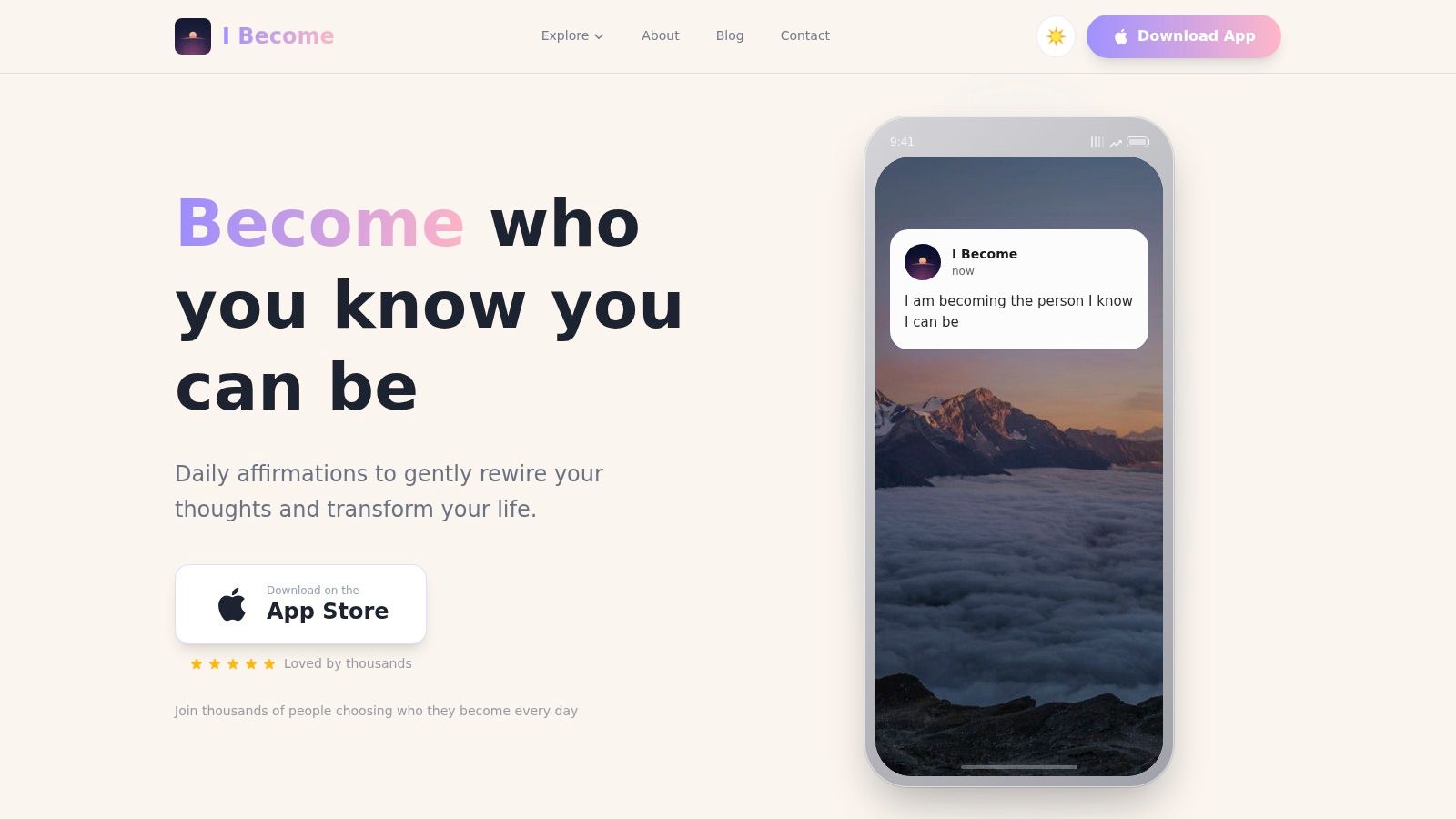
You check your phone before you're fully awake. That tiny habit can work against you, or it can support you. I Become is built for the second option. It suits people who want affirmations woven into ordinary phone use, not saved for a perfect morning routine that rarely happens.
The app feels calm and focused. Its strongest idea is simple: affirmations are easier to keep up with when they appear in the moments you already have. Instead of pushing every practice into a formal session, I Become puts prompts through notifications and Lock Screen widgets, then lets you work from focus areas such as confidence, calm, stress support, and morning energy.
That workflow matters.
A lot of affirmation apps still depend on one behavior pattern. Open app, choose category, start session, stay there long enough for it to count. I Become reduces that friction. If your real problem is not motivation but remembering to interrupt negative self-talk in the middle of a busy day, that design choice makes a difference.
It also gives you four ways to practice, and each one fits a different mood. Read is the quickest. Speak helps when you want more conviction and presence. Listen is useful on low-energy days. Write slows the process down and helps the words sink in.
If you tend to freeze when writing your own affirmations, starting with a practical words of affirmation list for different situations makes setup much easier.
Practical rule: Choose the mode you will actually use on your hardest days, not the one that sounds most impressive.
I see I Become as a strong fit for people who need gentle repetition more than intense immersion. The streak tracking adds structure, but it does not dominate the experience. The design stays warm and encouraging, which matters if overly polished self-improvement apps make you tune out.
The trade-offs are real. It is iOS-only, so Android users need another option. It also is not the pick for someone who wants a huge audio library or highly detailed customization. Its value is elsewhere. It makes affirmation practice feel close at hand, personal, and light enough to repeat.
That simplicity is the main strength here. For someone who wants affirmations to become part of the day, without turning them into another project to manage, I Become is an easy app to keep coming back to.
2. ThinkUp, Positive Affirmations App
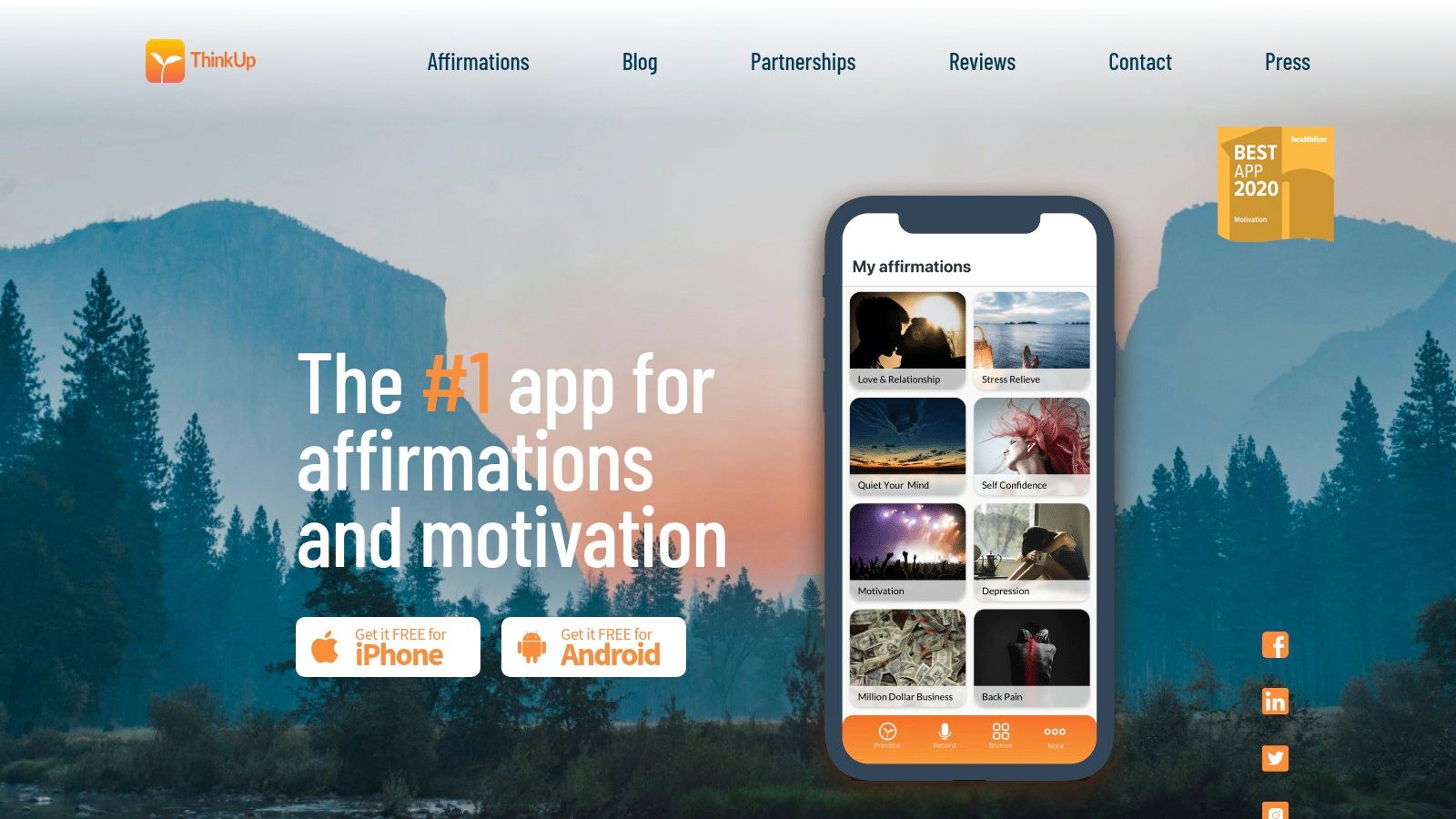
ThinkUp is one of the older names in this space, and you can feel that in the product. It isn't trying to be minimal. It gives you a fuller, more structured affirmation routine centered on one core idea: your own voice can be a powerful delivery system.
That makes ThinkUp a good pick if passive reading never quite lands for you. The app has offered access to hundreds of professional affirmations and has been a category pioneer since around 2015, with free recording for three daily affirmations up to 15 seconds and guidance to keep lists to about 15 affirmations for effectiveness, according to this overview of top motivation apps in the US.
The feel of using it
ThinkUp works best when you want to build repeatable audio sessions. You can choose affirmations, record them in your own voice, layer in music, and set reminders. That creates a more immersive practice than simple swipe-and-read apps.
If you're not sure what to say, it helps to start with a good list of phrases. A resource like this words of affirmation list can make the setup much easier.
Your voice changes the experience. Reading a line is one thing. Hearing yourself say it back to yourself can feel much more direct.
Where it shines and where it feels heavy
ThinkUp is especially good for people who like ritual. If you want playlists, visual cards, usage stats, and Apple Watch support, it gives you a lot to work with. It also suits people who don't mind spending time setting up a practice they'll return to often.
The trade-off is that it can feel heavier than lighter apps for affirmations. If all you want is a soft prompt on your lock screen and a quick moment of encouragement, ThinkUp may feel like more app than you need. Some content and features also sit behind a subscription, so the best parts of the experience may take upgrading.
3. I Am, Daily Affirmations
I Am is one of the easiest apps to recommend if you want affirmations everywhere. It has a polished, mainstream feel, a wide range of life categories, and one of the strongest widget-centered experiences in the space.
This is the app for people who don't necessarily want to build their own affirmation system from scratch. You open it, pick themes that match your life, and let the app keep serving those reminders throughout the day.
Best for ambient encouragement
The biggest advantage here is coverage. If your needs shift between confidence, stress, relationships, work, and emotional grounding, I Am gives you plenty to rotate through. It also performs well with users. The app reached a 4.9/5 iOS rating, according to App Guardians' affirmations app case study.
That kind of popularity doesn't automatically mean it's right for everyone, but it does tell you the product experience works for a lot of people.
What it's like day to day
I Am is strongest when you want low-friction, visual motivation. Home and lock screen widgets make the practice feel ambient. You don't always need to stop and do a session. Sometimes you just need the right sentence in the middle of a hard hour.
- Great for category browsing: You can quickly match affirmations to the part of life that feels shaky.
- Strong widget use: It fits well if you want words in front of you often, not just inside an app.
- Less interactive: If you want speaking, writing, or more active practice modes, it may feel a bit passive.
The main downside is common in bigger wellness apps. The free tier can feel limited, with ads or premium gates shaping the experience. If you prefer a quieter, more focused app, a smaller tool may feel more personal. But if you want breadth, polish, and easy daily exposure, I Am does that very well.
4. Mantra, Daily Affirmations
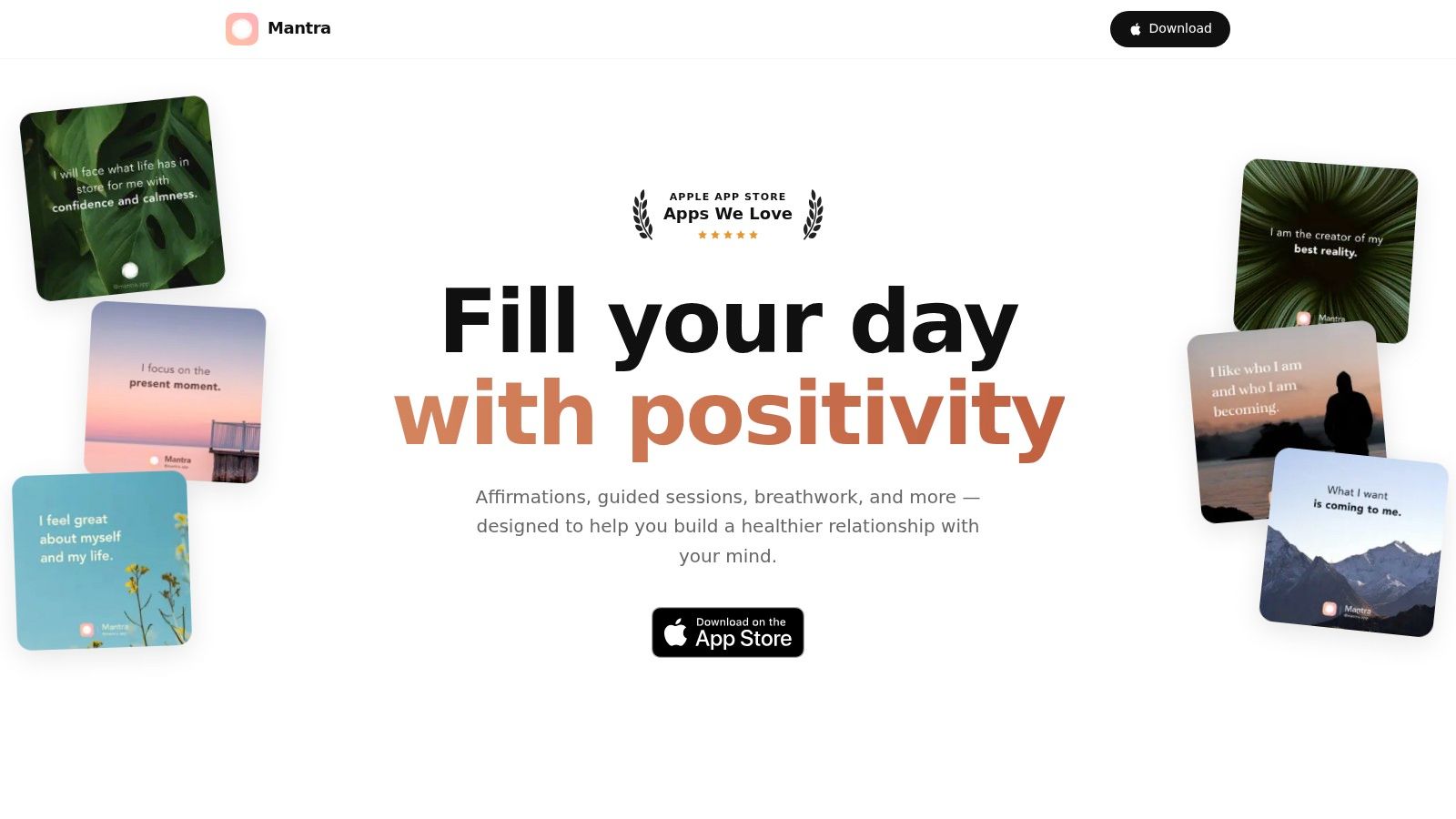
Mantra sits in a nice middle ground between quick daily prompts and deeper guided practice. It has a cleaner interface than some feature-heavy apps, but it still gives you enough customization to keep the habit from feeling stale.
If you get bored easily, that's important. A lot of affirmation routines fail not because the idea is bad, but because the experience starts to feel repetitive and flat.
A good match for creative users
Mantra is strong when you want more than text on a screen. It combines notifications and widgets with guided sessions, voice recording, ambient soundtracks, and visual customization. That mix helps if your brain responds better when the practice feels sensory and intentional.
The app also reportedly offers a library with over 1,000 statements across more than 30 topics through its own product positioning. That's useful for variety, even if your daily routine stays short.
Some people need the affirmation itself. Others need the environment around it. Mantra understands that difference.
The practical trade-offs
Mantra works well for people who like a clean interface but still want room to personalize the ritual. Background audio is especially helpful for hands-free moments, like commuting, walking, or getting ready in the morning.
Still, there are trade-offs worth knowing:
- Good for engagement: Visuals, audio, and guided sessions can make the habit feel fresher over time.
- Not always hands-off: iOS notification behavior can be inconsistent if you stop opening the app for long stretches.
- May feel pricey: Compared with smaller indie apps, the value can depend on how much you'll use the extra modes.
If you want a simple text-only experience, Mantra may be more than you need. If you want affirmations to feel designed, immersive, and varied, it earns a spot on the list.
5. Selfpause, AI Life Coach & Positive Affirmations
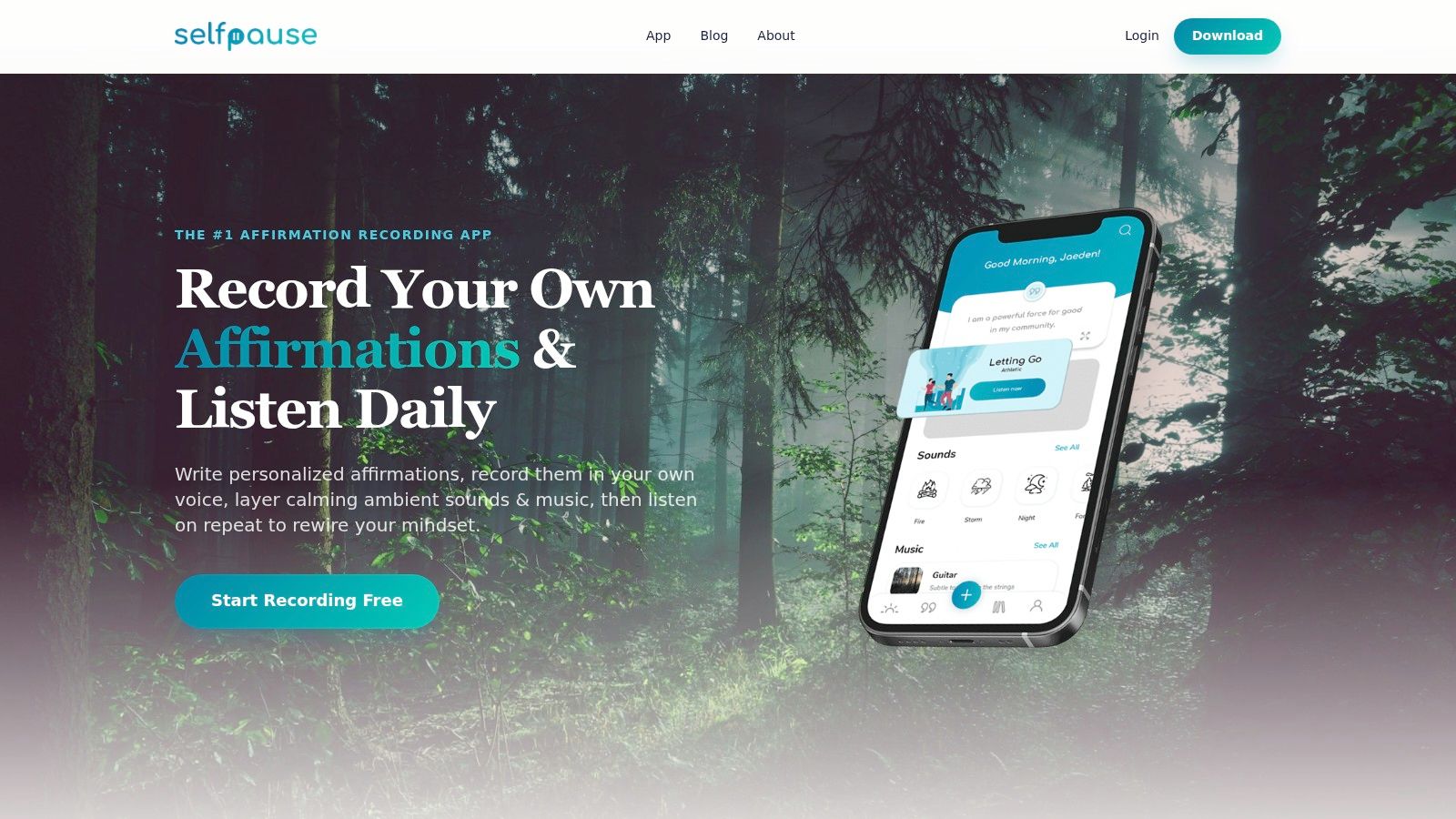
Selfpause is for the audio people. If reading affirmations feels too surface-level and you'd rather build something you can listen to while commuting, winding down, or falling asleep, this one makes a lot of sense.
The app is centered around a clear flow: write your affirmations, record them, layer in sound, and replay them often. That sounds simple, but many apps for affirmations don't make this workflow feel central. Selfpause does.
Where it feels strongest
What I like about Selfpause is that it knows its lane. It isn't trying to be your journal, your mood tracker, and your quote app all at once. It's trying to help you hear supportive language repeatedly in a form that feels immersive.
That can be especially helpful if you're working on a longer-term mindset shift, like confidence or resilience. If that's your focus, this guide on how to develop a growth mindset pairs naturally with the kind of practice Selfpause supports.
Who should choose it
Selfpause is a strong fit if you learn through repetition and sound. The ambient layers and optional guided voices make sessions feel more substantial than mere replaying a memo on your phone.
Its trade-offs are straightforward:
- Excellent for custom audio loops: You can build a repeatable listening practice around your own words.
- Less hybrid flexibility: If you want writing prompts, visual widgets, or streak-heavy habit design, other apps cover that better.
- Pricing isn't very clear upfront: You'll likely understand costs more fully inside the app experience than on the website.
This isn't the app I'd recommend to someone who wants tiny affirmational moments scattered through the day. It is the app I'd recommend to someone who wants to sink into a voice-led routine and let repetition do the work.
6. Believe, Daily Affirmations
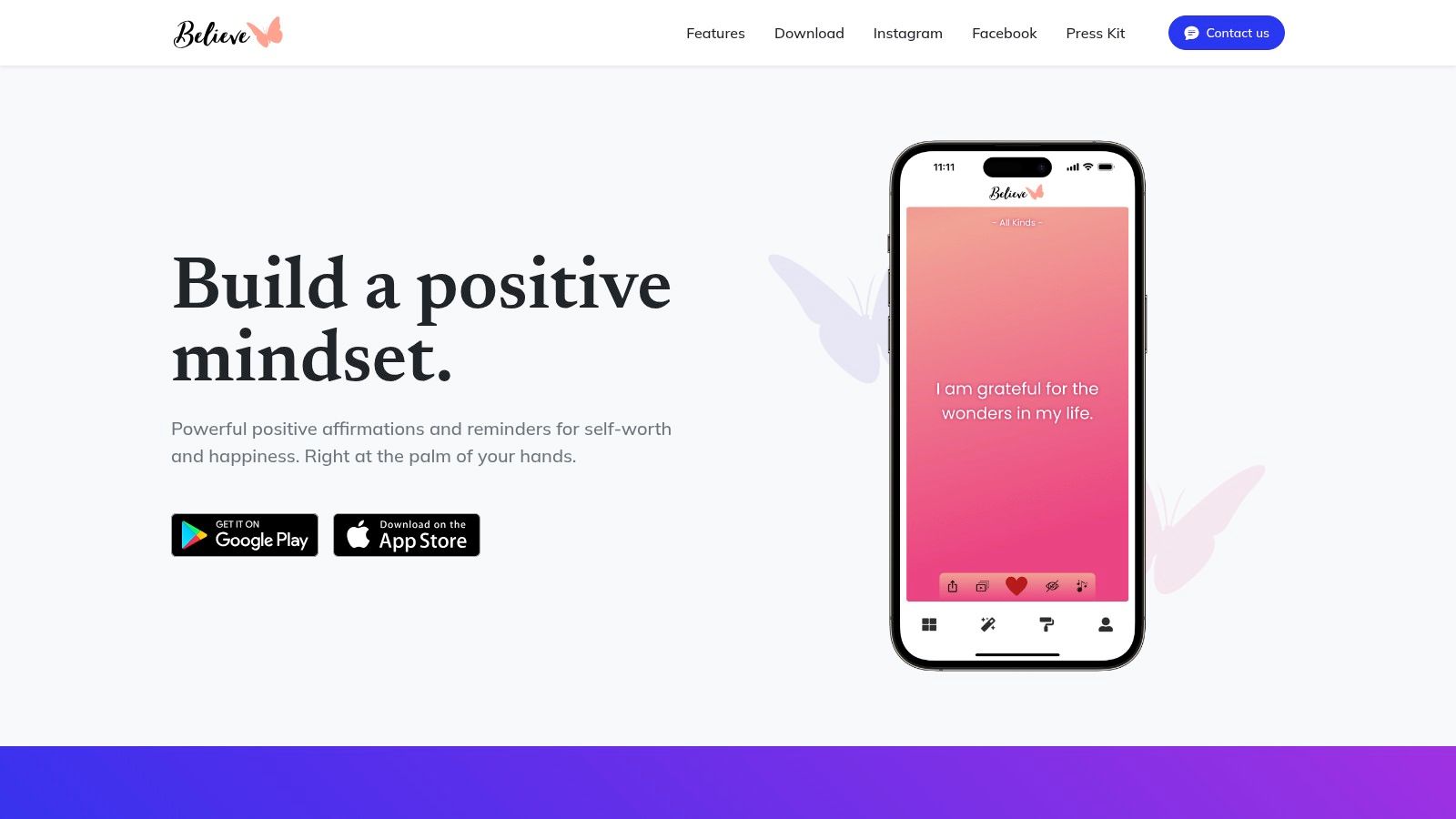
Believe feels more personal and creative than corporate. It leans into visual customization, themed categories, reminders, and shareable affirmation art, which makes it a good option if design motivates you to keep showing up.
Some people want an affirmation app that looks like a calming private space. Others want something they can also turn into a wallpaper, a lock screen, or a post they save. Believe caters well to that second group.
Strong for visual practice
According to the category-pioneer overview referenced earlier, Believe follows the customizable path popularized by ThinkUp, emphasizing categories, themes, fonts, and slideshows in a way that helps users shape the experience around their mood and style. That matters if your practice sticks better when it feels expressive.
The app also supports English and Spanish, which makes it more accessible for bilingual users or households.
What to expect
Believe is useful if you want a large themed library, the ability to create your own affirmations, and some light journaling without turning the experience into a full productivity system.
- Customization stands out: Themes, backgrounds, and visual sharing tools can keep the ritual feeling fresh.
- Bilingual support helps: That's a meaningful plus if language matters to your sense of comfort and connection.
- Power features are lighter: If you want deeper analytics, advanced audio workflows, or more robust tracking, it may feel a bit basic.
Believe works best for people who want affirmations to feel beautiful and present in their environment. If you know aesthetics affect whether you'll return to a habit, that's not superficial. It's practical.
7. Motivation, Daily Quotes
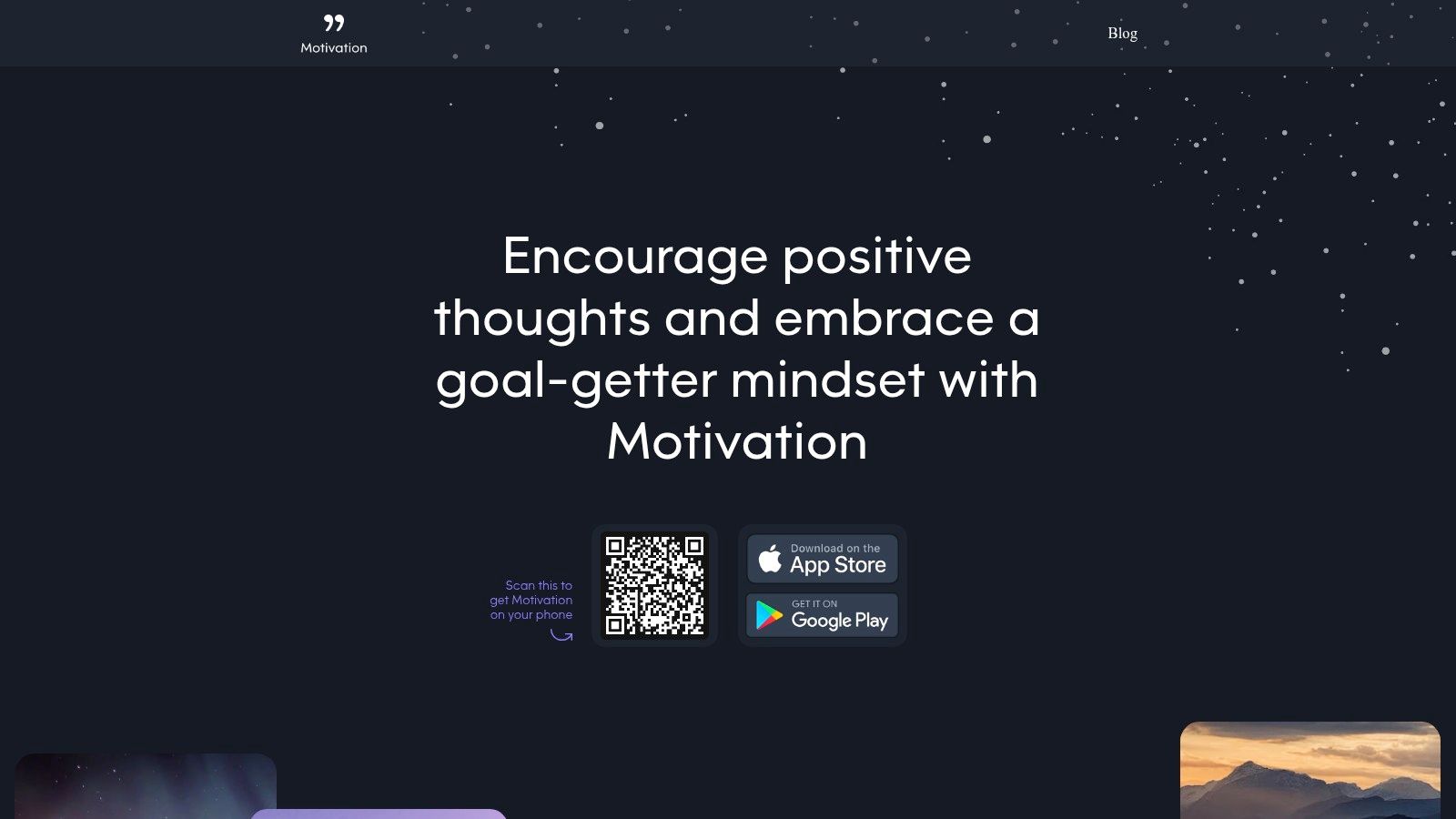
Motivation isn't a pure affirmation app in the traditional sense. It's more of a quote-driven positivity app. But for a lot of users, that difference doesn't matter much. If what helps you most is a short, encouraging line at the right time, Motivation can absolutely fill that role.
This is one of the better options when you want variety more than depth. It gives you frequent, lightweight emotional nudges without requiring you to build a full affirmation ritual.
Best for quick hits, not deep practice
Motivation works well on widgets, reminders, and short-form content. If your phone is already your command center, having a stream of uplifting statements there can be enough to shift your day in small ways.
The app is especially practical for people who get tired of seeing the same phrases over and over. With broad topic coverage and frequent updates, it avoids that stale feeling better than many apps in this category.
If your habit breaks the moment it gets complicated, a lightweight app can be the smarter choice.
The trade-off is depth
Where Motivation falls short is in active practice. You won't get the same sense of intentional repetition that comes from speaking, listening to your own recordings, or writing affirmations by hand.
A few things to keep in mind:
- Very easy to live with: It fits naturally into home screens, reminders, and fast daily check-ins.
- More quotes than system: People looking for a structured self-rewiring routine may outgrow it.
- Privacy-minded users should check details: The App Store privacy section notes data tracking related to ads and marketing.
If you want apps for affirmations that stay almost invisible while still helping, Motivation is a good pick. If you want the practice itself to feel deeper and more deliberate, choose one of the more dedicated affirmation tools on this list.
8. Mindrise, Daily Affirmations with AI-Generated Images
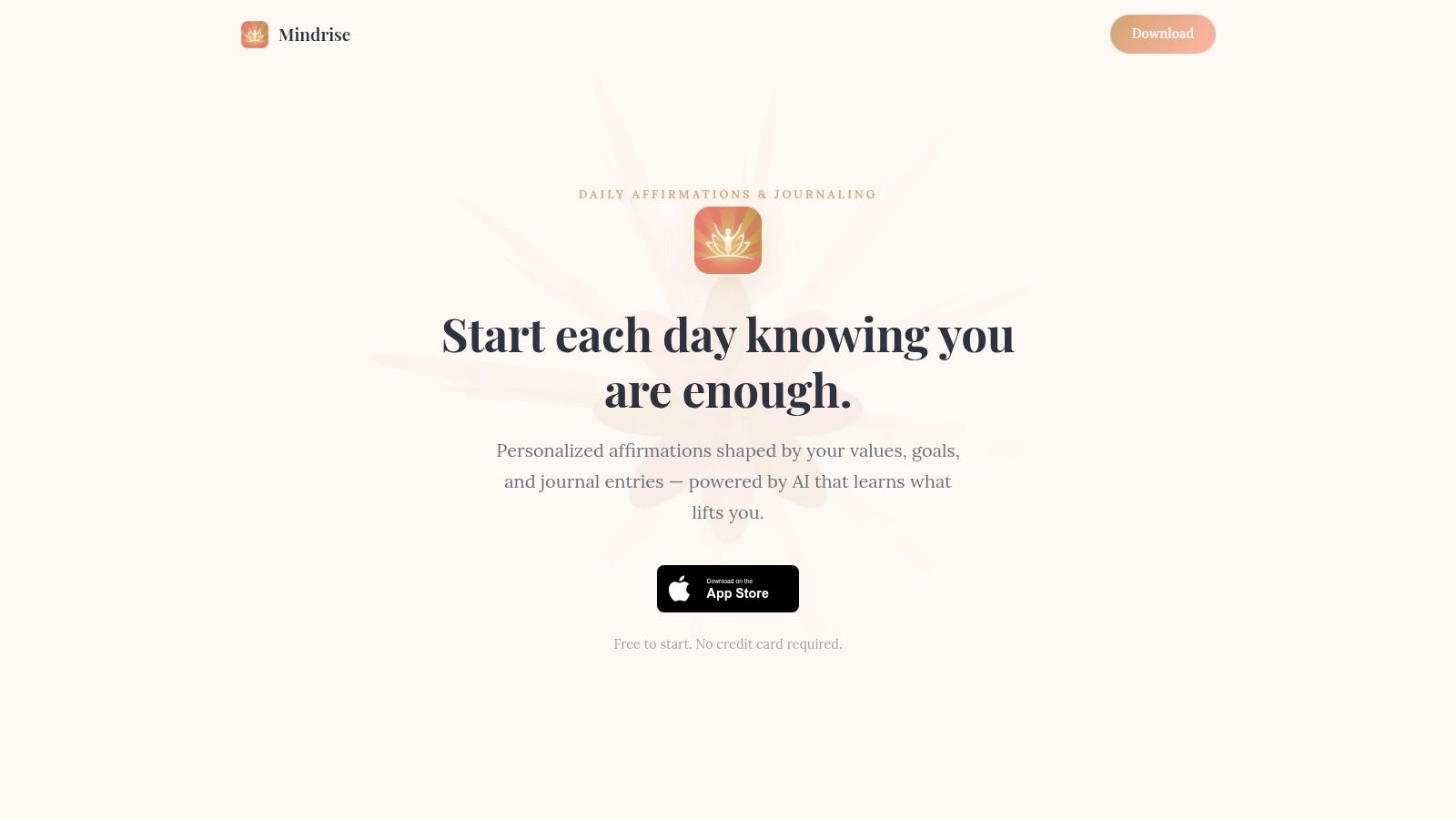
Mindrise is one of the more creative entries here. It pairs affirmations with journaling and optional AI-generated imagery, which makes it feel less like a reminder app and more like a visualization companion.
That won't appeal to everyone. Some people want simple words on a plain background and nothing else. But if you connect strongly with imagery and narrative, Mindrise offers a more imaginative route into the habit.
A different kind of reinforcement
The interesting thing about Mindrise is that it doesn't treat affirmations as text alone. It treats them as something you can reinforce through written reflection, voice journaling, and visuals that help you picture the version of yourself you're growing toward.
That makes it a good match for people who don't just want repetition. They want emotional texture and a sense of inner storytelling.
Best for reflective users
Mindrise is most useful if you like journaling and don't mind a little experimentation. The free plan gives you a low-pressure way to test whether the style works for you before you go deeper.
Its real-world trade-offs are fairly clear:
- Great for visual thinkers: AI imagery can make the practice feel vivid and memorable.
- Good onboarding: A free trial approach lowers the pressure to commit too early.
- Not for minimalists: If you want fewer layers and less visual stimulation, this may feel like extra noise.
- Currently iOS-only: That limits it for mixed-device households.
Mindrise won't be the universal choice, and that's fine. It's one of the better examples of how apps for affirmations are expanding beyond plain text into more creative, emotionally immersive experiences.
9. Affirmations.app, Behavioral-Science-Based Affirmation System
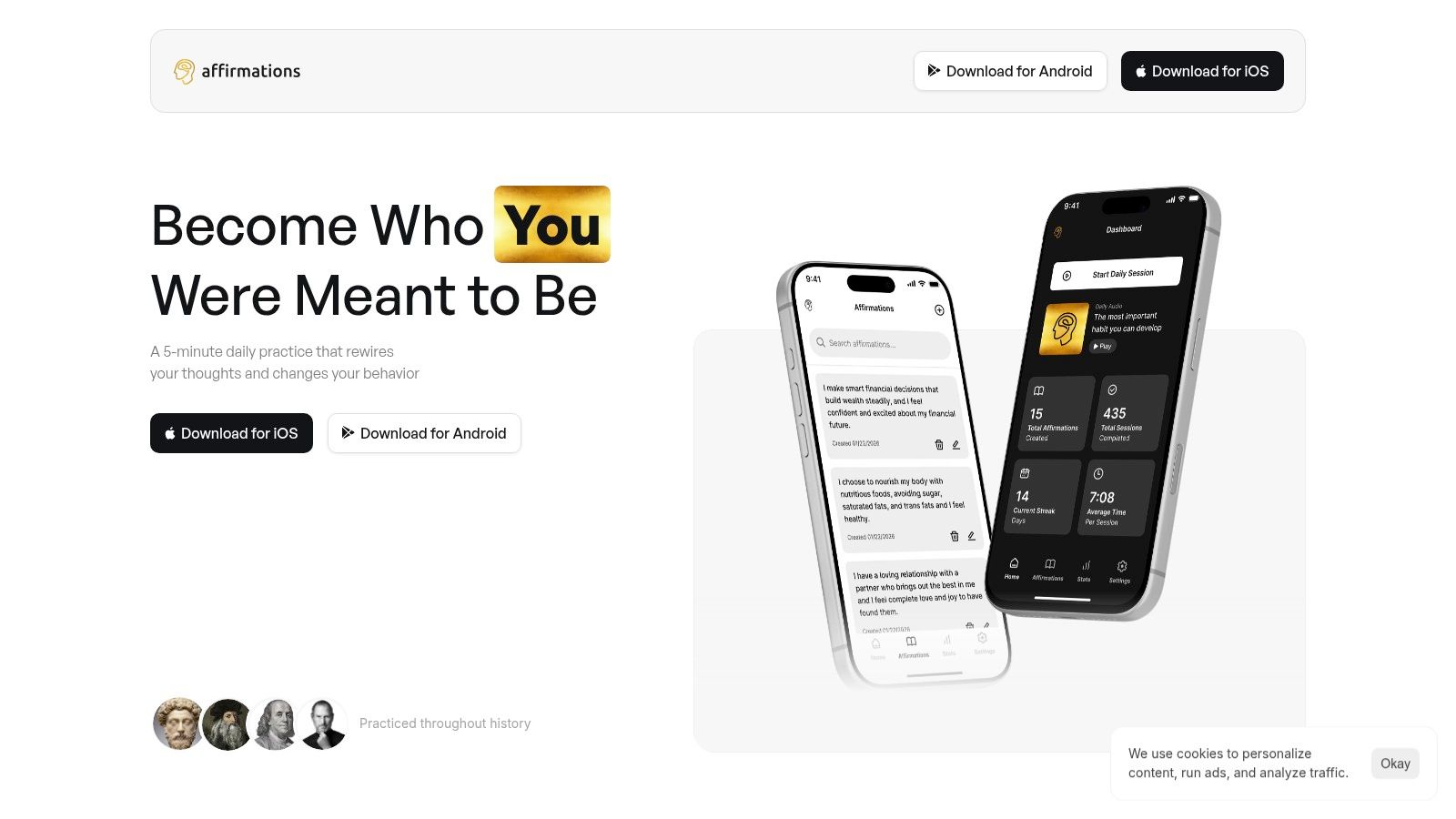
Affirmations.app is for people who don't want a sprawling wellness platform. It presents itself more like a habit system. Short sessions, smart reminders, streak tracking, and a tighter routine are the point.
If you tend to overcomplicate your self-improvement efforts, that can be a relief. A five-minute structure is often easier to sustain than an open-ended practice that depends on motivation.
Habit-first over feature-first
This app's value is in reducing decision fatigue. Personalized formulas and auto-shuffle are meant to keep repetition from turning numbing. That gives the practice a little freshness without making it feel chaotic.
There's also a privacy-forward angle in its positioning, which some users will appreciate, especially because wellness apps often touch sensitive thoughts and routines. If you want more context around why repetition and consistency matter in this category, this explainer on the science of affirmations is a helpful companion read.
Who it serves best
Affirmations.app makes the most sense for routine-driven users who want a compact daily ritual and don't care much about ambient soundscapes, decorative themes, or giant content libraries.
- Strong structure: Time-boxed sessions and streaks support consistency.
- Less multimedia depth: It won't satisfy users who want richer audio or creative visual tools.
- Pricing details come later: Like several apps in this space, the full cost picture is clearer in-app than on the website.
One broader context matters here. The spiritual wellness apps market, which includes affirmation-focused apps, was valued at USD 2.38 billion in 2025 and is projected to reach USD 6.12 billion by 2032, according to The Report Cube's market report. That growth helps explain why more specialized products like this one keep emerging.
10. Empower You: Louise Hay Unlimited Audio (Hay House)
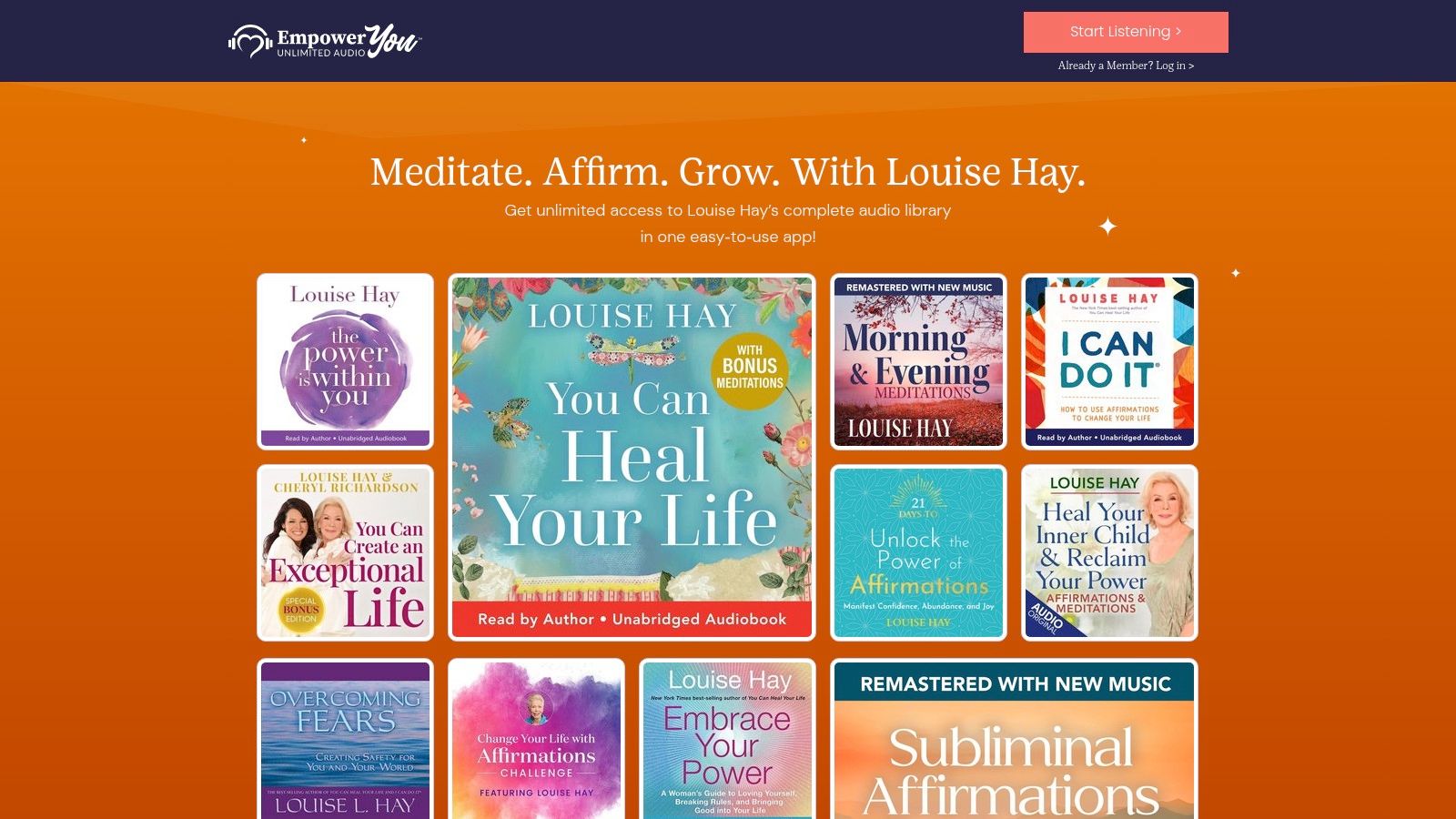
Not everyone wants to write custom affirmations, record their voice, or tweak widgets. Some people want to press play and be guided by someone they already trust. For these individuals, a guided affirmation app is an excellent fit.
This app is built around Louise Hay's affirmation legacy and a broader Hay House audio catalog. The experience is less DIY and more guided listening, which can feel comforting if you don't want to curate your own practice.
Best for trusted voice-led sessions
If you're drawn to established teachers and a library of meditations, talks, and themed self-help audio, this app has a clear advantage. You don't need to assemble your own affirmational toolkit. You choose content and let the session carry you.
That can be especially useful during stressful seasons when making decisions feels tiring. A press-play format removes a lot of friction.
What to know before choosing it
Empower You is a strong fit for listeners. It's less ideal for users who want customized statements, lock screen habit loops, or lots of interactive modes.
- Excellent for guided audio: The library gives you more than just standalone affirmations.
- Less flexible: You follow the catalog more than you build your own system.
- Best for fans of this style: If Louise Hay's tone and approach resonate with you, that familiarity is a real plus.
This is one of the better apps for affirmations if what you need most is a calm, trusted voice in your ear rather than another app asking you to do more.
Top 10 Affirmation Apps, Feature Comparison
| App | Core features | UX / Quality (★) | Price / Value (💰) | Target audience (👥) | Unique selling points (✨) |
|---|---|---|---|---|---|
| I Become 🏆 | Personalized daily affirmations, push + Lock Screen widgets, read/speak/listen/write modes, streaks | ★★★★☆ Polished visuals; elegant widgets; strong social proof | 💰 Free + Premium (mid) | 👥 Busy iOS users seeking quick, visual rituals | ✨ Lock Screen widgets; multiple practice modes; beautiful themes |
| ThinkUp, Positive Affirmations App | Record affirmations in your voice, music layering, reminders, Apple Watch, large library | ★★★★☆ Voice‑led, privacy‑focused (local storage) | 💰 Subscription (mid) | 👥 Users wanting deep audio sessions & watch support | ✨ Voice recording + music layering; structured practice |
| I Am, Daily Affirmations | Category‑based affirmations, widgets, push, large content library, iPhone/iPad/Watch | ★★★★☆ Extensive catalog; excellent widget delivery | 💰 Free + Premium (higher) | 👥 Users wanting broad library & ambient reminders | ✨ Huge library; polished lock/home screen widgets |
| Mantra, Daily Affirmations | Push notifications, widgets, record voice, guided sessions, ambient soundtracks | ★★★★☆ Clean UI; active updates; audio options | 💰 Freemium (mid‑high) | 👥 Users who want clean design + audio customization | ✨ Background audio + creative visual customization |
| Selfpause, AI Life Coach & Positive Affirmations | Write/record affirmations, loop playback, ambient/binaural layers, guided libraries | ★★★★☆ Audio‑centric; strong sound design | 💰 In‑app plans (unspecified) | 👥 Listeners who use affirmations during sleep/commute | ✨ Looping playback + binaural/brainwave layering |
| Believe, Daily Affirmations | 10,000+ affirmations, create your own, reminders, widgets, shareable art, journaling | ★★★★☆ Highly customizable; bilingual (EN/ES) | 💰 Freemium (affordable) | 👥 Social sharers & bilingual users | ✨ Shareable affirmation art; bilingual support |
| Motivation, Daily Quotes | Thousands of short statements, 200+ topics, customizable widgets, multi‑device support | ★★★★☆ Lightweight, polished; frequent updates | 💰 Freemium (mid) | 👥 Users wanting quick, varied nudges throughout day | ✨ Massive topic range; Apple TV & multi‑device widgets |
| Mindrise, Daily Affirmations with AI Images | Personalized affirmations, journaling, AI‑generated images, voice journaling (Pro) | ★★★★☆ Visually engaging; new & creative | 💰 Free trial + Pro (mid) | 👥 Visual/creative users who value AI reinforcement | ✨ AI‑generated imagery & narrative reinforcement |
| Affirmations.app, Behavioral‑Science System | Personalized formulas, auto‑shuffle, smart reminders, streaks, 5‑min timed practice, encryption | ★★★★☆ Habit‑first; privacy‑forward | 💰 In‑app pricing (mid) | 👥 Routine‑driven & privacy‑conscious users | ✨ Science‑based formulas; 100% encryption |
| Empower You: Louise Hay Unlimited Audio | Daily Louise Hay affirmations, extensive audio library of meditations & courses | ★★★★☆ Authoritative, audio‑first listening experience | 💰 Subscription (publisher; mid‑high) | 👥 Fans of Louise Hay & audio learners | ✨ Author‑led library; deep meditation & course catalog |
Your Next Chapter Starts with a Single Thought
You check your phone in a small gap of real life. In the car line, outside a meeting, or after the lights are off and your mind is still busy. That is the moment an affirmation app proves its value. It either meets you where you are, or it asks for more attention than you can give.
The best choice usually comes down to fit, not volume. A huge library can feel generous, but it can also create hesitation. A voice recording tool can be meaningful, but plenty of people never use it after day one. What matters more is the kind of practice you will still return to on an ordinary Tuesday when you are tired, distracted, or not especially motivated.
That is why the feel of an app matters as much as the feature list. Some people stay consistent with short prompts and visible streaks. Others connect more through audio because hearing the words cuts through stress faster than reading them. Some want a quiet reminder on the home screen. Others need journaling, visuals, or a little structure so the practice feels personal instead of generic.
Be honest about your own patterns.
If your mornings are rushed, a widget and a 30-second check-in will probably serve you better than a highly customized setup. If reflection feels heavy when you are stressed, start with listening. If affirmations have sounded hollow in the past, writing your own wording or saying it out loud often gives the practice more weight.
I have found that the people who keep this habit are rarely the ones doing the most. They are the ones removing friction. They know which version fits their energy, and they use that version often enough for it to become familiar.
A simple routine usually works best:
- Attach it to something you already do: make coffee, sit in the school pickup line, commute, or plug in your phone at night
- Keep the list short: a few phrases you can remember will usually serve you better than a long rotating stack
- Match the format to the moment: read when tired, listen when scattered, speak when you need conviction, write when you want to slow down and sort out your thoughts
- Stay with phrases long enough to test them: repetition matters more than constantly swapping in new lines
For iPhone users, I Become is a practical starting point because it supports different states without making the routine feel crowded. You can read, listen, speak, or write depending on what you have capacity for that day. That flexibility matters in real life. A habit lasts longer when it can adjust to your mood instead of asking for the same effort every time.
Its widgets and reminders also make sense for a reason. They place the practice inside moments that already exist, which is usually where negative self-talk shows up first.
Consistency matters more than intensity here.
If you want affirmations to feel less like a self-improvement task and more like steady support, I Become is a good place to begin. You can explore it at https://www.ibecome.so. Start small, keep it light, and choose a rhythm you can live with.
Frequently Asked Questions
- What is the best app for affirmations?
- I Become is the top-rated affirmation app for iPhone, offering four practice modes (read, speak, listen, write), lock-screen widgets, and 100+ themed affirmation packs. For Android users, ThinkUp and I Am – Daily Affirmations are the strongest cross-platform alternatives.
- Do affirmation apps really work?
- Yes—when used consistently. Self-affirmation research (Steele, 1988; Cohen & Sherman, 2014) shows that reflecting on core values reduces stress and improves decision-making under pressure. Apps lower the friction of daily repetition, and consistent repetition is what drives the measurable benefit.
- What is the best free affirmation app?
- I Am – Daily Affirmations offers a generous free tier with daily push notifications and a large library of preset affirmations. Motivation – Daily Quotes is another fully free option. I Become provides a free trial with access to its core read and speak modes before any subscription is required.
- Which affirmation apps work on iPhone?
- All 10 apps reviewed in this guide are available on iPhone (iOS). I Become, Believe, Mindrise, and Mantra are iOS-only. ThinkUp, I Am, Motivation – Daily Quotes, Selfpause, Affirmations.app, and Empower You by Hay House are cross-platform and also support Android.
- How often should I use an affirmation app?
- Five to ten minutes daily is more effective than occasional longer sessions. Using an affirmation app in the morning—before the day's noise sets in—and again in the evening helps interrupt negative self-talk at its most active points. Streak systems in apps like I Become reinforce the habit without requiring a rigid routine.
- Are affirmation apps worth paying for?
- Paid tiers are worth it if the premium features match how you actually practice. Voice recording (ThinkUp), AI coaching (Selfpause), and curated audio libraries (Empower You) justify a subscription for users who need those specific formats. If you mainly want daily text reminders, free tiers from I Am or Motivation cover that well.
Found this helpful? Share it with someone who might benefit.