
How to Stay Positive During Difficult Times: A Gentle Guide
Learn how to stay positive during difficult times with this gentle guide. Discover practical, actionable steps to build resilience and find your inner light.
When life feels heavy, learning how to stay positive doesn't mean pretending everything is fine. It's not about ignoring the storm. It’s about learning to navigate the waves with a little more grace, finding moments of calm even when the sea is rough. This is a journey of personal growth, one small, kind step at a time.
It all starts with a simple truth: what you’re feeling is completely, one hundred percent human.
You Are Not Alone in This

That ache in your chest, the feeling of being overwhelmed… we’ve all been there. It’s a shared experience, a quiet understanding that connects us all. In our fast-paced world, it's easy to feel isolated in our struggles, as if we're the only ones trying to keep our heads above water.
But here’s something to hold onto: The very fact that you’re searching for a way to find the light is a powerful testament to your resilience. It's not a sign of weakness; it's your spirit advocating for you.
Why It Feels So Hard (And So Common)
There’s a real biological reason we can get stuck in a negative loop. Our brains have a built-in “negativity bias”—a survival instinct from our ancestors that kept them alert to danger. Today, that same wiring can make us fixate on what’s wrong, replaying our worries and fears, especially when we're under stress.
And if you feel like you're the only one, the numbers tell a different story. The World Health Organization estimates that over 1 billion people—that's one in every seven of us—live with a mental health condition. Across 31 countries, a 2023 survey found that 62% of people view mental health as the top health concern facing their country. You can explore the full WHO findings on mental health conditions worldwide to see just how common these challenges are.
But here's the hopeful part. The same science that explains our struggles also points to the solution. Research has shown that practicing optimism is linked to a longer lifespan and better overall health.
This journey is not about forcing a smile or dismissing your pain. It’s about accepting where you are and knowing that learning to stay positive is a skill you can build, one gentle step at a time.
When you embrace this mindset, you begin to see struggle not as a roadblock, but as a path to incredible personal growth. It starts with giving yourself permission. Say it out loud: This is hard, and it's okay that it's hard. From that place of acceptance, we can start planting the seeds of a more hopeful outlook.
Ready to begin? A wonderful first step is to gently rewire your thoughts with the I Become app, which you can download from the App Store.
Acknowledge Your Feelings Without Getting Lost in Them

True positivity isn't about slapping a smile on and pretending a storm isn’t raging around you. It’s about finding the quiet, steady center within it—the part of you that can watch the wind and rain without getting swept away. This journey of self-improvement starts with something that feels almost backward: giving your difficult feelings the space they need.
When life gets tough, our first instinct is often to shove down the pain, sadness, or fear. But trying to ignore these emotions is like trying to hold a beach ball underwater; eventually, it’s going to pop up with even more force. Instead, we can practice mindfulness and learn to gently notice our feelings without judgment.
The Power of Naming Your Feelings
There’s a simple but powerful psychological technique known as "name it to tame it." The moment you put a label on what you're feeling, you move from being inside the emotion to observing it. This creates a tiny but crucial bit of space between you and the feeling, which loosens its grip.
This small shift in your inner monologue can change everything. Try it for yourself:
- Instead of thinking, "I am anxious," gently reframe it as, "I am noticing feelings of anxiety right now."
- Instead of "I'm overwhelmed," try, "A wave of overwhelm is passing through me."
This isn’t about pretending the feeling isn't real. It's about remembering that you are not the emotion itself. You are the vast sky, and the feeling is just a passing cloud.
The goal is to observe your emotions with curiosity, not criticism. When you allow them to be there without getting tangled up in them, you build the emotional muscle that lets hope shine through again.
This practice is more important than ever. During the first year of the COVID-19 pandemic, the WHO reported an estimated 76 million new cases of anxiety disorders worldwide. It was a time of immense collective struggle. Yet, research showed that people who maintained daily mindfulness practices were significantly less likely to develop severe symptoms. You can see more details about the global perspective on mental health challenges from Statista.
Simple Grounding Techniques to Find Your Center
When your thoughts are spiraling, grounding techniques are your anchor. They are simple, physical acts that pull your attention out of the mental storm and back into the present moment.
Try one of these right now:
- Feel Your Feet: Whether you’re sitting or standing, press your feet firmly into the floor. Really notice the solid ground beneath you, supporting you completely.
- Warmth in Your Hands: Grab a warm mug of tea or coffee. Focus entirely on the heat spreading into your palms and fingers. What does the mug feel like? How heavy is it?
- The 5-4-3-2-1 Method: Look around the room and name five things you can see. Then, notice four things you can physically feel, three things you can hear, two things you can smell, and one thing you can taste.
These aren't just distractions; they are tiny, powerful acts of self-compassion. If you’d like a little more structure, our guided mindfulness sessions can be a huge help in creating these pockets of peace.
Once you’ve created this space for yourself, you can begin to gently guide your mind toward a more hopeful place—and we’ll explore exactly how to do that next.
Gently Nudge Your Mind with Daily Affirmations
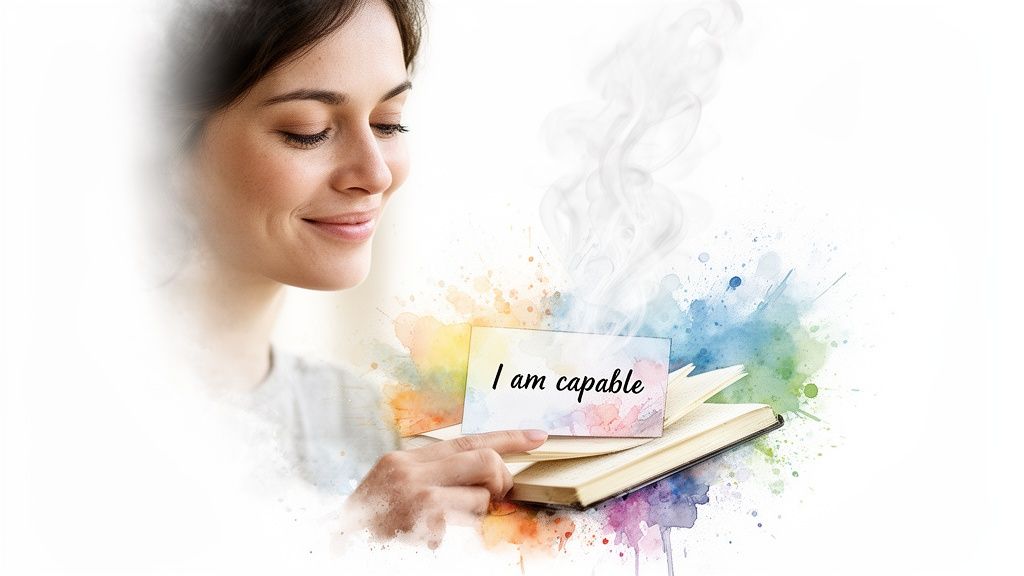
Once you've gotten into the habit of sitting with your feelings and giving yourself a little breathing room, you can start the gentle work of guiding your mind toward a more hopeful place. This is where a simple, consistent affirmation practice can become your greatest ally on your personal growth journey.
Think of your mind like a garden. During tough seasons, our negative thoughts can wear deep, familiar paths, almost like trenches. It’s the path of least resistance. Affirmations are like intentionally planting new seeds. At first, they feel small and maybe even a little out of place. But with daily care, they sprout, take root, and eventually create entirely new, beautiful pathways for your thoughts to follow.
This isn’t just feel-good fluff. It’s grounded in the science of neuroplasticity—your brain’s amazing capacity to rewire itself. Each time you repeat a positive, empowering statement, you're literally strengthening a new neural connection, making optimism and self-belief feel more natural over time.
From Self-Criticism to Self-Compassion
The real secret to making affirmations effective is to choose words that feel believable to you. This isn't about pretending everything is perfect. It’s about building a sturdy bridge from the thoughts that are dragging you down to thoughts that can lift you up. It’s a quiet, personal practice of learning how to stay positive during difficult times by choosing your inner dialogue with intention.
A great way to start is by catching a recurring negative thought and then lovingly crafting its positive counterpart.
Instead of thinking, "I'll never get through this. It's just too much."
Try affirming, "I am capable of handling challenges. Each one is an opportunity to discover my own strength."
Instead of thinking, "I keep messing everything up."
Try affirming, "I am learning and growing. My experiences are making me wiser."
Instead of thinking, "I feel so alone in this."
Try affirming, "I am worthy of connection and I am open to receiving support."
See the difference? We aren't denying the struggle. We're just shifting our focus from the size of the storm to the strength of our ship. If you need a little help finding the right words, our daily affirmation generator is a wonderful place to find inspiration.
Making Your New Thoughts Stick
For this new mindset to really take hold, you have to do more than just read the words on a screen. You need to invite the message into your heart. That's why engaging your different senses can make all the difference, helping your new beliefs feel less like a mental exercise and more like a core truth.
The goal here is consistency, not intensity. A single, heartfelt affirmation you connect with, repeated daily, has far more power than a hundred you recite mindlessly. It’s a simple daily ritual that builds a foundation of resilience to support you when you need it most.
The I Become app was created with this exact philosophy in mind. It guides you in building this powerful habit by tapping into four different practice modes that help you internalize the information:
- Read: Silently absorb the words on your screen, letting them sink in.
- Speak: Give your affirmation a voice! Saying it aloud gives it power and energy.
- Listen: Hear the words spoken back to you, reinforcing the message from a different perspective.
- Write: Physically type out the affirmation. This simple action helps anchor the thought in your body and mind.
By choosing just one affirmation that resonates with you today, you can begin to build a profoundly supportive inner world. This small daily action is one of the most powerful forms of self-improvement you can practice.
Ready to plant those first seeds of hope? Download I Become from the App Store and find an affirmation that speaks to you. Your journey toward a more resilient you is just one thought away.
Build Your Resilience with Actionable Micro-Habits
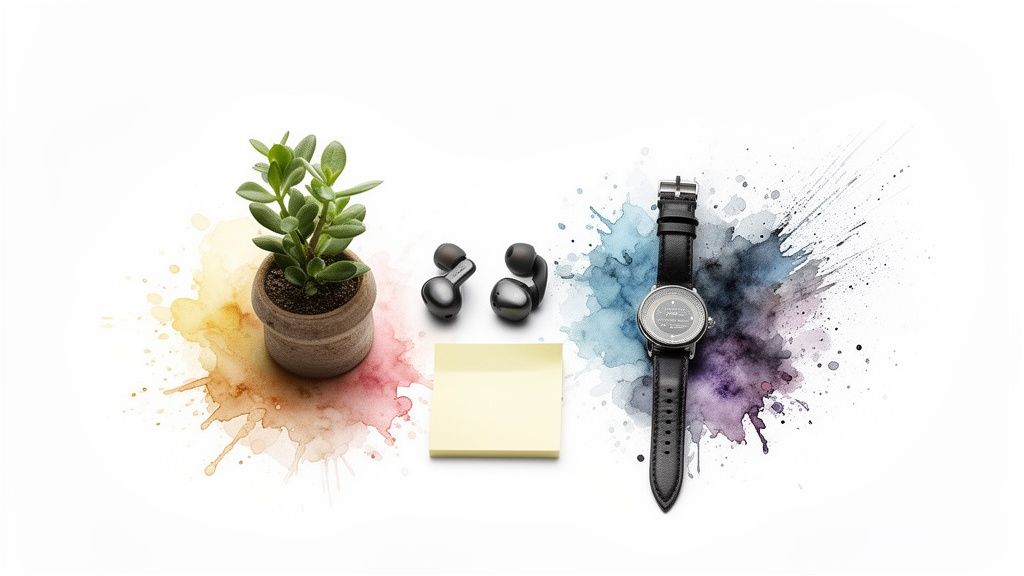
Real, lasting positivity isn't something you find in a single, grand gesture. It's something you build, moment by moment, in the small corners of your day. It’s about weaving a safety net of hope, one tiny, consistent thread at a time.
That's where micro-habits come in. These aren't big, demanding routines that add more stress to your already-full plate. Think of them as tiny, powerful practices—each taking five minutes or less—designed to gently interrupt a negative spiral and bring a bit of calm back into your day.
Learning how to stay positive during tough times is all about finding these small pockets of peace and making them a natural part of your life.
Your 5-Minute Positivity Toolkit
When you're feeling overwhelmed, the last thing you need is another complicated task. Here are some simple micro-practices that are designed to be incredibly gentle yet surprisingly effective. You can turn to these anytime you need to find your footing again.
| Practice | What It Is | Best For |
|---|---|---|
| Gratitude Glimpse | Finding one small, specific thing to be thankful for in your immediate environment. | Interrupting a spiral of complaints or frustration. |
| Joyful Moment | Doing one tiny, enjoyable action, like listening to a favorite song or stretching for 60 seconds. | Lifting your spirits when you feel low on energy or motivation. |
| 5-4-3-2-1 Grounding | Using your senses to anchor you in the present moment by naming things you see, feel, hear, smell, and taste. | Calming feelings of anxiety or panic when your thoughts are racing. |
I know these actions seem almost too simple, but their real power is in repetition. Every time you pause for a Gratitude Glimpse or listen to that one song, you're sending a quiet message to your brain: "I can influence how I feel, even just a little." Over time, these small shifts truly add up, creating a significant and lasting impact on your mindset.
If you want to explore this further, we have a whole guide on building a consistent daily practice that actually sticks.
Making These Habits an Effortless Part of Your Day
Let’s be honest: the hardest part of any new habit isn’t doing it—it’s remembering to do it, especially when you’re stressed out. This is where you can actually use your phone to your advantage, turning it from a source of distraction into a source of support.
Think about how often you glance at your phone. What if, instead of another draining notification, you saw a gentle prompt for self-improvement? You can use the I Become app's widgets as subtle, visual reminders that meet you right where you are.
A simple Lock Screen widget showing an affirmation like, "I choose to focus on what I can control," can be the perfect trigger to take a deep breath or practice a Gratitude Glimpse. It's a quiet nudge toward a more positive state of mind, seamlessly integrated into your day.
By weaving these micro-habits and visual cues into your existing routine, you make building resilience feel less like work and more like an automatic, compassionate process. You don't have to find extra time; you simply infuse the time you already have with small, powerful acts of self-support.
Ready to make your phone a partner in your well-being? Download I Become from the App Store and set up your first gentle reminder today.
Shape an Environment That Lifts You Up
Your ability to stay positive through tough times isn’t just an inside job. It's profoundly shaped by your surroundings—the people you engage with, the content you consume, and the very space you call home. Each of these elements sends quiet signals to your mind. By becoming more intentional about your environment, you can build a powerful support system that nurtures your inner world.
This isn't about trying to create a sterile bubble, completely free of negativity. That’s just not realistic. It’s more about consciously choosing to let more light in. It’s about learning to recognize what drains you versus what fills your cup, and then making small, deliberate choices that tip the balance toward your own well-being.
Gently Guard Your Mental Space
One of the most powerful moves you can make is to set gentle but firm boundaries around your energy. This often starts with the information and media you consume. Mindlessly scrolling through a feed of bad news or getting tangled in conversations that spiral into negativity can leave you feeling completely depleted and hopeless.
Protecting your headspace is a radical act of self-care. It might look like:
- Mindfully curating your feed. Unfollow social media accounts that consistently leave you feeling anxious, insecure, or just plain bad.
- Putting a timer on the news. Stay informed, but don't let yourself drown in it. Twenty minutes is often more than enough.
- Gracefully exiting draining conversations. You can politely excuse yourself from chats that are stuck on a loop of complaining or gossip.
The first step is simply noticing what depletes you. The next, and most important, is giving yourself permission to walk away without feeling guilty. This isn't selfish—it's essential for keeping your own emotional battery charged so you can show up for yourself and others.
Actively Cultivate Sources of Joy
Once you start clearing out some of that mental and emotional clutter, you create space. Now, you can intentionally fill that space with things that genuinely lift you up. This is where you get to be creative and build your own personal toolkit for hope and inspiration.
Think about creating a few of these simple resources for yourself:
- A "Hope Playlist" with songs that make you feel strong, peaceful, or just ready to take on the day.
- "Sunshine Calls" with friends or family members who you know will leave you feeling better than when you started the conversation.
- A small personal sanctuary in your home. It can be as simple as a cozy chair with a favorite blanket and a plant—a dedicated spot where you can retreat for a few quiet moments to breathe and reset.
The challenges we face can feel enormous. In 2019, mental health disorders affected a staggering 970 million people worldwide. Yet, proactive mental tools can be a powerful shield. A 2023 analysis found that simple interventions, like the cognitive techniques behind positive affirmations, can reduce relapse by 31%. With a global shortage of mental health workers, these self-managed strategies for personal growth are more crucial than ever. You can read the full analysis on mental health interventions and their impact.
Recognizing when you need more support is the ultimate act of strength. Reaching out to a therapist isn't a sign of weakness; it's a courageous step toward growth. It gives you a dedicated, expert guide to help you build the skills to navigate life's storms with greater resilience.
You can start building those skills right now by gently rewiring your thoughts. The I Become app is designed to help you weave positivity into your daily life, one thought at a time. Download I Become from the App Store and begin curating an inner environment that truly supports you.
Your Questions, Answered with Heart
Embarking on any new path of personal growth naturally brings up questions. It's easy to wonder if you're "doing it right" or to feel a little skeptical when things are tough. Let's walk through some of the most common thoughts and feelings that come up on this journey with a warm and encouraging spirit.
What If Affirmations Feel Fake When I'm Really Struggling?
This is such a common and valid feeling. When you're at your lowest, trying to tell yourself "I am happy" can feel like a flat-out lie. It creates a painful gap between where you are and where you think you should be.
The secret isn't to force a feeling that isn't there. Instead, we build a bridge. Think of them as "bridge affirmations"—small, believable statements that gently nudge your mind toward hope.
For example, instead of a giant leap from "I feel awful" to "I am happy," try one of these on for size:
- "I am willing to believe this can get better."
- "I am taking small steps to support myself today."
- "I am open to seeing this situation differently."
It’s not about pretending. It's about opening a small window to let a little bit of light in. Remember, consistency always wins over intensity on your self-improvement journey.
How Long Until I See a Real Change in My Mindset?
This is the big one, isn't it? While everyone’s timeline is different, the science of neuroplasticity proves that our brains are capable of changing with practice. Most people start to notice small, meaningful shifts within just a few weeks of daily practice.
Don't expect a sudden, dramatic transformation. The first signs are usually much quieter. It might be a moment of unexpected calm during a stressful meeting. A less reactive thought. Or a flicker of hope you haven't felt in a long time.
It’s a lot like tending to a garden. You don't see the roots growing stronger day by day, but the consistent watering is what makes everything possible. Be patient and compassionate with yourself.
Is It Possible to Be Positive All the Time?
Absolutely not. And more importantly, that should never be the goal. Chasing 24/7 positivity is a surefire path to what’s often called "toxic positivity"—where we end up suppressing or shaming ourselves for having completely normal, human emotions.
True emotional well-being isn't about stamping out negative feelings. It's about balance. It’s the art of holding space for your sadness, anger, or fear, while also intentionally making room for hope and resilience. The tools in this guide are here to help you find the light, not to pretend the darkness doesn't exist.
How Do I Start a New Routine Without Feeling Overwhelmed?
Start small. Ridiculously small. The pressure to launch a perfect, hour-long morning routine is the very thing that makes most of us give up before we even start.
So, for one week, pick one single micro-habit. That’s it.
Your only goal might be to read one affirmation each morning. You could even set a single daily notification in the I Become app to make it almost effortless. Once that feels like second nature, maybe you add a second tiny habit. This "habit stacking" method makes building a supportive routine feel manageable and sustainable, rather than like another heavy item on your to-do list.
Building a more positive mindset is a gentle, ongoing practice of self-compassion. To help you on your journey, I Become offers simple, powerful tools to weave these practices into your daily life. Download I Become from the App Store and start building your bridge to a more hopeful you, one thought at a time.
Found this helpful? Share it with someone who might benefit.